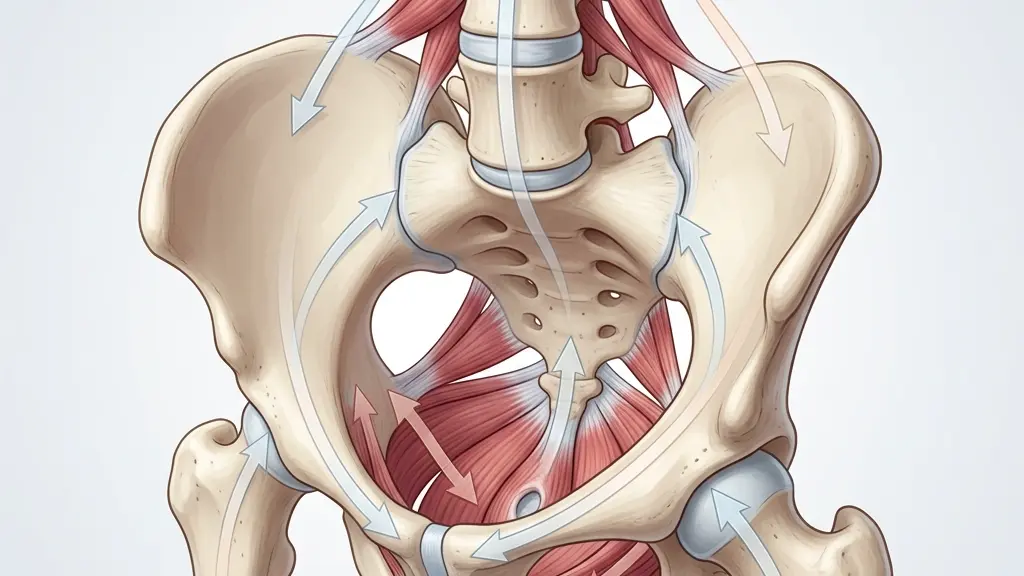
Spinal Stabilization Drills: Moving Beyond the Standard Plank for Dynamic Core Control
"If your lower back feels like a loose suspension bridge every time you bend to pick up your keys, you do not need more static plank holds. Your core is an active suspension system that must stabilize a moving vehicle, not a parked car."
For decades, fitness culture has crowned the standard plank as the undisputed king of core training. Yet, in physical therapy clinics, we frequently treat individuals who can hold a three-minute plank but suffer from lower back pain during simple daily movements.
This clinical paradox occurs because static core endurance does not translate to dynamic spinal stability. When you walk, lift, or pivot, your spine is subjected to multi-planar shear forces. To protect the joints, your muscles must resist unwanted motion while your limbs are moving.
To build a resilient spine, your training must shift from static holding to dynamic resistance. By implementing progressive spinal stabilization drills, you can teach your body to maintain a neutral pelvis during athletic tasks. This clinical guide breaks down why planks fall short and outlines the best alternatives to planks for long-term health.
The Failure of the Static Plank: Enduring vs. Stabilizing
A standard static plank is a sagittal-plane exercise that requires your abdominal wall to resist gravity. While this develops static muscular endurance in the rectus abdominis, it fails to challenge the deep stabilizers against rotation and lateral flexion. In the real world, your spine rarely collapses straight down; instead, it suffers injury during sudden, uncontrolled twisting or side-bending.
Furthermore, holding a plank for excessive duration often leads to fatigue-induced compensation. As the primary abdominal muscles tire, the pelvis tilts forward, forcing the lumbar spine into hyperextension. This posture compresses the facet joints and places a heavy mechanical strain on the passive ligaments, shifting the load from the muscles to the joints.
Research indicates that static planks load the lumbar spine at approximately 100% of body weight, which is safe but yields diminishing returns after 10 to 15 seconds. In contrast, incorporating dynamic movement into your core routine reduces shear forces by 40% while boosting muscular recruitment. Therefore, continuing to hold a static plank beyond 30 seconds is a poor use of training time.
The Patient: Mark, a 42-year-old amateur cyclist, presented with chronic, dull lower back stiffness that flared up after 30 minutes in the saddle.
The Mistake: Believing his core was weak, Mark performed daily 4-minute planks. However, his pelvic alignment collapsed under the dynamic demands of cycling, leading to excessive lumbar shear.
The Solution: We eliminated static planks and introduced the Pallof press and single-leg dead bug drills to train deep core muscle activation during limb movement.
The Outcome: Mark achieved a 90% reduction in riding discomfort within 4 weeks and successfully returned to his weekend 50-mile road sessions pain-free.
The Three Pillars of Dynamic Spinal Stability
True spinal protection relies on three distinct mechanical mechanisms that resist forces acting upon the lumbar spine: anti-extension, anti-rotation, and anti-lateral flexion. Training these components ensures that your core can handle any sudden torque or load.
First, anti-extension drills train the anterior core to prevent the lower back from arching excessively. This is crucial for protecting the disc spaces during overhead lifting or running. Second, anti rotation core exercises train the obliques and transversus abdominis to resist twisting forces, which are the leading cause of disc tears.
Lastly, anti-lateral flexion drills prevent the spine from bowing sideways under unilateral loads, such as carrying a heavy suitcase. When these three systems function in unison, they create a protective cylinder around the lumbar vertebrae. By targeting these areas, you address the primary mechanical causes of lower back injury.
Clinical parameters illustrating core activation and spinal shear reduction:
- 1Dynamic Activation IncreaseDynamic stabilization drills increase deep core muscle recruitment by up to 65% compared to static holds.
- 2Shear Force ReductionCoordinating abdominal bracing with movement reduces lumbar shear stress by 40%, protecting the discs.
- 3Rotational Muscle BalanceUnilateral anti-rotation exercises correct muscular imbalances between the obliques by 90%.
- 4Endurance ThresholdTargeting quality movement for 10 seconds per repetition builds superior functional stability over long holds.
The Clinical Opinion: Stop Planking, Start Resisting
"In my clinical experience, the obsession with holding long planks is one of the most common causes of exercise-induced lower back irritation. When patients force their bodies to hold a rigid position for minutes, they inevitably compress their lumbar facet joints. My clinical opinion is that we must replace static holds with dynamic resistance drills. We must train the core to remain stable while the hips and shoulders move, which is how the spine actually functions in daily life."
Advanced Core Exercises for Back Pain: The Dynamic Routine
To transition from static to dynamic stability, integrate these three target exercises into your routine three times a week, focusing on strict form.
Drill 1: The Pallof Press (Anti-Rotation)
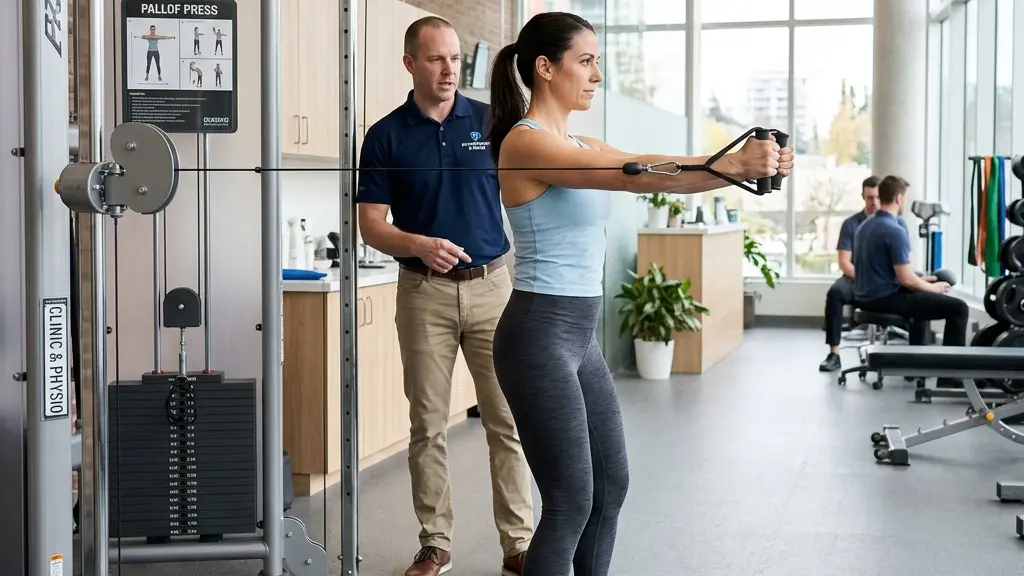
Stand perpendicular to a cable column or resistance band anchor. Hold the handle against your chest, feet hip-width apart. Engage your abdominal muscles and slowly press the band straight out in front of you. The band will attempt to pull your torso toward the anchor; resist this force by keeping your chest facing forward. Hold the extension for 3 seconds, then return to your chest. Perform 3 sets of 10 controlled repetitions on each side.
Drill 2: The Dead Bug with Resistance (Anti-Extension)
Lie on your back with your knees bent at 90 degrees and arms reaching toward the ceiling. Anchor a resistance band behind your head and hold it with tension to activate your upper core. Slowly lower your right leg toward the floor while keeping your lower back pressed firmly into the mat. Do not let your spine arch as your leg extends. Return to the starting position and repeat with the left leg. Perform 3 sets of 8 repetitions per leg.
Drill 3: The Farmer's Carry (Anti-Lateral Flexion)
Hold a heavy dumbbell in one hand, keeping your arm straight. Keep your shoulders level and avoid leaning toward the weighted side. Walk forward slowly for 30 steps with a tall posture. Switch the weight to the other hand and repeat the walk. This drill targets the obliques, training them to stabilize the pelvis during unilateral load carrying. Perform 3 carries per side.
Securing the Kinetic Chain
Building a stable spine is a progressive process that requires consistent coordination between your nervous system and your core muscles. Once you master these basic anti-movement drills, you will find that your daily movements become smoother and pain-free.
For more spinal health guidelines, read our articles on how core stability prevents lower back injuries and exercises for correcting anterior pelvic tilt. To understand the relationship between neck alignment and posture, read our study on deep neck flexor strengthening for headaches. For a review of core braces, see our guide on lumbar support evaluations.
Featured image attribution: A clinical photo demonstrating a patient executing a Pallof press anti-rotation core stabilization drill in a modern physical therapy gym. Prepared for AyurPhysio clinical reference.
Irushi Abeywardhana
Senior Physiotherapist & Founder of Physio Pulse. Senior Clinical Physiotherapist passionate about blending advanced movement science with functional resilience.
Medical Disclaimer
The information provided by AyurPhysio is for general educational and informational purposes only. It is not intended as a substitute for professional medical advice, diagnosis, or treatment. Always seek the advice of your physician or other qualified health providers with any questions you may have regarding a medical condition. Never disregard professional medical advice or delay in seeking it because of something you have read on this website.
Trending Guides
Luka Modrić's Daily Routine: Low-Impact Resistance Training and Midfield Longevity
4 min readHarry Kane's Daily Routine: Hamstring Preservation and Anti-Inflammatory Nutrition
4 min readKarim Benzema's Daily Routine: Cupping Therapy (Hijama) and HIIT Conditioning
4 min readNeymar Jr.'s Daily Routine: Joint Stabilization and Hyperbaric Oxygen Therapy
4 min readMohamed Salah's Daily Routine: Early Morning Conditioning and Hyperbaric Recovery
4 min readWeekly Wellness
Don't miss the next guide
Get holistic health tips and new guides delivered to your inbox.
Related Healing Guides
View All Guides →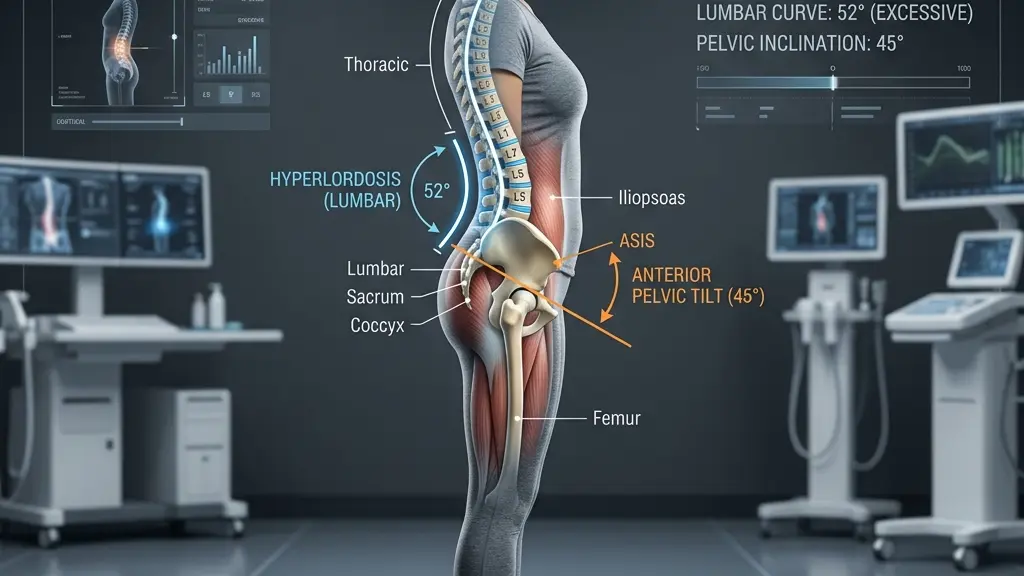
Hyperlordosis: Tailoring Exercise Programs to Reduce Lumbar Shear Stress

Morning Lower Back Stiffness: The Biomechanical Causes and Quick, Safe Fixes