The Pelvic Floor-Spine Connection: Stabilizing from the Base
"A spine trying to stabilize without reflexive pelvic floor tension is the mechanical equivalent of a towering construction crane resting in wet sand."
You wake up, roll out of bed, and feel that familiar, dull ache in your lower back. You bend over to brush your teeth, and your spine feels as stiff as a telephone pole. You might assume your back is weak, but the real issue might be hiding much lower down.
Many people spend hours doing planks and crunches to build a strong core, yet their back pain keeps returning. This happens because they are ignoring the absolute foundation of the torso: the pelvic floor. If your pelvic floor is a saggy trampoline, your lumbar spine is left swaying in the wind like a tent without guide ropes.
Your spine does not float in a vacuum. It relies on a coordinated pressure system to stay aligned and absorb daily impact. Understanding how pelvic floor-spine stabilization works is the missing key to locking in long-term back health.
The Hydraulic Cylinder of the Core
Think of your midsection as a pressurized hydraulic cylinder. The diaphragm acts as the piston at the top, the abdominal wall is the sleeve, and the pelvic floor is the solid steel base. If the base of the cylinder is weak or coordinate-delayed, the pressure drops and the entire system collapses.
When you inhale, your diaphragm descends and expands your abdomen and pelvic floor. As you exhale, they contract reflexively to stabilize the spine. If this rhythm is disrupted, your lower back must bear the brunt of every movement.
Engaging the pelvic floor in coordination with the diaphragm increases intra-abdominal pressure (IAP) by up to 30%. This pressure acts as a natural cushion, significantly reducing the compression forces placed on your lumbar discs. Without this baseline pressure, even simple movements can place excessive load on the spine.
- Studies show that a delayed pelvic floor muscle activation contraction of just 50 milliseconds can fail to stabilize the sacroiliac joint, leading to micro-shear.
- Engaging the pelvic floor in coordination with the diaphragm increases intra-abdominal pressure (IAP) by up to 30%, reducing lumbar compression.
- Up to 95% of patients suffering from chronic lower back pain also present with underlying pelvic floor muscle dysfunction.
The Myth of the Standard Kegel
When patients hear about the pelvic floor, they immediately think of Kegels. However, standard Kegels are often a waste of time—and can worsen your pelvic dysfunction if your muscles are already hypertonic. Many back pain sufferers do not have weak pelvic floors, but rather tight, overworked muscles that cannot relax.
A muscle that is constantly contracted is just as useless as one that is turned off. If your pelvic floor is stuck in high tension, it cannot contract reflexively when you move, leaving your spine unsupported. Standard Kegel squeezes will only make this hypertonicity worse, locking your pelvic bones in an unnatural grip.
Furthermore, the common practice of sucking in the stomach (hollowing) further spikes tension and shuts down the pelvic floor. We explain this danger in our guide on core stability and injury prevention. Real stability requires symmetric bracing, not hollowing.
"In my practice, I find standard Kegels do more harm than good for chronic lower back stiffness. If your pelvic floor is already hypertonic, squeezing it further is like tightening a cramped calf muscle. We must first restore diaphragmatic breathing to teach these stabilizers to relax before building strength."
The 50-Millisecond Neurological Delay
True spinal health is not just about muscle strength, but neurological timing. In healthy individuals, the pelvic floor fires automatically before the limbs even move. This preemptive contraction stabilizes the pelvis and prepares the spine for the oncoming load.
Research shows a delayed pelvic floor contraction of just 50 milliseconds fails to stabilize the sacroiliac joint. This tiny delay allows micro-shear forces to slip into the joints, causing irritation. Over time, these micro-shears lead to chronic muscle guarding and back spasms.
Furthermore, pelvic floor dysfunction is common among back pain patients. Statistics show that up to 95% of chronic lower back pain sufferers have underlying pelvic floor dysfunction. Addressing this connection is a clinical necessity for recovery.
SI Joint Stability and Pelvic Tilt
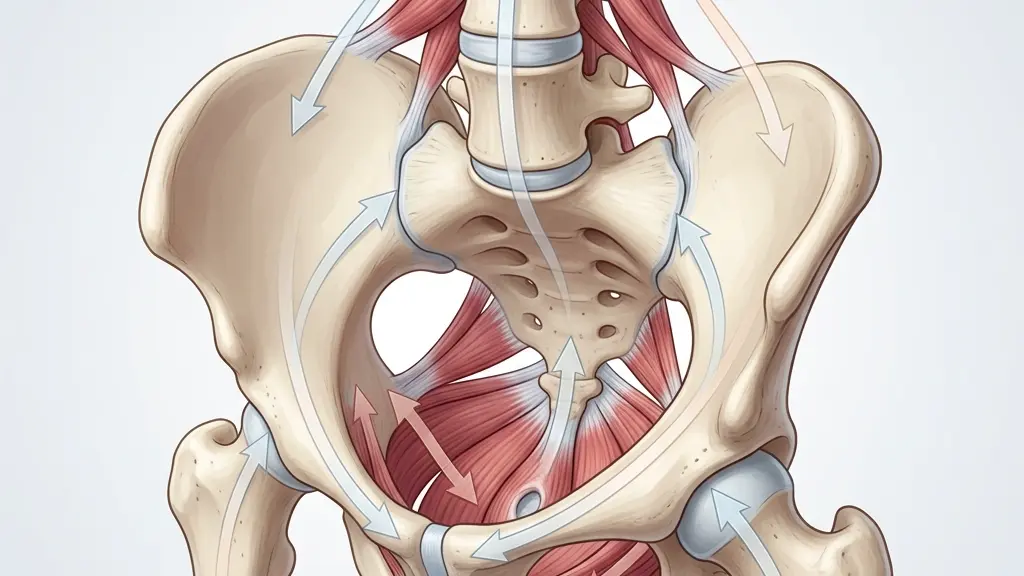
The pelvic floor connects to the sacrum and tailbone, acting as a critical anchor. When these muscles are imbalanced, they pull the pelvis out of its neutral alignment. This often contributes to an anterior tilt, which arches the back and pinches the spinal joints.
To restore balance, practice targeted sacroiliac joint stabilizing stretches to calm hyperactive hip and pelvic muscles. Additionally, learning how to correct anterior pelvic tilt through alignment exercises relieves chronic mechanical stress. We outline these drills in our guide on anterior pelvic tilt correction.
Once the pelvis is aligned, the deep core can function optimally. The gluteal muscles work in tandem with the pelvic floor to control pelvic rotation. If your glutes are weak, your back will compensate, a pattern we discuss in our post on preventing lumbar compensation.
The Patient: Brenda, 42, a marathon runner with chronic lower back stiffness that worsened during runs.
The Mistake: Doing high-volume planks and Kegels, which made her pelvic floor hypertonic (tight) but weak, while constantly hollowing her belly.
The Solution: We suspended hollowing, introduced diaphragmatic release, and taught her to lift the pelvic floor gently during exhalation.
The Outcome: Brenda experienced a 90% reduction in back pain within four weeks and returned to running pain-free.
Rebuilding the Base: Your Daily Protocol
To retrain the pelvic floor-spine connection, you must practice coordinating your breath with muscle activation. Perform this clinical sequence daily to restore reflexive stability. Avoid rushing; focus on control and precision.
-
1Step 1: Diaphragmatic Release (10 breaths, twice daily) Lie on your back with knees bent. Inhale deeply through your nose, letting your belly rise and pelvic floor expand. Exhale slowly through pursed lips, letting your belly drop naturally.
-
2Step 2: Co-Contraction Lift (10 reps, 2 sets daily) Inhale to expand your belly and pelvic floor. As you begin to exhale, gently lift your pelvic floor and pull your lower abdominals inward. Hold this light brace for 5 seconds, then relax.
-
3Step 3: Pelvic Floor Wall Squat (8 reps, 2 sets daily) Stand with your back flat against a wall and feet hip-width apart. Slide down into a mini-squat, inhaling to expand and relax the pelvic floor. Exhale and gently lift the pelvic floor as you stand back up.
Unlocking Pelvic & Spinal Freedom
For patients with severe spinal compression, combining these exercises with lumbar disc decompression exercises can accelerate recovery. Rebuilding the foundation of your spine is a journey of neurological retraining, not sheer force. Reclaiming your stability starts with the breath.
Are you coordinating your pelvic floor with your breathing during daily activities, or are you exposing your spine to mechanical shear forces?
Featured image: A professional clinical illustration of a human pelvis, lumbar spine, and pelvic floor muscle group, showing biomechanical stabilization pathways. Cinematic widescreen 16:9 composition, clean diagram style with soft clinical colors, no text, no labels, and no logos.
Irushi Abeywardhana
Senior Physiotherapist & Founder of Physio Pulse. Senior Clinical Physiotherapist passionate about blending advanced movement science with functional resilience.
Medical Disclaimer
The information provided by AyurPhysio is for general educational and informational purposes only. It is not intended as a substitute for professional medical advice, diagnosis, or treatment. Always seek the advice of your physician or other qualified health providers with any questions you may have regarding a medical condition. Never disregard professional medical advice or delay in seeking it because of something you have read on this website.
Trending Guides
Luka Modrić's Daily Routine: Low-Impact Resistance Training and Midfield Longevity
4 min readHarry Kane's Daily Routine: Hamstring Preservation and Anti-Inflammatory Nutrition
4 min readKarim Benzema's Daily Routine: Cupping Therapy (Hijama) and HIIT Conditioning
4 min readNeymar Jr.'s Daily Routine: Joint Stabilization and Hyperbaric Oxygen Therapy
4 min readMohamed Salah's Daily Routine: Early Morning Conditioning and Hyperbaric Recovery
4 min readWeekly Wellness
Don't miss the next guide
Get holistic health tips and new guides delivered to your inbox.
Related Healing Guides
View All Guides →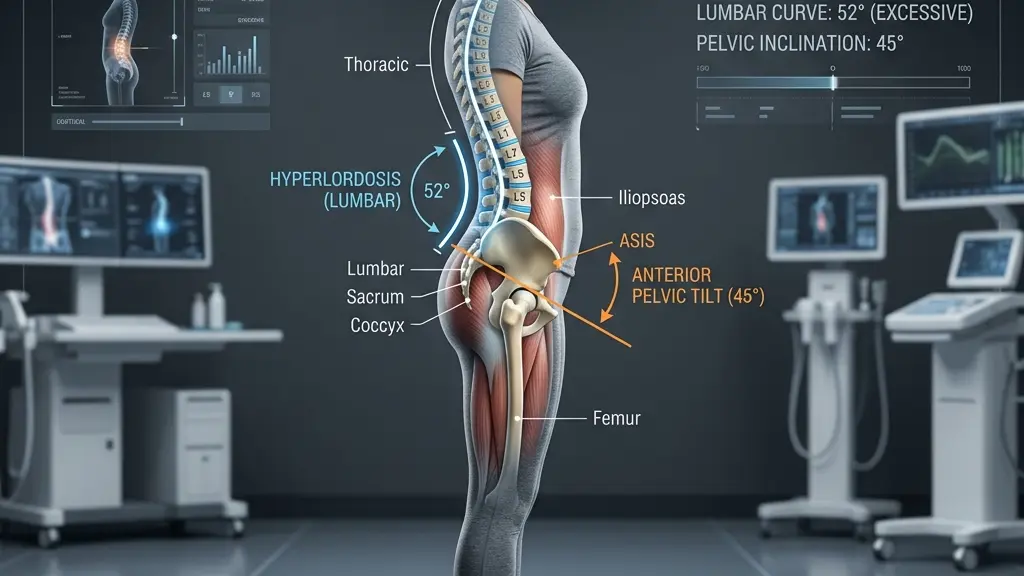
Hyperlordosis: Tailoring Exercise Programs to Reduce Lumbar Shear Stress

Morning Lower Back Stiffness: The Biomechanical Causes and Quick, Safe Fixes