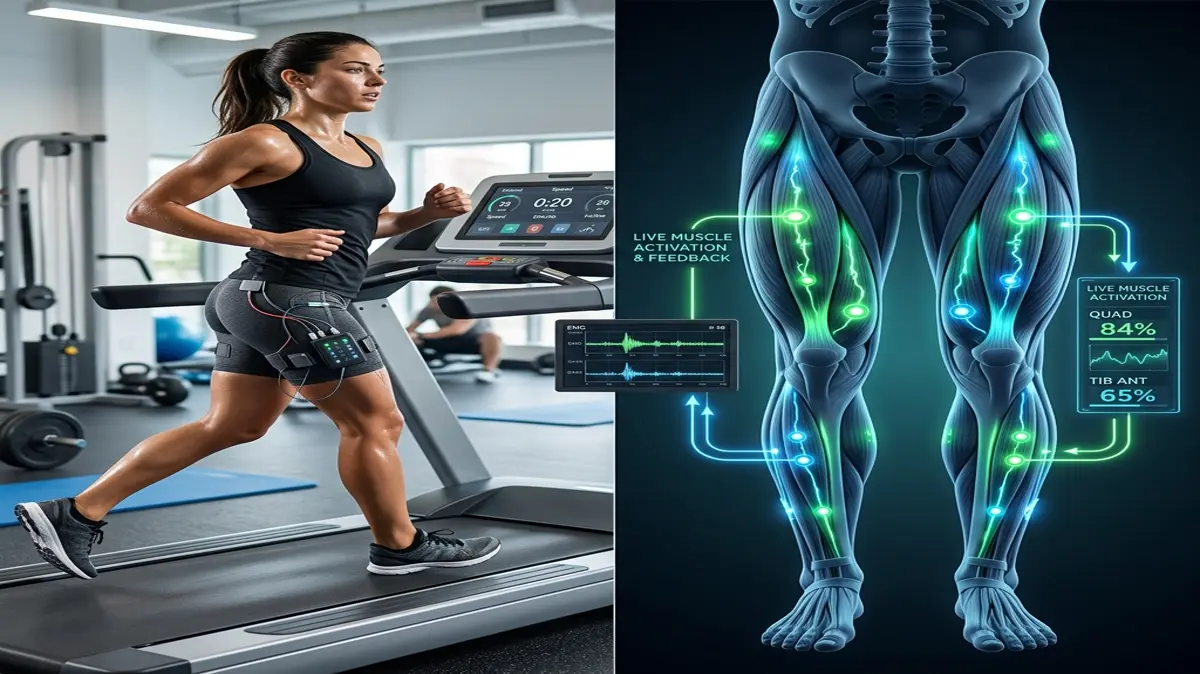
"Rehabilitation is as much a neural retraining process as it is a muscular one. By translating the silent electrical activity of muscles into immediate visual data, smart wearables allow patients to actively re-engage their motor pathways."
The integration of technology into physical therapy has entered a new era with the rise of smart garments incorporating electromyography (EMG). These wearable sensors allow therapists and patients to track muscle recruitment patterns in real time. This biofeedback is changing the way we approach gait rehabilitation and neurological recovery.
Traditional rehabilitation often relies on manual palpation and visual observation to assess muscle function. While valuable, these methods cannot quantify the exact timing or intensity of muscle firing. EMG wearables provide objective data, allowing for precise adjustments to movement patterns during exercise.
Accelerating motor recovery requires addressing the exact connection between the brain and muscle. By using real-time biofeedback and targeted EMG wearable technology reconditioning, we can guide patients toward optimal movement mechanics.
This article reviews the clinical science of wearable EMG, the benefits of biofeedback, and its applications in gait and motor rehabilitation.
The Clinical Science of Wearable EMG and Neuromuscular Recruitment
Electromyography measures the electrical signals generated by muscle fibers when they are stimulated by the nervous system. When a nerve impulse arrives at the muscle, it triggers a cascade of chemical and electrical events that cause the muscle to contract. Wearable EMG sensors place small, non-invasive electrodes directly on the skin to detect these micro-volt signals.
The sensor amplifies and filters the signal, converting the raw electrical noise into a clean stream of muscle activation data. In a clinic, this data allows therapists to see exactly which muscles are firing, when they fire during a movement cycle, and how much force they generate. This level of detail is especially useful for identifying compensation patterns.
For example, following a knee injury, the quadriceps often underperform due to pain-induced inhibition, while the hamstrings overwork to compensate. EMG wearables show this imbalance clearly on a clinical screen, prompting the patient to make immediate adjustments. This targeted feedback helps restore normal firing patterns, protecting the joints from uneven loads.
Neuromuscular coordination issues are present in up to 80% of patients recovering from major joint surgeries. Furthermore, delayed muscle activation is a primary contributor to chronic gait instability in stroke survivors. Resolving these motor deficits requires retraining the brain to fire the correct muscles at the correct time.
Key clinical parameters tracking motor learning and gait correction through tech:
- 1Activation DelayEMG wearables can detect muscle firing delays as small as 10 milliseconds, guiding precise timing corrections.
- 2Motor Learning SpeedReal-time biofeedback accelerates the acquisition of new motor skills by up to 40% compared to standard exercise.
- 3Compensatory ReductionVisual biofeedback reduces compensatory hip hiking during walking in stroke patients by 30% within 4 weeks.
- 4Clinical EfficacyOver 85% of physical therapists report improved patient engagement when using wearable biofeedback tech.
The Clinical Opinion: Active Tech Biofeedback vs. Verbal Cues
"In my clinical opinion, real-time EMG biofeedback is significantly more effective than verbal movement cues. While telling a patient to 'squeeze their quadriceps' is helpful, it relies on their subjective feeling of contraction. Showing them an active graph on a screen that rises when they fire the correct muscle provides immediate, objective confirmation, speeding up the neurological retraining process."
Verbal cues can be misinterpreted, especially by patients with neurological damage or chronic pain. Visual biofeedback bypasses these communication barriers by providing direct, objective data. The patient can see the immediate result of their effort, which helps reinforce the correct neural pathway.
Additionally, wearable EMG sensors can be used outside the clinic, allowing patients to receive biofeedback during home exercises. This constant guidance ensures that exercises are performed correctly, preventing the development of bad habits and reducing the risk of re-injury. The technology serves as a digital assistant to support the recovery process.
Multi-Stage Biofeedback Rehabilitation Protocol
Integrating EMG wearables into a rehabilitation program requires a progressive approach that moves from simple muscle activation to complex functional movements.
Phase 1: Isolated Muscle Activation and Biofeedback Calibration (Weeks 1-2)
The early phase focuses on calibrating the sensors, establishing baseline activation levels, and introducing isolated muscle control. The athlete performs basic exercises, such as quad sets or glute squeezes, while watching the EMG screen.
The therapist sets visual targets on the screen based on the uninjured limb's activation. The athlete performs controlled contractions, aiming to reach the target line and hold for 5 seconds. This exercise is performed in 3 sets of 10 repetitions.
Sensor placement is standardized to ensure consistent data across sessions. We monitor the relative activation of the target muscle and any compensatory muscle groups. Restoring isolated muscle activation is the first step toward complex movement retraining.
Phase 2: Dynamic Movement Training and Gait Correction (Weeks 3-5)
Once isolated muscle control is established, we progress to dynamic exercises and walking drills. The athlete wears the EMG sensors during squats, lunges, and stepping exercises. The biofeedback focus transitions from raw force to coordination and timing.
Gait analysis is performed on a treadmill, tracking the firing sequence of the quadriceps, hamstrings, and calves. The app provides auditory alerts if a muscle fires too late or fails to reach the required activation threshold during the swing phase.
The athlete performs walking drills, making immediate adjustments based on the alerts to correct limp or compensatory movements. These drills are performed for 15 minutes three times weekly, building endurance in the correct walking patterns.
Phase 3: High-Velocity Movement and Functional Independence (Weeks 6-8)
The final phase focuses on maintaining optimal muscle recruitment during high-speed, sports-specific movements. The athlete performs jumping, landing, and rapid directional changes while wearing the EMG sensors. The biofeedback app tracks dynamic joint stability.
The therapist reviews the data post-session to identify any muscle firing delays during high-impact landings. We focus on ensuring symmetric activation between the injured and uninjured limbs. Progressive loading is adjusted based on muscle performance.
The athlete transitions to independent home training, utilizing the wearables to maintain movement quality during daily routines. Follow-up clinical sessions are scheduled bi-weekly to monitor progress and adjust target thresholds as the athlete recovers.
Integrating the Kinetic Chain with Smart Technology
An isolated muscle weakness always impacts the wider kinetic chain. A delayed quadriceps contraction during landing forces the knee to absorb excessive impact, leading to patellar tendon strain and hip compensation. This compensation can cause lower back stiffness over time.
To prevent these kinetic chain issues, the rehabilitation program utilizes multi-sensor configurations to monitor both the hip and knee stabilizers. Ensuring coordinated activation across the entire lower limb protects the joints from abnormal stress. Smart technology is the key to achieving complete, balanced recovery.
For more technological and rehabilitation guidelines, read our detailed guides on VR mirror therapy in neuro-rehab, stroke rehabilitation and neuroplasticity, and neurological motor recovery protocols. To understand athletic biomechanics and muscle activation, view our analyses of AI robotic exoskeleton rehabilitation, Simone Biles' vestibular biomeception, and Jeremy Renner's trauma rehab. You can also review smart wearables HRV tracking and sleep analysis.
Featured image attribution: Left panel displays an athlete performing rehab exercises while wearing smart EMG-sensor shorts. Right panel shows a clinical 3D digital illustration illustrating real-time neuromuscular biofeedback loops and muscle activation signals. Modified by cropping and compositing.
Dr. Dhanushika Dilshani
Expert Ayurvedic Wellness Doctor. Specialized in modern holistic wellness, optimizing dermal resilience, cosmetic radiance, and systematic diagnosis driven by traditional and evidence-based medical logic.
Medical Disclaimer
The information provided by AyurPhysio is for general educational and informational purposes only. It is not intended as a substitute for professional medical advice, diagnosis, or treatment. Always seek the advice of your physician or other qualified health providers with any questions you may have regarding a medical condition. Never disregard professional medical advice or delay in seeking it because of something you have read on this website.
Trending Guides
Luka Modrić's Daily Routine: Low-Impact Resistance Training and Midfield Longevity
4 min readHarry Kane's Daily Routine: Hamstring Preservation and Anti-Inflammatory Nutrition
4 min readKarim Benzema's Daily Routine: Cupping Therapy (Hijama) and HIIT Conditioning
4 min readNeymar Jr.'s Daily Routine: Joint Stabilization and Hyperbaric Oxygen Therapy
4 min readMohamed Salah's Daily Routine: Early Morning Conditioning and Hyperbaric Recovery
4 min readWeekly Wellness
Don't miss the next guide
Get holistic health tips and new guides delivered to your inbox.
Related Healing Guides
View All Guides →
Luka Modrić's Daily Routine: Low-Impact Resistance Training and Midfield Longevity
Harry Kane's Daily Routine: Hamstring Preservation and Anti-Inflammatory Nutrition