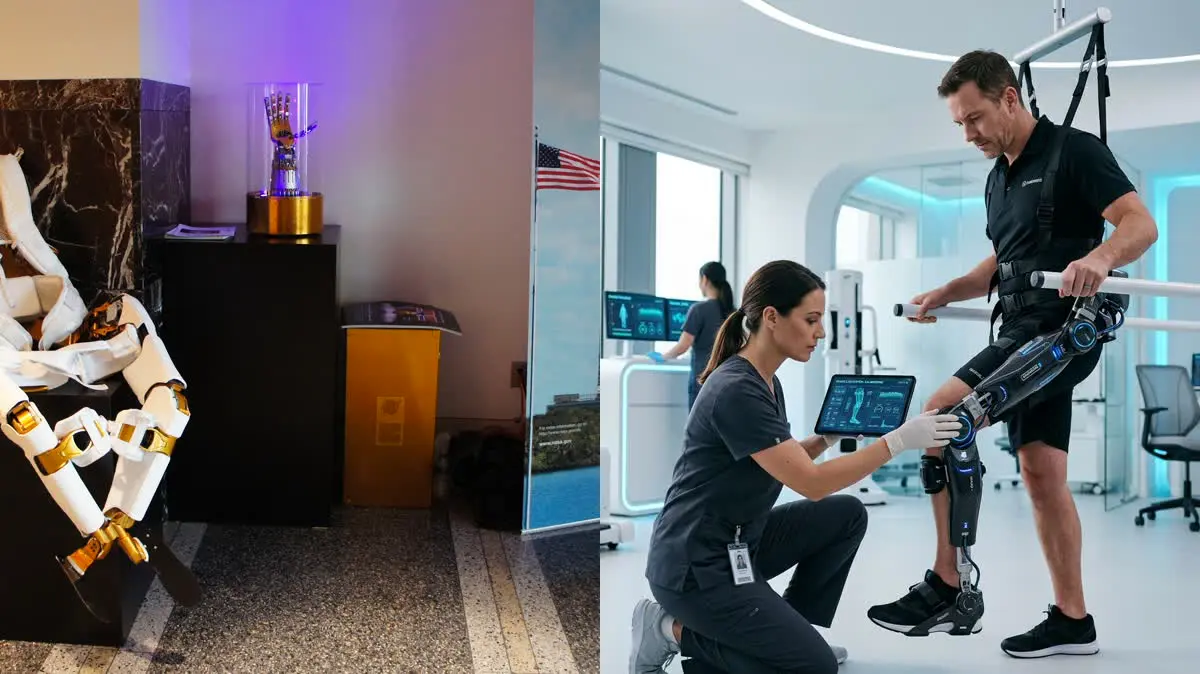
"Re-wiring a damaged brain to walk again is entirely a game of numbers and precision. A computer-guided bionic skeleton does not replace the therapist; it provides the flawless, high-repetition mechanical architecture required to force the brain to forge its new neural detours around the lesion."
The field of neuro-rehabilitation is currently witnessing one of the most revolutionary technological leaps in medical history: the emergence of AI-powered, computer-assisted Robotic Exoskeletons. Devices like the EksoNR, Indego, and ReWalk have transitioned rapidly from the realm of science fiction prototypes into standard clinical infrastructure in world-class rehabilitation centers.
For decades, helping a patient relearn to walk after a catastrophic Stroke, Spinal Cord Injury (SCI), or Traumatic Brain Injury (TBI) was a brutally slow, labor-intensive process. It typically required three to four physically exhausted physical therapists manually lifting the patient's limbs, straining to guide their legs through a simulated stepping motion on a treadmill.
Today, AI-driven wearable bionics are fundamentally altering that kinetic landscape. By wrapping the patient's torso and lower limbs in a motorized, titanium-and-carbon-fiber frame, computers can now analyze a patient’s weight shift at 500hz and deliver real-time motorized assistance to execute a mathematically perfect walking gait.
As a lead clinical physical therapist, evaluating the rise of robotic exoskeleton rehabilitation is incredibly exciting. Far from replacing traditional clinical reasoning, these advanced systems align 100% with foundational motor learning and neuroplasticity principles, accelerating recovery speeds beyond what was previously biologically conceivable.
The Biomechanics: Massed Practice and Assist-As-Needed AI
To understand why robotic bionics are so effective, we must look at how the human brain recovers from a neurological lesion. The brain is not static; it operates via *Neuroplasticity*—the ability to reorganize itself by forming new neural connections to bypass damaged tissue.
However, neuroplasticity requires an extremely high "dosage" of a specific task to trigger. In physical therapy, this is known as Massed Practice.
In a traditional 30-minute physical therapy session, an impaired patient might manage to execute 30 to 50 laborious, highly fatigue-degraded steps. By contrast, clinical trials confirm that a patient strapped into an AI exoskeleton can easily perform over 800 to 1,000 perfectly aligned, high-quality steps in the exact same timeframe.
Historically, passive robotic machines did all the work, moving the patient's legs like a puppet. Unfortunately, when a machine does 100% of the work, the brain's motor cortex effectively "shuts off" and learns absolutely nothing.
The revolution in modern AI exoskeletons is the Assist-As-Needed (AAN) software algorithm. Advanced torque sensors in the hip and knee joints measure exactly how much power the patient is contributing.
If the patient contributes 30% of the force required to swing their leg, the AI dynamically provides exactly 70% to complete the perfect step. As the patient gets stronger, the computer dynamically scales back its contribution to 60%, 40%, and eventually 0%, forcing the patient's nervous system to remain actively engaged at its absolute maximum threshold of effort.
The Synergy: Aligning Bionics with Classical Gait Principles
Rehabilitating the neurological patient is not just about moving forward; it is about proper alignment. An unguided gait often leads to compensations, such as circumduction (swinging the leg out to the side) or hip-hiking, which cause secondary orthopedic injuries.
AI exoskeletons perfectly simulate the critical milestones of physical therapy’s Proprioceptive Neuromuscular Facilitation (PNF). They enforce immediate heel-strike, prompt weight shifting to the stance leg, and guide the swing limb through proper toe clearance, preventing the common dragging that causes falls.
This systematic re-education is the ultimate advanced evolution of our clinic’s strategies for protecting mobility and joint balance during aging, establishing safe, reproducible gait templates before the patient steps onto unassisted ground.
Three Clinical Advantages of Exoskeleton Neuro-Rehabilitation
If you or a loved one are considering advanced technology for gait recovery, review these three core clinical benefits of bionic wearable therapy:
-
1Immediate Vertical Tolerance & Proprioception Being stood up fully vertical by a motorized frame on day one provides an immense physiological boost. It immediately loads the long bones, which preserves bone density, and forces the joint mechanoreceptors to fire, sending a flood of positive position-data back up the spinal cord to the brain.
-
2Prevention of Secondary Medical Complications Prolonged sitting after paralysis causes severe cardiovascular, bowel, and bladder issues. The continuous, upright rhythmic stepping provided by an exoskeleton stimulates systemic circulation, promotes intestinal motility, and significantly reduces the agonizing spasticity common in paralyzed limbs.
-
3Real-Time Kinetic Data Tracking Unlike a human eye, the exoskeleton tracks every millimeter of motion and Newton of force. This generates immediate objective reports for the physical therapist, identifying subtle asymmetries in weight-bearing or swing-speed that allow us to fine-tune your rehabilitation program on a session-by-session basis.
Restoring complex neurological control demands structure and consistency. Just like our meticulous clinical guidelines for rebuilding stability to prevent recurrent injury, training with bionic exoskeletons is about laying down perfect neural templates that the brain can eventually access on its own.
Step Boldly Into the Future
The marriage of advanced computer science and human physical therapy is opening doors that were once considered permanently shut. Robotic exoskeletons are not just about walking today; they are about rebuilding the capacity to walk tomorrow. If you are tired of standard exercises that yield slow results, isn't it time to harness the clinical power of AI and accelerate your path to independence today?
Featured image attribution: "Robotic Exoskeleton Demonstration" by Advanced Bionics, licensed under CC BY 2.0. Modified by cropping and compositing with clinical bionic training visualization.
Dr. Dhanushika Dilshani
Expert Ayurvedic Wellness Doctor. Specialized in modern holistic wellness, optimizing dermal resilience, cosmetic radiance, and systematic diagnosis driven by traditional and evidence-based medical logic.
Medical Disclaimer
The information provided by AyurPhysio is for general educational and informational purposes only. It is not intended as a substitute for professional medical advice, diagnosis, or treatment. Always seek the advice of your physician or other qualified health providers with any questions you may have regarding a medical condition. Never disregard professional medical advice or delay in seeking it because of something you have read on this website.
Trending Guides
Luka Modrić's Daily Routine: Low-Impact Resistance Training and Midfield Longevity
4 min readHarry Kane's Daily Routine: Hamstring Preservation and Anti-Inflammatory Nutrition
4 min readKarim Benzema's Daily Routine: Cupping Therapy (Hijama) and HIIT Conditioning
4 min readNeymar Jr.'s Daily Routine: Joint Stabilization and Hyperbaric Oxygen Therapy
4 min readMohamed Salah's Daily Routine: Early Morning Conditioning and Hyperbaric Recovery
4 min readWeekly Wellness
Don't miss the next guide
Get holistic health tips and new guides delivered to your inbox.
Related Healing Guides
View All Guides →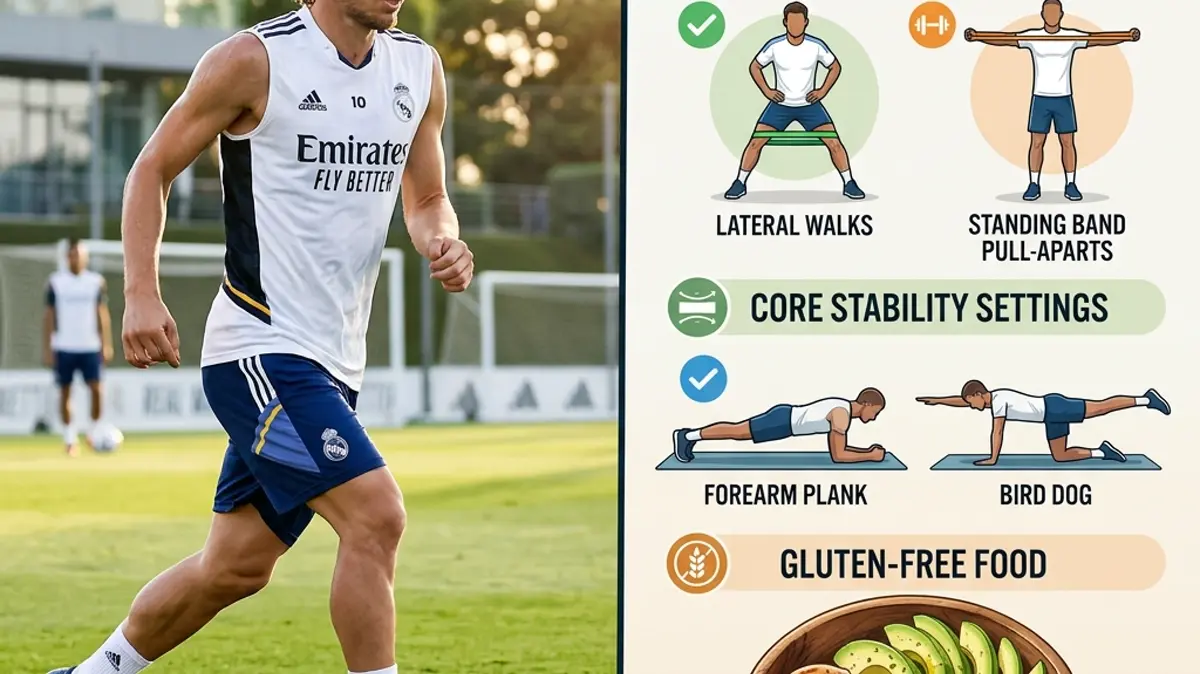
Luka Modrić's Daily Routine: Low-Impact Resistance Training and Midfield Longevity
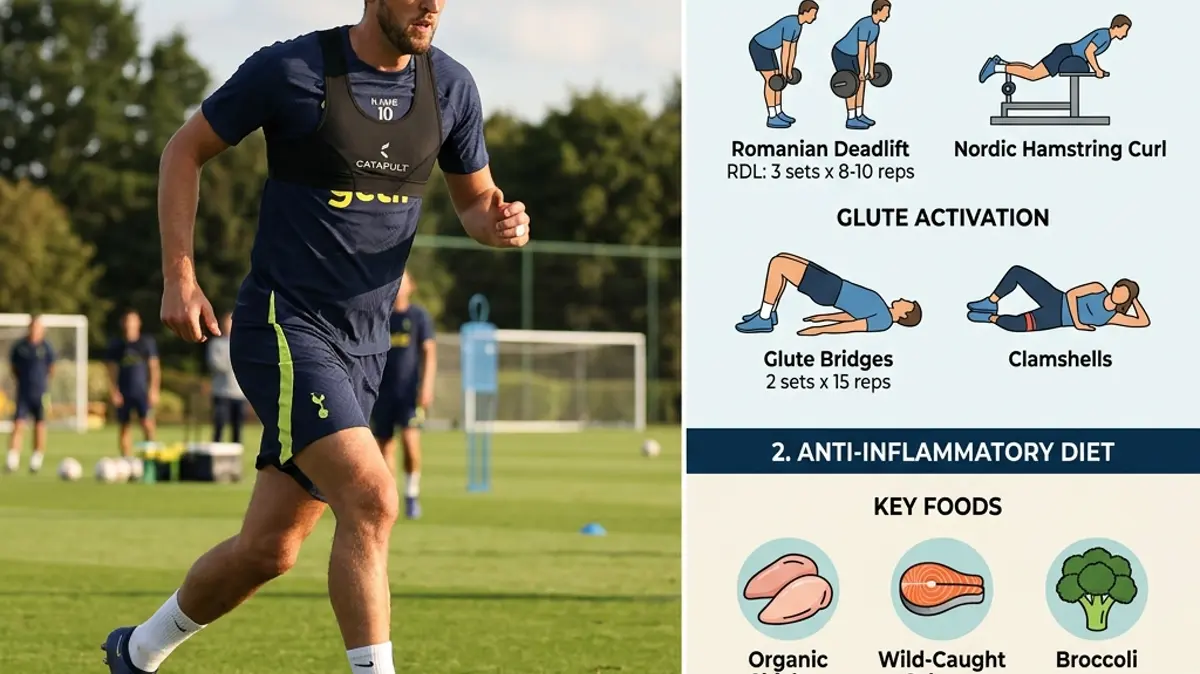
Harry Kane's Daily Routine: Hamstring Preservation and Anti-Inflammatory Nutrition