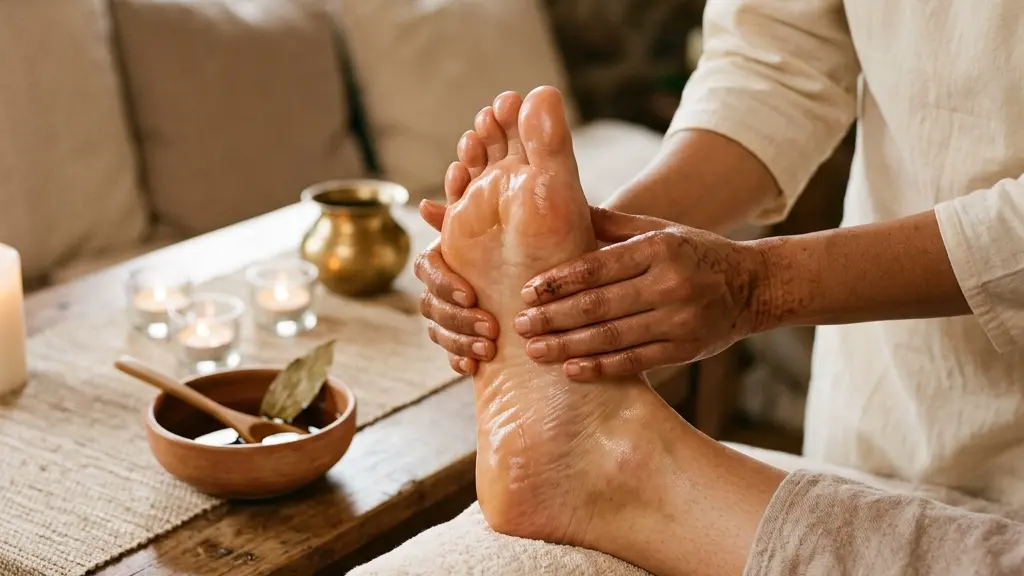
"Stretching a cold, dry plantar fascia is the physiological equivalent of pulling a dried-out rubber band—it will snap and tear instead of extending. An inflamed heel is your body's way of telling you that the tissue is running on dry friction."
If taking your first steps out of bed in the morning feels like stepping onto a sharp metal nail, or if walking after a period of rest triggers a throbbing pain in your heel, you are dealing with plantar tissue irritation. This common condition causes micro-tearing, localized stiffness, and persistent discomfort that impacts your daily gait. In Ayurveda, this localized stiffness is recognized as a manifestation of vitiated Vata dosha, which is naturally dry, cold, and rigid.
Many individuals attempt to resolve this by rolling their foot on ice bottles daily or using hard orthotics. While these methods mask the pain temporarily, they reduce blood flow and dry out the tissue further. Applying cold to a rigid plantar fascia decreases local blood circulation and increases tissue stiffness, directly worsening Vata dosha and making the fibers more brittle.
To restore comfortable walking, you must soften the rigid tissue and pacify Vata in the lower limbs. By utilizing traditional warm foot abhyanga (Padabhyanga), you can lubricate the deep fascial planes, soothe the localized nerve endings, and eliminate morning heel pain naturally.
The Pathophysiology of Plantar Tension: A Vata Imbalance
The plantar fascia is a thick band of connective tissue running along the bottom of your foot, connecting the heel bone to the toes. It plays a critical role in maintaining your foot arch and absorbing shock during movement. When Vata dosha accumulates in the lower limbs, it dries out the natural moisture of the fascia, making the fibers brittle.
When you place weight on the dry tissue after hours of rest, it fails to stretch and sustains microscopic tears at the heel attachment. This triggers a protective spasm in the surrounding foot muscles, worsening the stiffness. To resolve this, you must implement a structured plantar fasciitis ayurvedic treatment that focuses on warming and lubricating the sole of the foot.
"Using standard mineral oils for foot massage is clinically ineffective because they do not penetrate the skin. You must use warm, herb-infused sesame oil, such as Mahanarayan Oil or Ksheerabala Oil, which contains Vata-pacifying herbs like Ashwagandha and Bala. The sesame base carries these nutrients deep into the dry tissues, restoring flexibility."
The Padabhyanga Protocol for Heel Stiffness
To restore tissue elasticity and eliminate morning stiffness, perform these traditional steps daily:
- 1Oil Warm-upWarm 2 tablespoons of Mahanarayan or Ksheerabala taila in a warm water bath. Warming the oil is essential as heat pacifies Vata and helps the active herbal compounds penetrate the tough skin on the sole of the foot.
- 2Foot Abhyanga (Padabhyanga)Massage the warm oil deeply into the sole of your foot, focusing on the arch and heel bone attachment. Use firm, circular strokes on the joints and heel, and long sweeps along the fascia for 5 to 10 minutes. This mechanical action relaxes the muscle fibers and calms local nerve endings.
- 3Moist Heat Therapy (Swedana)After the massage, dip your feet in a basin of warm water infused with a pinch of salt for 10 minutes. The warmth helps the oil penetrate deeper into the joints, further reducing Vata-induced stiffness and clearing metabolic wastes. Perform this nightly before bed.
The Patient: Clara, a 42-year-old nurse, presented with severe stabbing heel pain during her first steps out of bed and after long shifts.
The Mistake: Clara rolled her foot on ice daily, which constricted blood flow and dried out her plantar fascia, causing her morning pain to worsen.
The Solution: We replaced ice rolling with nightly warm Padabhyanga oil massage using Mahanarayan oil, combined with local warm baths and a Vata-pacifying lifestyle.
The Outcome: Within six weeks, Clara reported complete resolution of morning heel pain and was able to work 12-hour shifts comfortably.
Restore Full Foot Agility Safely
Softening the dry fascial tissues with warm herbal oil is the most effective way to resolve plantar stiffness. By focusing on Vata-pacifying daily routines, you can support long-term heel comfort and prevent recurrence.
For adjacent healing guides, check out our guide on plantar fasciitis and posterior chain release. If you are selecting oils for systemic joints, explore our comparison of Mahanarayan, Ksheerabala, and Karpooradi oils. For general joint swelling, see our guidelines on clearing Ama-Vata inflammation.
Featured image: Traditional foot massage (Padabhyanga) with warm medicated oils in an Ayurvedic clinical setting. Created for AyurPhysio editorial use.
Dr. Dhanushika Dilshani
Expert Ayurvedic Wellness Doctor. Specialized in modern holistic wellness, optimizing dermal resilience, cosmetic radiance, and systematic diagnosis driven by traditional and evidence-based medical logic.
Medical Disclaimer
The information provided by AyurPhysio is for general educational and informational purposes only. It is not intended as a substitute for professional medical advice, diagnosis, or treatment. Always seek the advice of your physician or other qualified health providers with any questions you may have regarding a medical condition. Never disregard professional medical advice or delay in seeking it because of something you have read on this website.
Trending Guides
Luka Modrić's Daily Routine: Low-Impact Resistance Training and Midfield Longevity
4 min readHarry Kane's Daily Routine: Hamstring Preservation and Anti-Inflammatory Nutrition
4 min readKarim Benzema's Daily Routine: Cupping Therapy (Hijama) and HIIT Conditioning
4 min readNeymar Jr.'s Daily Routine: Joint Stabilization and Hyperbaric Oxygen Therapy
4 min readMohamed Salah's Daily Routine: Early Morning Conditioning and Hyperbaric Recovery
4 min readWeekly Wellness
Don't miss the next guide
Get holistic health tips and new guides delivered to your inbox.
Related Healing Guides
View All Guides →
Tulsi (Holy Basil): The Premier Adaptogenic Herb for Respiratory Strength and Emotional Balance

Amalaki (Amla): The Premier Ayurvedic Superfood of Rejuvenation and Natural Vitamin C