Plantar Fasciitis: Releasing the Posterior Chain and Intrinsic Foot Muscles
“Treating Plantar Fasciitis purely by rubbing the bottom of the foot is like fixing a tight violin string by tinkering only with the bridge. You must look all the way up the neck—the entire posterior chain—to release the tension.”
Stepping out of bed and immediately feeling as if an electric rusty nail has shot up through your heel is a distinct, gut-wrenching trauma. For millions of runners and service workers, that "first step" agony signifies the rigid onset of Plantar Fasciosis, commonly known as plantar fasciitis.
Standard medicine will tell you to wear restrictive foam boots, inject cortisol, or blindly roll your foot on an iced water bottle forever. Yet, most find themselves six months later, still limping, desperate for the next temporary patch.
But most people miss the hidden catalyst for this inflammation. The plantar fascia does not exist in isolation; it is the continuous terminal end of the Superficial Back Line. If your hamstrings and calves are locked, your foot is physically being ripped upward from behind like a tightly cranked cable winch.
The Chain Reaction: Why the Calf Rules the Heel
The gastrocnemius (calf muscle) fuses directly into the Achilles tendon, which then wraps underneath the calcaneus (heel bone) to form the beginning of the plantar fascia.
Science confirms this anatomical continuum. Research reveals that individuals with restricted ankle dorsiflexion—inability to pull the toes backward—have an almost 23x higher risk rate of developing persistent plantar fasciitis.
Stop Rolling, Start Rebuilding
Endlessly rolling the sore arch on a lacrosse ball feels "good," but my strong professional opinion is that you are simply desensitizing a dying nerve pathway while further injuring the torn fascial fibers. Genuine plantar fasciitis treatment demands Heavy Slow Resistance (HSR) training to build collagen load capacity, not passive compression.
This localized structural vulnerability mirrors other kinetic chain breakdowns, much like how meniscus tears are often caused by unstable hip mechanics rather than purely local knee failure.
Three Crucial Moves to Break the Cycle
To definitively resolve intrinsic foot muscle constraints and unlock the back line, apply this 3-phase reset daily.
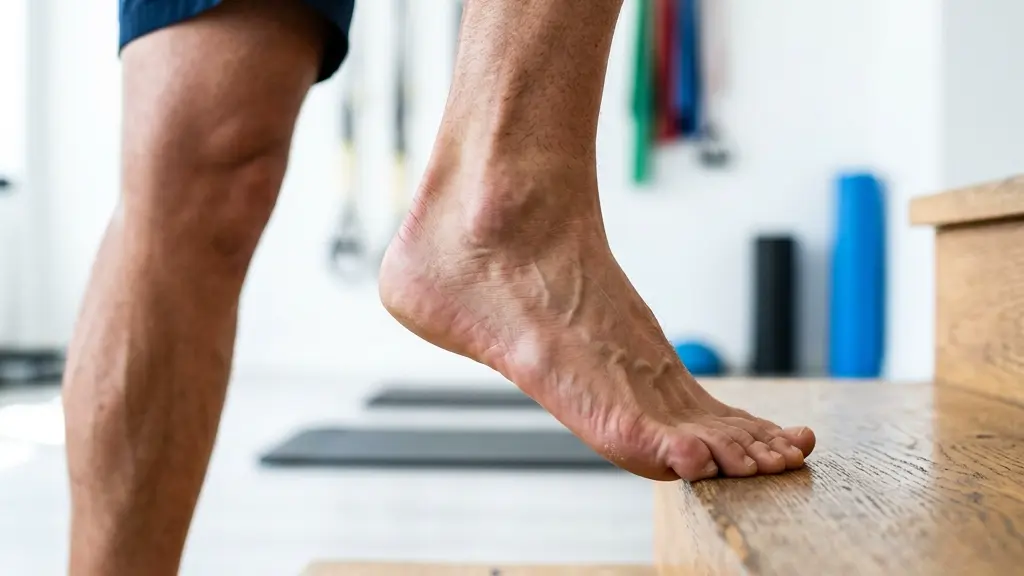
- Phase 1: The Rathleff Protocol (Big Toe Heel Raises): Place a rolled-up towel under your toes to force the big toe into extension. Perform slow 3-second-up, 2-second-hold, 3-second-down single-leg heel raises on the edge of a step. This explicitly forces the plantar fibers to absorb high mechanical tension and remodel correctly.
- Phase 2: Solar Plexus Hamstring Flossing: Lie on your back and pull one leg toward your chest. Keeping the leg vertical, dynamically pump your ankle up and down 20 times. This separates the sciatic nerve fibers from the tight hamstring sheaths, releasing the superior tension.
- Phase 3: Towel Crunches & Toe Spreading: Place a light towel on the floor and use solely your bare toes to scrunch it toward you. This reactivates the small intrinsic muscles underneath the foot that have "switched off," allowing them to actually hold up your arch and share the load.
👤 Patient Spotlight: Julian's Morning Agony
The Patient: Julian, 48, a weekend runner who considered quitting sports due to stabbing pain making his first 10 minutes of walking every day agonizing.
The Mistake: He wore excessively padded shoes 24/7, which let his foot arch muscles completely atrophy and weaken further.
The Solution: Switched to minimalist shoes around the house, introduced Rathleff loading on a step 3x weekly, and focused explicitly on calf mobilization.
The Outcome: Within 5 weeks, his morning symptoms dropped by 90%. He successfully completed a pain-free 5k run by the eighth week of protocol adherence.
Long-Term Foot Resilience
Your feet are dynamic masterpieces composed of 26 bones and thousands of nerve endings. Locking them in stiff casts and masking the feedback loops guarantees failure.
Apply high-load tension intelligently. Stretch the chain, not just the symptom. Are you going to keep hobbling every morning, or will you step firmly onto the path toward kinetic resilience today?
Irushi Abeywardhana
Senior Physiotherapist & Founder of Physio Pulse. Senior Clinical Physiotherapist passionate about blending advanced movement science with functional resilience.
Medical Disclaimer
The information provided by AyurPhysio is for general educational and informational purposes only. It is not intended as a substitute for professional medical advice, diagnosis, or treatment. Always seek the advice of your physician or other qualified health providers with any questions you may have regarding a medical condition. Never disregard professional medical advice or delay in seeking it because of something you have read on this website.
Trending Guides
Luka Modrić's Daily Routine: Low-Impact Resistance Training and Midfield Longevity
4 min readHarry Kane's Daily Routine: Hamstring Preservation and Anti-Inflammatory Nutrition
4 min readKarim Benzema's Daily Routine: Cupping Therapy (Hijama) and HIIT Conditioning
4 min readNeymar Jr.'s Daily Routine: Joint Stabilization and Hyperbaric Oxygen Therapy
4 min readMohamed Salah's Daily Routine: Early Morning Conditioning and Hyperbaric Recovery
4 min readWeekly Wellness
Don't miss the next guide
Get holistic health tips and new guides delivered to your inbox.
Related Healing Guides
View All Guides →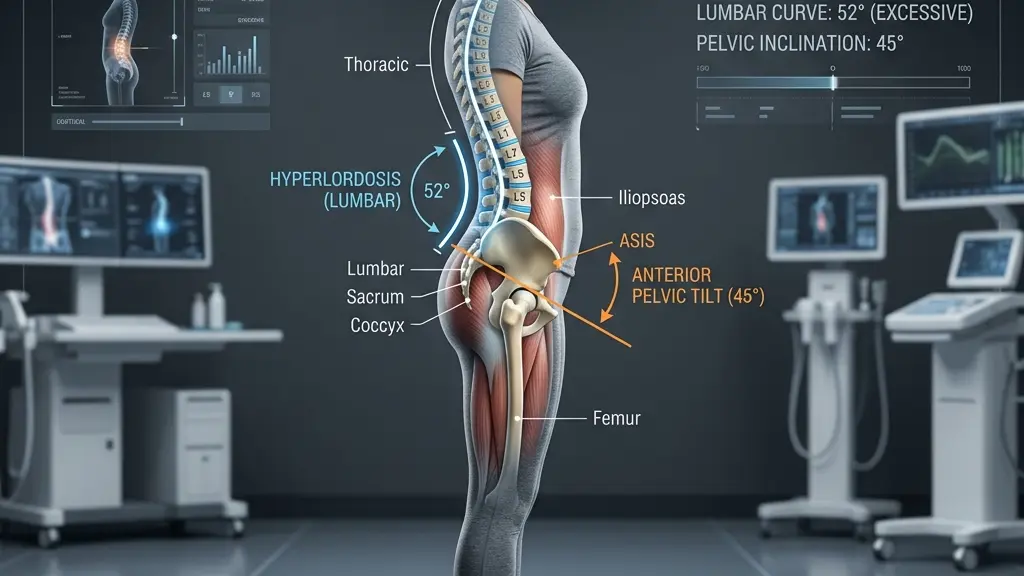
Hyperlordosis: Tailoring Exercise Programs to Reduce Lumbar Shear Stress

Morning Lower Back Stiffness: The Biomechanical Causes and Quick, Safe Fixes