Nerve Flossing Techniques for Sciatic Nerve Mobilization
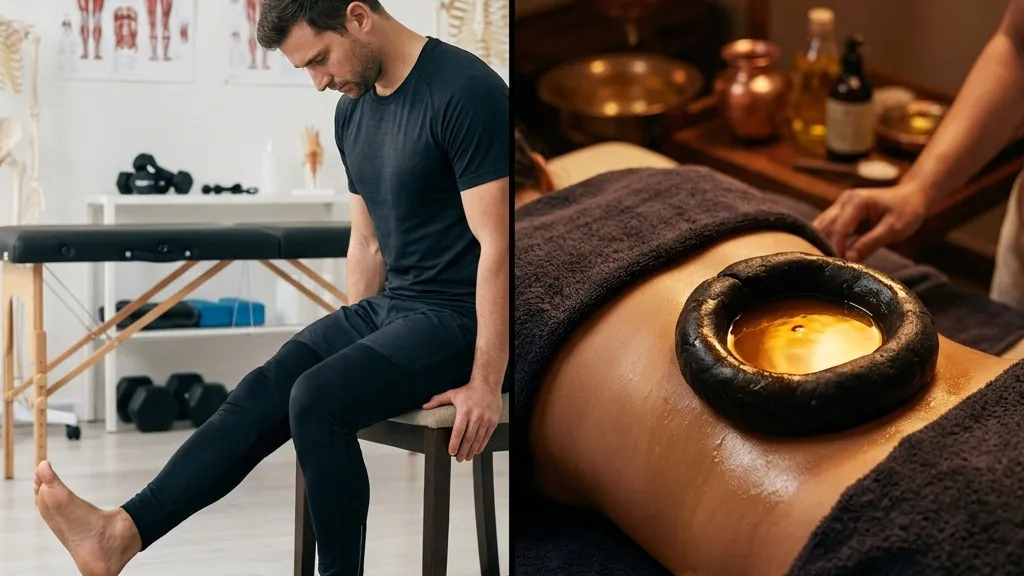
"Trying to stretch a pinched sciatic nerve is like pulling on a stuck thread in a wool sweater—the harder you pull, the tighter the knot gets and the more you damage the fabric."
If you experience a sharp, burning pain shooting from your lower back down the back of your leg to your foot, you are dealing with nerve irritation. To many, the immediate response is to stretch the hamstrings, hoping to release the tightness.
However, when a nerve is pinched or inflamed, placing it under tension simply irritates the nerve root further, worsening your symptoms. In clinical physical therapy, the gold standard for restoring neural mobility is using nerve flossing techniques.
By alternately tensioning one end of the nerve path while relaxing the other, we can gently glide the nerve back and forth through its surrounding tissue sheath. This dynamic movement reduces friction, increases blood flow, and provides fast sciatic pain relief exercises.
The Biomechanics of Flossing: Nerve Gliding vs. Tensioning
To understand why nerve flossing works, we must examine the anatomy of the nervous system. Your sciatic nerve is the largest nerve in the human body, originating in the lumbar spine and running down to the toes.
In a healthy body, the sciatic nerve can slide up to 20 mm (about 0.8 inches) within its tissue sheath during movement.
Aggressive stretching of a pinched nerve root triggers a protective spasm response:
- Hamstring Stretch Load: Symmetrical hamstring stretching doubles the mechanical tension on a pinched sciatic nerve.
- Nerve Gliding Efficacy: Active nerve flossing can reduce sciatic nerve pain sensitivity by up to 40%.
- Oxygen Restoration: Restoring glide flushes local acidic chemicals and improves micro-circulation within the nerve sheath.
This is why passive hamstring stretching is counter-productive. By pulling on both ends of the nerve simultaneously, you compress the nerve root against the herniated disc, worsening the irritation.
Why Your Hamstring Stretches are Worsening Your Sciatica
When patients feel shooting pain down their leg, their immediate reaction is to perform deep forward folds or leg-up-on-a-bench hamstring stretches. They hold these stretches, attempting to force the tight leg muscles to relax.
My decisive clinical opinion is that aggressively stretching a pinched sciatic nerve is a serious clinical error—nerves are not elastic muscles and they hate tension. Pulling on an irritated nerve triggers a protective spasm in the surrounding muscles to prevent further stretch. To find relief, you must discard static stretches and use dynamic nerve flossing to glide the nerve smoothly.
This technique is a core part of clinical nerve decompression protocols. It is also important to differentiate whether your symptoms stem from a disc issue or muscle compression; see our guide on sciatica vs piriformis syndrome. Once the nerve sensitivity is reduced, you must build active core stability to prevent future flare-ups.
The Patient: Sandra, a 43-year-old dental hygienist, presented with burning pain and tingling shooting from her lower back down to her calf, making sitting at her stool excruciating.
The Mistake: Sandra was doing deep forward folds and hamstring stretches daily, which flared her symptoms for 24 hours afterward.
The Solution: We stopped all static stretches, introduced seated sciatic nerve flossing, and stabilized her pelvic core alignment.
The Outcome: Within 3 weeks, Sandra experienced a 90% pain reduction, stopped taking anti-inflammatories, and returned to comfortable work shifts.
Three Clinical Sciatic Nerve Flossing Exercises
To restore sciatic nerve glide, reduce leg pain, and eliminate lower back stiffness, perform these three clinical exercises daily:
-
1The Seated Sciatic Nerve Glider (The "Kick and Look Up") Sit tall on a chair. Gently extend your right knee, bringing your leg out straight in front of you, while simultaneously tilting your head back to look at the ceiling. Then, slowly bend your knee to return your foot to the floor while tucking your chin down toward your chest. Perform 15 slow repetitions. This pulls the nerve toward the head while relaxing the foot end, then pulls it toward the foot while relaxing the head end—allowing it to glide smoothly.
-
2The Supine Hamstring Nerve Slider Lie flat on your back. Clasp both hands behind your thigh, holding your knee bent at 90 degrees. Point your toes up toward the ceiling. Slowly straighten your knee as far as comfortable until you feel a light stretch (not pain), then flex your ankle to point your toes back toward the shin. Lower the leg and repeat. Perform 3 sets of 10 repetitions. This targets lower leg nerve mobility.
-
3The Sidelying Sciatic Glider Lie on your side with your bottom leg bent for support. Hold the thigh of your top leg with both hands. Slowly extend your knee while pointing your toes away from you, then bend your knee while flexing your ankle toward your shin. Perform 10 controlled repetitions. This side-lying position is excellent for acute flare-ups as it minimizes spine loading.
Unlocking Neural Mobility
Your nervous system requires movement and space to function. When a nerve is pinched by a disc or muscle, stretching it aggressively simply worsens the local inflammation and triggers protective muscle spasms.
By prioritizing dynamic nerve flossing, practicing active glute activation, and maintaining core stability, you can restore sciatic nerve mobility, eliminate radiating pain, and walk with complete freedom.
Irushi Abeywardhana
Senior Physiotherapist & Founder of Physio Pulse. Senior Clinical Physiotherapist passionate about blending advanced movement science with functional resilience.
Medical Disclaimer
The information provided by AyurPhysio is for general educational and informational purposes only. It is not intended as a substitute for professional medical advice, diagnosis, or treatment. Always seek the advice of your physician or other qualified health providers with any questions you may have regarding a medical condition. Never disregard professional medical advice or delay in seeking it because of something you have read on this website.
Trending Guides
Luka Modrić's Daily Routine: Low-Impact Resistance Training and Midfield Longevity
4 min readHarry Kane's Daily Routine: Hamstring Preservation and Anti-Inflammatory Nutrition
4 min readKarim Benzema's Daily Routine: Cupping Therapy (Hijama) and HIIT Conditioning
4 min readNeymar Jr.'s Daily Routine: Joint Stabilization and Hyperbaric Oxygen Therapy
4 min readMohamed Salah's Daily Routine: Early Morning Conditioning and Hyperbaric Recovery
4 min readWeekly Wellness
Don't miss the next guide
Get holistic health tips and new guides delivered to your inbox.
Related Healing Guides
View All Guides →
Hyperlordosis: Tailoring Exercise Programs to Reduce Lumbar Shear Stress

Morning Lower Back Stiffness: The Biomechanical Causes and Quick, Safe Fixes