Multifidus Muscle Atrophy and Its Direct Link to Chronic Lower Back Pain
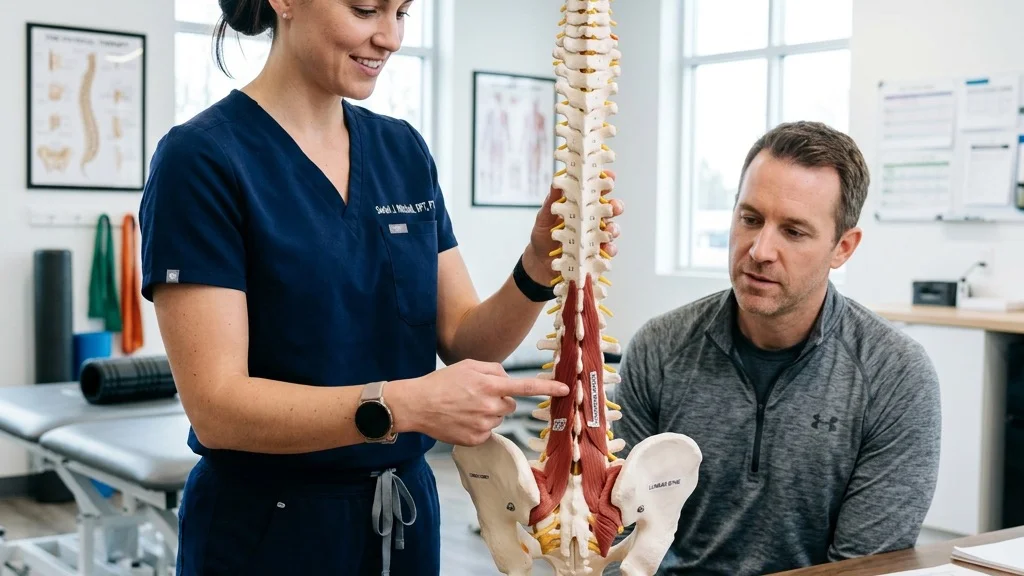
"If your spine is a suspension bridge, the multifidus muscles are the individual guide wires anchoring each segment. Relying on global core exercises to fix segment instability is like painting the bridge cables while the foundations are actively eroding."
Imagine waking up with a dull, persistent ache in your lower back that worsens every time you stand to wash the dishes or lean forward to tie your shoes. You have tried performing standard planks, stretching your tight hamstrings, and wearing a supportive back brace, yet the deep lumbar vulnerability remains.
Many patients suffering from chronic back issues are told they simply need a stronger core. They load up on sit-ups and bird-dogs, unaware that the true stabilizer—the deep multifidus muscle—has quieted down, leaving their joints exposed to excessive shear forces.
When a spinal segment experiences an injury or a sudden micro-trauma, the body initiates a protective reflex that turns down the neural activation to the local stabilizer. This reflex triggers rapid multifidus muscle atrophy, creating a localized weakness that cannot be corrected by large, global muscles.
To resolve this vulnerability, you must learn how to strengthen multifidus using precise, targeted isometric contractions. This guide will outline the biomechanics of segment protection and show you how to reactivate these deep stabilizers to achieve lasting chronic lower back pain relief.
The Anatomy of Local Stabilization: Meet the Multifidus
The lumbar multifidus is a series of small, triangular muscle bundles that lie directly against the lamina of the vertebrae. They are the shortest and most medial of the spinal muscles, spanning only two to four vertebral segments.
Because of their deep anatomical location and high concentration of muscle spindle receptors, their primary job is not to move the trunk, but to monitor and control fine rotational and translational forces between individual vertebrae.
When you lift a heavy object, the multifidus must contract milliseconds before the global movement muscles do, acting like a set of active pre-tensioners. If this system is delayed, the facet joints bear the brunt of the load, causing micro-damage and inflammation.
Clinical ultrasound studies show that within 24 hours of an acute lower back pain episode, the multifidus muscle on the painful side experiences up to a 30% reduction in cross-sectional area. This rapid wasting is a neural reflex, not standard muscle disuse.
Furthermore, research reveals that patients who do not perform targeted stabilizer retraining face an 80% recurrence rate of lower back pain within one year, compared to just 30% for those who restore multifidus function.
In terms of load management, a fully active multifidus system reduces the shear load on the lumbar facet joints by 40%, protecting the intervertebral discs from excessive wear.
Why Planks and Plie Squats Fail the Deep Spine
The most common mistake in spinal rehabilitation is assuming that global exercises like planks, crunches, and squats will automatically activate the deep spinal stabilizers.
When the brain detects pain or structural damage, it avoids using the vulnerable stabilizer. Instead, it over-activates larger, superficial muscles like the erector spinae and rectus abdominis to splint the spine.
My strong clinical opinion is that standard planks and heavy deadlifts are often counterproductive in early lumbar rehab. When multifidus atrophy is present, the body will use the superficial erector spinae to perform the work, squeezing the joints even tighter and increasing compressive stress.
To restore proper lumbar spine stability, we must isolate the stabilizers before loading the system. We do this by teaching patients to perform a subtle, low-load contraction of the multifidus under the guidance of palpation, ensuring the global muscles remain completely relaxed.
If you want to understand how this stabilization connects to the wider abdominal wall, read our comprehensive guide on how to activate the transversus abdominis.
The Patient: John, a 42-year-old accountant and avid golfer, suffered from recurring, sharp right-sided lower back pain that ruined his golf swing.
The Mistake: John performed heavy planks and side-bridges for three months, believing his core was weak, while his right-sided L4-L5 multifidus remained wasted and inactive.
The Solution: We stopped all high-load core training and focused on single-segment prone lifts with finger palpation to ensure the multifidus was contracting. We gradually progressed him to asymmetrical quadruped exercises.
The Outcome: Within four weeks, his localized back pain resolved completely. Ultrasound verification confirmed that his L4-L5 multifidus cross-sectional symmetry had returned to 95%, allowing him to swing his golf clubs without fear.
The 3-Step Program to Reverse Multifidus Atrophy
To wake up these dormant muscles and restore structural integrity to your lower back, perform this sequence daily. Keep the contractions gentle—using only 10% to 20% of your maximum effort to prevent global muscles from taking over.
-
1The Prone Segmental Activation (The Palpation Drill) Lie on your stomach. Place your thumbs on either side of your spine in the lower back, feeling for the muscle just off the bony spinous process. Take a deep breath. As you exhale, imagine gently drawing your pelvic bones together or swelling the muscle under your thumbs without moving your pelvis. Hold for 5 seconds, repeat 10 times.
-
2The Contralateral Bird-Dog Hold (Asymmetric Stabilization) Start on all fours with a flat back. Palpate the spine to ensure it does not sag. Slowly slide your right arm forward and your left leg backward, keeping your toes on the floor. Lift them slightly only if your lower back does not rotate. Hold this pose for 8 seconds. Perform 3 sets of 8 repetitions per side.
-
3Prone Contralateral Pointer Lifts (Extensor Integration) Lie flat on your stomach with your forehead resting on a small towel. Raise your right arm and left leg about two inches off the floor, concentrating on the diagonal connection across your lower back. Hold for 3 seconds, then lower slowly. Perform 12 controlled reps per diagonal set.
If you are also dealing with pelvic alignment issues, combining these stabilizers with our SI joint stabilizing stretches will provide a complete support system for your hips and back.
Reclaim Your Spinal Support
A stable spine is not built by doing hundreds of crunches; it is built through the coordinated activation of tiny, deep muscle fibers that protect your vertebrae from the inside. By learning how to isolate and retrain the multifidus, you can halt segment degeneration and return to your favorite activities with confidence.
If you are interested in learning how general postural habits impact your spine over time, read our guide on preventing lower back injuries through core stability.
Are you ready to stop using heavy exercises that cause compensation? Lie down, find your stabilizers, and perform your first activation drill today. How much stronger will your spine feel once its guide wires are fully active?
Irushi Abeywardhana
Senior Physiotherapist & Founder of Physio Pulse. Senior Clinical Physiotherapist passionate about blending advanced movement science with functional resilience.
Medical Disclaimer
The information provided by AyurPhysio is for general educational and informational purposes only. It is not intended as a substitute for professional medical advice, diagnosis, or treatment. Always seek the advice of your physician or other qualified health providers with any questions you may have regarding a medical condition. Never disregard professional medical advice or delay in seeking it because of something you have read on this website.
Trending Guides
Luka Modrić's Daily Routine: Low-Impact Resistance Training and Midfield Longevity
4 min readHarry Kane's Daily Routine: Hamstring Preservation and Anti-Inflammatory Nutrition
4 min readKarim Benzema's Daily Routine: Cupping Therapy (Hijama) and HIIT Conditioning
4 min readNeymar Jr.'s Daily Routine: Joint Stabilization and Hyperbaric Oxygen Therapy
4 min readMohamed Salah's Daily Routine: Early Morning Conditioning and Hyperbaric Recovery
4 min readWeekly Wellness
Don't miss the next guide
Get holistic health tips and new guides delivered to your inbox.
Related Healing Guides
View All Guides →
Hyperlordosis: Tailoring Exercise Programs to Reduce Lumbar Shear Stress

Morning Lower Back Stiffness: The Biomechanical Causes and Quick, Safe Fixes