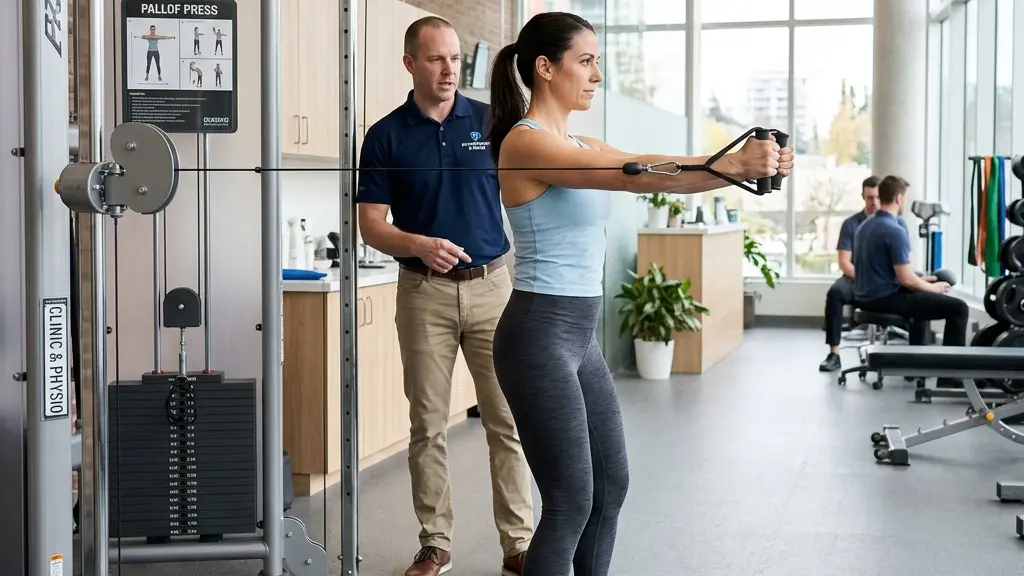
The Deep Core: How to Correctly Activate the Transversus Abdominis
"If your lower back feels like a stack of loose Jenga blocks ready to collapse under the slightest breeze, your stabilizer system is offline. Performing heavy abdominal crunches without activating your deep corset muscle is the mechanical equivalent of putting a roaring V8 engine into a plastic tricycle."
We have been conditioned to believe that core strength is measured in six-pack slabs. People spend hours flexing their spines in gym classes, chasing that burn in the mirror. Yet, many of these same fitness enthusiasts complain of a persistent, nagging lower back ache when standing to wash dishes or walking down the street.
This happens because the outer abdominal muscles cannot stabilize your individual spinal segments. The true custodian of your lumbar spine is a deep, wrap-around muscle called the transversus abdominis. Without targeted transversus abdominis activation, your spine is essentially unsupported, leaving your joints vulnerable to wear and tear.
To fix this, you must learn to bypass your superficial abdominal layers and wake up your deep corset. By integrating precise deep core strengthening exercises, you can build a natural internal shield that protects your lower back. This structural stability is the foundation required to learn how to correct anterior pelvic tilt and maintain healthy spinal geometry.
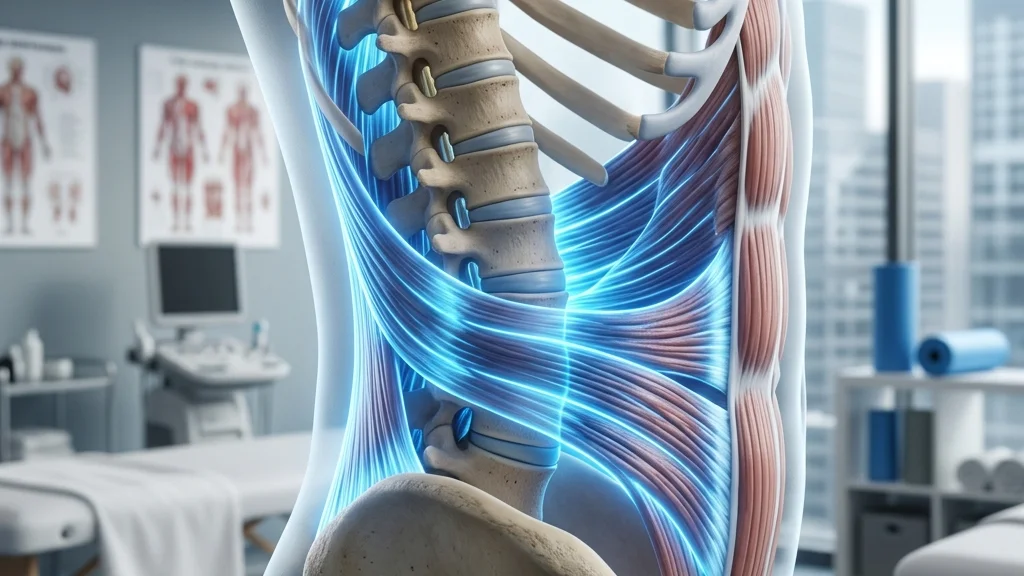
The Biological Corset: Understanding the Transversus Abdominis
The transversus abdominis (TA) is the deepest of the flat abdominal muscles, lying beneath the internal obliques and the rectus abdominis. Its fibers run horizontally around your midsection, originating from the lower ribs and lumbar fascia, and wrapping forward to insert into the pubic bone.
In healthy, pain-free individuals, the TA acts as an anticipatory stabilizer. Electromyographical studies show it fires 30 milliseconds before you move your arm and 110 milliseconds before you move your leg. This automatic contraction creates a stabilizing belt of intra-abdominal pressure that secures your vertebrae in place before any physical load is applied.
However, when you experience lower back injury, this anticipatory mechanism is immediately disrupted. The nervous system selectively dampens the TA, leaving your lumbar spine to take the brunt of every movement. Over time, this lack of support leads to micro-instability, chronic muscle spasm, and joint degeneration.
My strong clinical opinion is that standard abdominal crunches and sit-ups are not only useless for chronic back pain, but they often actively worsen it. Bending your spine repeatedly under load forces the lumbar discs into extreme flexion, compressing the nerve pathways.
If your deep core is sleeping, a crunch simply forces your superficial rectus abdominis to pull your pelvis into a deeper tilt, flattening the natural curve of your back. We must stop treating the core as an engine for movement and start treating it as a stabilizer of posture. You must learn to lock your spine in a neutral position before you try to build force.
Why Your Pelvis Dictates Your Lower Back Pain
When your TA is weak or inactive, your body must find stability elsewhere. The pelvis, which should remain in a balanced neutral position, starts to tilt forward under the weight of your upper body. This pulls the lumbar spine into an exaggerated arch, compressing the facet joints at the back of your vertebrae.
This anterior tilt is often the true driver of recurrent aches. To address this, we must use sacroiliac joint stabilizing stretches to release the tight hip flexors and back extensors, while simultaneously firing the deep lower abdominals.
Once the deep core is activated, it acts like a pair of suspenders, pulling the front of the pelvis upward. This natural realignment creates space within the lumbar canal, acting as the foundation for successful lumbar disc decompression exercises.
Many gym instructors tell patients to "suck their belly button in toward their spine." This cue often causes patients to hold their breath and pull their ribs upward, using their diaphragm instead of their lower core.
This is a dysfunctional compensation pattern that spikes your internal blood pressure and locks up your ribs. True deep core activation is subtle, quiet, and must allow for normal, rhythmic breathing throughout the movement.
The Isolation Protocol: Waking Up Your Transversus Abdominis
To isolate this deep stabilizer, we must use slow, controlled exercises that focus on muscular coordination rather than sheer force. Perform this isolation routine on a firm mat twice daily.
Lie on your back with your knees bent and feet flat on the floor in a neutral position. Place your fingers on your hip bones, then slide them one inch inward and down toward your midline. Exhale slowly, and imagine drawing the two front points of your hip bones toward each other, feeling a deep, flat tension beneath your fingers. Hold this gentle tension for 10 seconds while breathing normally, and repeat 10 times.
Maintain the supine draw-in maneuver to lock your pelvis in neutral. Slowly slide one heel along the floor, extending your leg completely without letting your lower back arch. Slowly pull your heel back to the starting position, maintaining the flat tension under your fingers. Perform 3 sets of 8 repetitions on each leg.
Get on your hands and knees with your head aligned with your flat spine. Exhale slowly, draw your lower abdomen up toward your spine without moving your ribs or arching your back, and hold. Maintain this deep brace for 10 seconds while breathing normally, performing 3 sets of 10 repetitions.
If you find that this isolation work triggers a sharp, unilateral back stiffness, you may also have an overactive quadratus lumborum muscle. Read our guide on the role of the quadratus lumborum to learn how to release this common compensation pattern.
The Patient: Laura, a 28-year-old amateur runner, suffered from severe right-sided sacroiliac joint pain that flared up after every 5k run, preventing her from training.
The Mistake: Laura was performing 150 daily crunches and planks, believing a hard stomach would protect her. However, during her assessment, her rectus abdominis fired instantly, while her deep transversus abdominis remained completely silent.
The Solution: We suspended all planks and crunches. We taught her the supine draw-in maneuver using visual cues, and progressed her to heel slides and bird-dogs while maintaining pelvic alignment.
The Outcome: Within three weeks, Laura's deep core was firing automatically during her movements. She returned to running, completing a 10k run with zero pain, proving that coordination is more important than raw power.
Maintaining a Stable Base for Life
Learning to activate your deep core is like learning to play a delicate musical instrument. It requires focused attention, patience, and a complete release of superficial muscle tension.
Once you master this isolation, you must integrate it into your daily movements. Every time you lift a bag of groceries, bend down to tie your shoes, or stand up from your chair, your deep corset should fire first to keep your spine safe.
To understand how this core stabilization fits into a broader program for preventing injury, read our detailed article on how to prevent recurrent lower back injuries. By building this internal armor, you can move with complete confidence.
Irushi Abeywardhana
Senior Physiotherapist & Founder of Physio Pulse. Senior Clinical Physiotherapist passionate about blending advanced movement science with functional resilience.
Medical Disclaimer
The information provided by AyurPhysio is for general educational and informational purposes only. It is not intended as a substitute for professional medical advice, diagnosis, or treatment. Always seek the advice of your physician or other qualified health providers with any questions you may have regarding a medical condition. Never disregard professional medical advice or delay in seeking it because of something you have read on this website.
Trending Guides
Luka Modrić's Daily Routine: Low-Impact Resistance Training and Midfield Longevity
4 min readHarry Kane's Daily Routine: Hamstring Preservation and Anti-Inflammatory Nutrition
4 min readKarim Benzema's Daily Routine: Cupping Therapy (Hijama) and HIIT Conditioning
4 min readNeymar Jr.'s Daily Routine: Joint Stabilization and Hyperbaric Oxygen Therapy
4 min readMohamed Salah's Daily Routine: Early Morning Conditioning and Hyperbaric Recovery
4 min readWeekly Wellness
Don't miss the next guide
Get holistic health tips and new guides delivered to your inbox.
Related Healing Guides
View All Guides →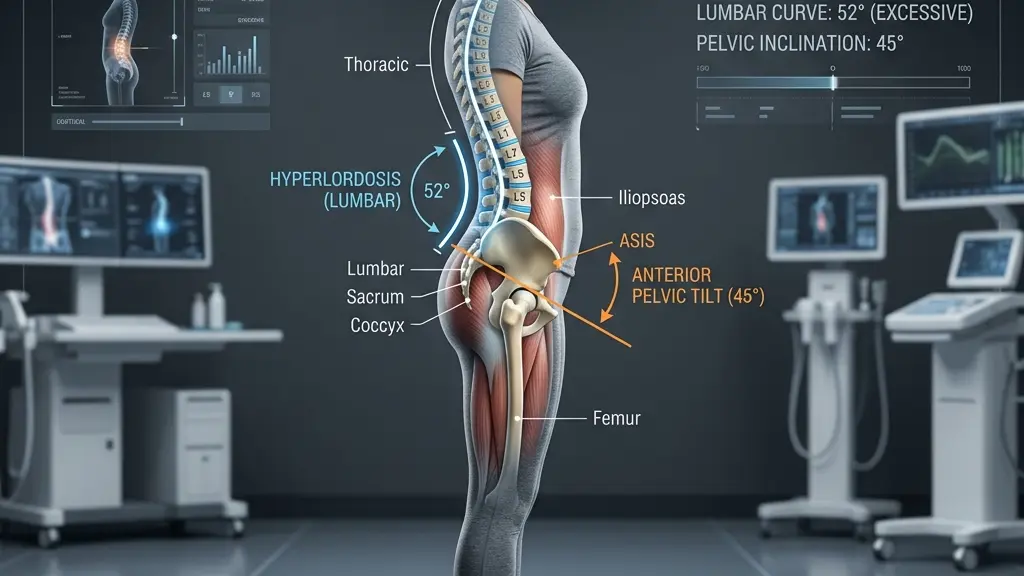
Hyperlordosis: Tailoring Exercise Programs to Reduce Lumbar Shear Stress

Morning Lower Back Stiffness: The Biomechanical Causes and Quick, Safe Fixes