Managing Knee Osteoarthritis: Quadriceps Strengthening and Joint Biomechanics
"Biomechanics governs the knee. When quadriceps strength declines, joint stability is lost and cartilage wear accelerates. Restoring active quad load is the most powerful non-surgical defense against osteoarthritis progression."
Receiving a diagnosis of "bone-on-bone" knee osteoarthritis feels like a countdown clock ticking toward an inevitable total joint replacement. You step cautiously, constantly aware of that grating sensation and deep ache inside the capsule every time you rise from a chair. However, understanding knee biomechanics can change your approach to managing this chronic wear.
The quadriceps muscle group acts as the primary dynamic stabilizer and shock absorber for the knee. Strong quadriceps absorb up to 20% to 25% of the gravitational force that would otherwise pass through the joint surface. Actively loading the surrounding musculature protects the cartilage and helps restore pain-free walking.
The Biomechanical Link: Shock Absorption and Cartilage Health
- 1Quadriceps Shock AbsorptionStrong quad muscles actively reduce joint reaction forces. Every percentage gain in thigh strength correlates with a measurable decrease in joint stress. This slowing of wear is vital for preserving the remaining cartilage.
- 2Patellar Tracking AlignmentBalanced strength prevents the kneecap from tracking laterally. Correct tracking ensures even distribution of pressure across the femoral groove. This prevents localized cartilage wear and reduces anterior knee pain.
- 3Progressive Loading AdaptationsBone and tendon tissue adapt dynamically to progressive mechanical load. Carefully planned loading builds structural resilience. It stimulates synovial fluid flow, naturally lubricating the joint space.
Clinical Rehabilitation: Decelerating the Wear
Physical therapy does not replace lost cartilage, but it alters how your body manages joint loads. By building strength in the quadriceps, hamstrings, and hip abductors, you create an active support system around the arthritic capsule. This reduces the mechanical irritation of the bony surfaces during daily movement.
When starting a strengthening program, the initial focus must be on closed-chain exercises—where the foot is supported by a solid surface. Closed-chain movements stimulate co-contraction of the surrounding muscles, maximizing stability and minimizing joint shear. Slowly progressing the weight ensures the joint adapts without swelling or inflammation.
"Attempting heavy weight-bearing exercises on an actively inflamed arthritic knee is a common mistake. If the joint is swollen, the brain inhibits the quadriceps, leading to poor control and increased joint stress. We must begin with pain-free, isometric contractions to build strength without overloading the joint, gradually transitioning to dynamic loaded ranges as pain subsides."
The 3-Step Knee Osteoarthritis Protocol
- 1Quadriceps Isometrics (Daily)Sit with your legs straight. Place a rolled towel under your knee and press it down by tightening your thigh muscle. Hold the contraction for 10 seconds, then relax. Repeat 20 times to wake up the quad fibers without moving the joint.
- 2Straight Leg Raises (3 Sets of 10)Lie on your back, bend one knee, and keep the target leg straight. Tighten your thigh and lift the straight leg 12 inches off the floor. Hold for 3 seconds, then lower slowly. This builds hip flexor and quad control without compressing the knee joint.
- 3Closed-Chain Wall Slides (3 Sets of 8)Lean your back against a wall with feet shoulder-width apart. Slowly slide down the wall, bending your knees to a comfortable angle (no deeper than 45 degrees). Hold for 3 seconds, then press through your heels to return to standing. This loads the quads while using the wall to stabilize the torso.
The Patient: Eleanor, a 67-year-old grandmother, could no longer climb the stairs to her bedroom without gripping both railings in severe distress.
The Mistake: She had tried an aggressive gym program, but the heavy squats caused severe knee swelling that lasted for days, stopping her progress.
The Solution: We started a structured home program focusing on non-weight bearing quad activation and gradual wall slides, tracking her post-exercise pain levels.
The Outcome: Her swelling resolved, and her leg strength steadily improved. Within 6 weeks, she could climb the stairs to her bedroom using only a light touch on the railing, completely pain-free.
Claiming Joint Authority
Do not accept a narrative of pure decay. Your joints are living structures that respond dynamically to load when guided by solid biomechanical principles. By strengthening the supporting muscles and managing mechanical stress, you can protect your knees and reclaim an active life.
To learn more about joint stabilizing exercises, read our detailed guide on how core stability protects the kinetic chain. For a broader overview of age-related joint care, check out our resource on healthy aging and mobility preservation. Additionally, our post on patellofemoral pain and hip abductor strength highlights the role of hip stability in knee health.
Knee osteoarthritis is a challenge, but you can change how your body handles it. By focusing on progressive quadriceps conditioning and protecting the joint biomechanics, you can reduce pain and stay active for years to come.
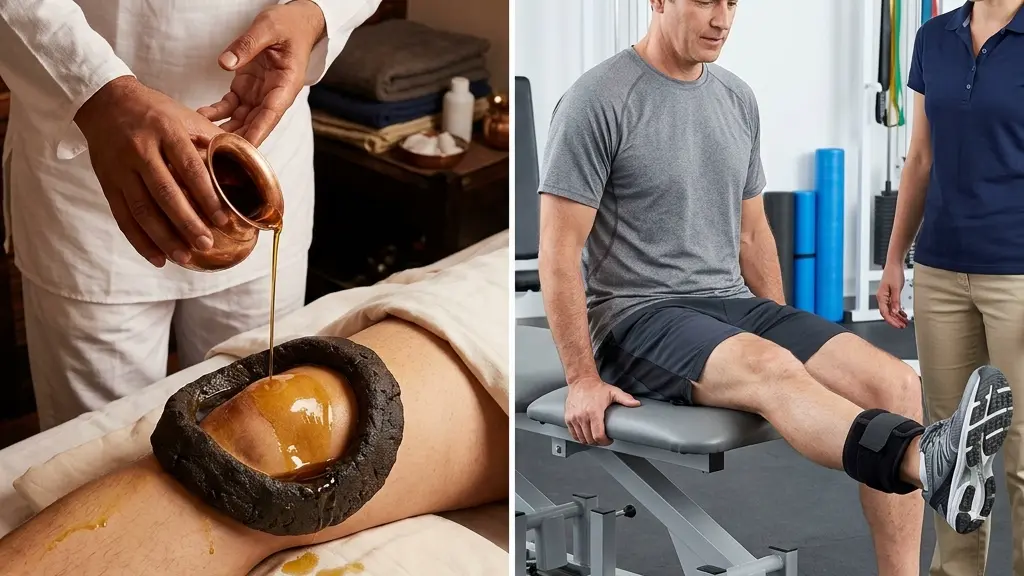
Featured image: Medical diagram illustrating knee joint loading and quadriceps muscle activation. Created for AyurPhysio editorial use.
Irushi Abeywardhana
Senior Physiotherapist & Founder of Physio Pulse. Senior Clinical Physiotherapist passionate about blending advanced movement science with functional resilience.
Medical Disclaimer
The information provided by AyurPhysio is for general educational and informational purposes only. It is not intended as a substitute for professional medical advice, diagnosis, or treatment. Always seek the advice of your physician or other qualified health providers with any questions you may have regarding a medical condition. Never disregard professional medical advice or delay in seeking it because of something you have read on this website.
Trending Guides
Luka Modrić's Daily Routine: Low-Impact Resistance Training and Midfield Longevity
4 min readHarry Kane's Daily Routine: Hamstring Preservation and Anti-Inflammatory Nutrition
4 min readKarim Benzema's Daily Routine: Cupping Therapy (Hijama) and HIIT Conditioning
4 min readNeymar Jr.'s Daily Routine: Joint Stabilization and Hyperbaric Oxygen Therapy
4 min readMohamed Salah's Daily Routine: Early Morning Conditioning and Hyperbaric Recovery
4 min readWeekly Wellness
Don't miss the next guide
Get holistic health tips and new guides delivered to your inbox.
Related Healing Guides
View All Guides →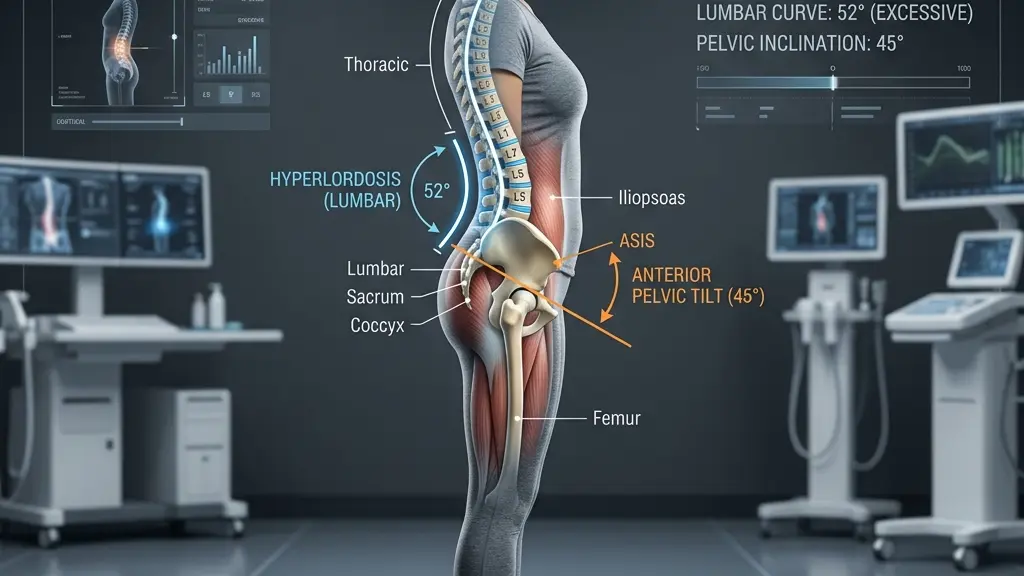
Hyperlordosis: Tailoring Exercise Programs to Reduce Lumbar Shear Stress

Morning Lower Back Stiffness: The Biomechanical Causes and Quick, Safe Fixes