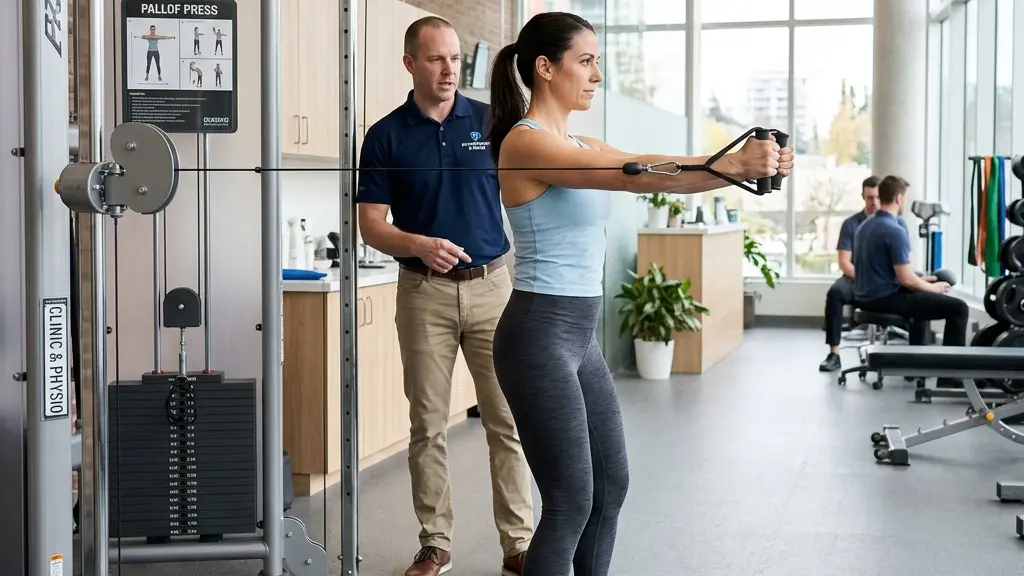
Healthy Aging: Protecting Joint Mobility and Balance in Your 60s and Beyond

“Aging is not the thief of movement; static living is. The body in your 60s and 70s is perfectly capable of profound balance and flexibility, provided you consistently issue the mechanical demand that keeps those pathways sharp.”
Entering your 60s often feels like standing on a cultural threshold where society quietly commands you to "take it easy" and sit down. Yet from a physiological standpoint, "sitting down" is the single most dangerous decision you can possibly make for your longevity.
The single greatest risk Factor for maintaining independence past 65 is not cardiovascular capacity, but dynamic balance. A single slip-and-fall incident can catalyze a catastrophic cascading loss of autonomy.
To successfully weaponize yourself against fragility, you must implement strategies for healthy aging mobility that address the three pillars of youth: proprioceptive balance, flexible thoracic architecture, and dense skeletal armor.
The Proprioception Crisis: Why We Lose Our Footing
Your brain calculates balance using signals from the inner ear, eyes, and thousands of nerve receptors in your feet and ankles called proprioceptors. As we age, these receptors can begin to "fade" in resolution, making your brain slightly blind to where your center of gravity currently rests.
Standard CDC health data highlights that one in four older adults falls each year. The majority of these occur not due to tripping hazards, but from slow reflexive correction speeds when displaced from neutral posture.
Walking Alone Isn't Enough Anymore
Walking is fantastic for heart health, but my strict clinical stance is that simple flat-surface walking is utterly useless for preventing falls. It trains zero lateral stabilization or perturbation recovery. To genuinely preserve autonomy, your regime MUST include multidirectional balance perturbations that force the nervous system to recalibrate instantly.
Part of preserving structure involves building raw mass resilience, notably for women in our specialized analysis on osteoporosis and bone density restoration.
The 3 Defenses: Your Weekly Autonomy Strategy
Dedicate just 10 minutes, three mornings a week, to perform these targeted longevity physiotherapy interventions to remain iron-clad.
- Static Tandem Stance (Heel-to-Toe): Stand by a countertop for safety and place the heel of one foot directly touching the toes of the other. Attempt to balance for 30 seconds without holding the counter. This narrows your support base, forcing intense nervous system recalibration.
- Single Leg Toothbrushing: An easy way to bake habit into life. Every time you brush your teeth, stand purely on one leg for the first 60 seconds, switching to the other for the second minute. This guarantees 2 daily doses of active ankle stabilization.
- Thoracic Extensions (Anti-Hunching): Aging commonly causes a "dowager's hump" which shifts your center of gravity drastically forward, making forward falls 40% more likely. Check your daily alignment via our understanding text neck guidelines to reclaim your natural vertical axis.
👤 Patient Spotlight: Gregory's Grandkids Promise
The Patient: Gregory, 71, felt nervous stepping on uneven lawns and had stopped playing ball with his 6-year-old grandson due to fear of falling.
The Mistake: He moved slower and more deliberately, which actually further degraded his reflexive, fast-twitch recovery reactions.
The Solution: We introduced soft-foam balance pads and simple clockwise/counter-clockwise clock stepping drills to build back dynamic confidence.
The Outcome: Within 8 weeks his fear scoring dropped substantially. He now actively chases his grandkids in the park without hesitation or bracing.
A Life In Command
Your body responds directly to what you demand of it. If you ask for nothing but sitting, it will atrophy into that shape. If you demand balance, mass, and agility, it will sustain those attributes with surprising loyalty well into your eighth decade.
Never surrender your autonomy. Challenge your footing, trust your structure, and live vibrantly commanding the terrain you walk upon.
Irushi Abeywardhana
Senior Physiotherapist & Founder of Physio Pulse. Senior Clinical Physiotherapist passionate about blending advanced movement science with functional resilience.
Medical Disclaimer
The information provided by AyurPhysio is for general educational and informational purposes only. It is not intended as a substitute for professional medical advice, diagnosis, or treatment. Always seek the advice of your physician or other qualified health providers with any questions you may have regarding a medical condition. Never disregard professional medical advice or delay in seeking it because of something you have read on this website.
Trending Guides
Luka Modrić's Daily Routine: Low-Impact Resistance Training and Midfield Longevity
4 min readHarry Kane's Daily Routine: Hamstring Preservation and Anti-Inflammatory Nutrition
4 min readKarim Benzema's Daily Routine: Cupping Therapy (Hijama) and HIIT Conditioning
4 min readNeymar Jr.'s Daily Routine: Joint Stabilization and Hyperbaric Oxygen Therapy
4 min readMohamed Salah's Daily Routine: Early Morning Conditioning and Hyperbaric Recovery
4 min readWeekly Wellness
Don't miss the next guide
Get holistic health tips and new guides delivered to your inbox.
Related Healing Guides
View All Guides →
Hyperlordosis: Tailoring Exercise Programs to Reduce Lumbar Shear Stress

Morning Lower Back Stiffness: The Biomechanical Causes and Quick, Safe Fixes