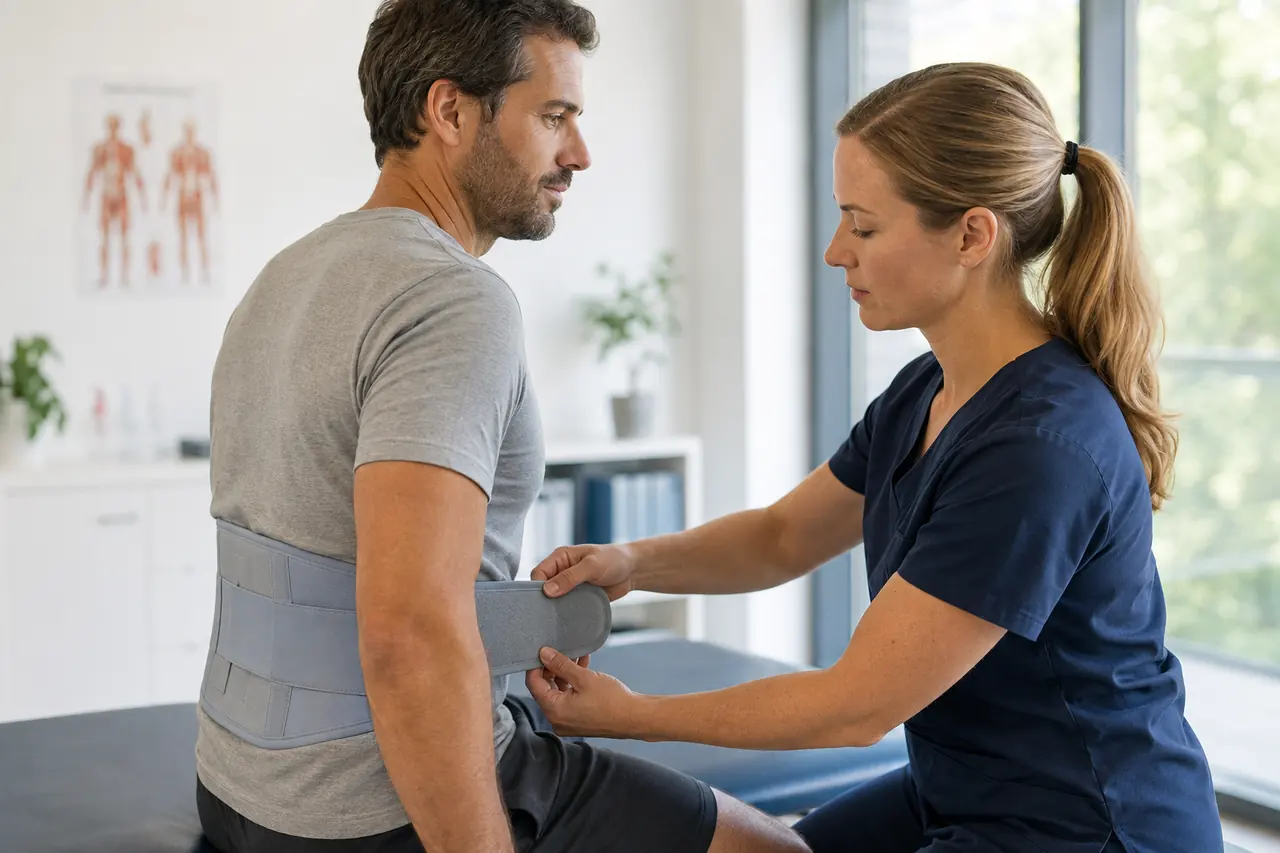
A French randomized clinical trial published online on 19 August 2026 has reopened a familiar question: can a soft lumbar belt add anything to usual care for nonspecific low back pain? The result was encouraging for the particular belt and patients studied, but it does not settle the broader debate about routine back-support use.
What the researchers tested
The multicentre trial enrolled 168 adults at 17 French centres. Participants had nonspecific low back pain lasting between one and six months. Eighty-six were assigned an adjustable, soft belt in addition to usual care; 82 continued with usual care without the device. The main outcome was change on the Oswestry Disability Index, a questionnaire about how back pain affects everyday function.
At 12 weeks, the reported disability score improved by 10 points in the belt group and 5.3 points in the control group. The adjusted difference between groups was 4.7 points. Average pain at rest and during activity also decreased more in the belt group. No serious device-related adverse event was reported.
Why “statistically significant” is not the whole story
The trial found a statistical difference, but readers should not translate that directly into “everyone with back pain needs a belt.” The average difference in disability was modest, the participants knew which treatment they received, and 155 of the 168 randomized participants contributed to the primary analysis. An open-label device trial can be influenced by expectations and differences in behaviour.
The researchers studied adults with a recent, recurrent or recently chronic episode diagnosed as nonspecific low back pain. The findings do not automatically apply to pain from a fracture, infection, inflammatory disease, cancer, significant nerve compression or another specific cause.
How this fits with current guidance
The paper itself notes that earlier evidence has been inconsistent. The World Health Organization has conditionally recommended against routine lumbar braces, belts and supports for chronic primary low back pain, citing very low-certainty evidence and concerns about prolonged use. One new trial can inform future reviews, but it does not instantly replace a guideline based on a wider evidence set.
A reasonable interpretation is that a soft belt may be a short-term adjunct for some people when discussed with a qualified clinician—not a substitute for assessment, appropriate activity, rehabilitation or investigation when indicated. Belt type, duration, comfort and the reason for using it all matter.
Questions worth asking before using one
- Does the diagnosis and duration of my symptoms resemble the trial population?
- What is the intended goal: comfort, function during an activity, or something else?
- How will we judge whether it is helping, and when will we review its use?
- Could prolonged reliance reduce confidence in movement or interfere with rehabilitation?
For a wider look at buying decisions, see our evidence-first guide to home lumbar devices. It explains why a product category and a specific clinical plan should not be treated as the same thing.
Sources
- Grange L, et al. Lumbar Belt for Nonspecific Low Back Pain: A Randomized Clinical Trial. JAMA Network Open. Published 19 August 2026.
- WHO guideline for non-surgical management of chronic primary low back pain.
This research summary is for general information. It does not diagnose back pain or recommend a device for an individual.
Medical Disclaimer
The information provided by AyurPhysio is for general educational and informational purposes only. It is not intended as a substitute for professional medical advice, diagnosis, or treatment. Always seek the advice of your physician or other qualified health providers with any questions you may have regarding a medical condition. Never disregard professional medical advice or delay in seeking it because of something you have read on this website.
Trending Guides
How to Read a Health-Product Review Without Being Misled
4 min readOne in Six Older Adults Faced Delayed Home Rehabilitation After Joint Replacement
3 min readCan Group Knee-Osteoarthritis Care Work by Video? A Small Trial Offers a Cautious Yes
3 min readBlended Digital Physiotherapy Was Not Better for Neck and Shoulder Pain in a 2026 Trial
3 min readPressure-Wave Therapy After Rotator-Cuff Repair: What a Small 2026 Trial Adds
3 min readWeekly Wellness
Don't miss the next guide
Get holistic health tips and new guides delivered to your inbox.
Related Healing Guides
View All Guides →
One in Six Older Adults Faced Delayed Home Rehabilitation After Joint Replacement
Can Group Knee-Osteoarthritis Care Work by Video? A Small Trial Offers a Cautious Yes