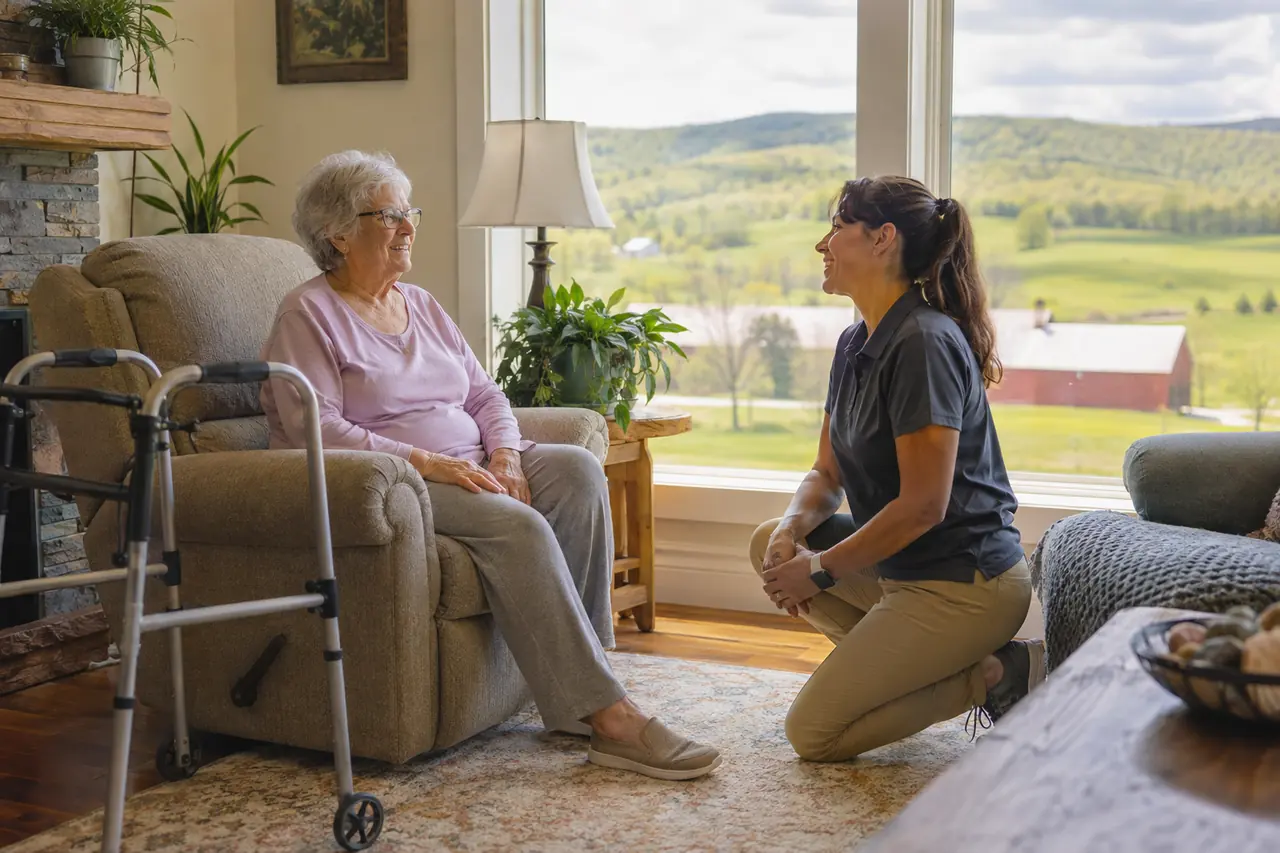
A US study published in 2026 found that 17% of older Medicare beneficiaries receiving home health care after hip or knee replacement did not begin physical or occupational therapy within two days of discharge. Delays were more common among rural residents and people enrolled in both Medicare and Medicaid, and were associated with poorer mobility improvement.
A large view of recovery at home
Researchers analysed data from 18,998 Medicare beneficiaries aged 65 and older who received home health services after joint replacement. The study examined whether physical or occupational therapy began within 48 hours and compared access and mobility outcomes across rurality and Medicare-Medicaid eligibility.
Nearly one in six experienced a delay. Rural beneficiaries had lower odds of receiving timely rehabilitation and lower odds of greater mobility improvement. People eligible for both Medicare and Medicaid also faced wider gaps in both access and recovery.
Association is not proof of cause
The size of the dataset makes the disparity difficult to dismiss, but this was not a randomized experiment. People who experience delayed care may differ in health complexity, local service availability, transport, social support or other factors that also influence mobility. Statistical adjustment can reduce some imbalance but cannot remove every unmeasured difference.
The study therefore supports better coordination and further investigation; it does not establish that a specific 48-hour threshold guarantees a better outcome for every patient. Recovery schedules and precautions vary with the operation, medical status and discharge plan.
Why rural and low-income access deserves attention
Home rehabilitation depends on a workforce able to travel to patients. Long distances, shortages of clinicians and fewer home-health agencies can make prompt visits harder in rural communities. Dual eligibility for Medicare and Medicaid is also associated with greater economic and medical vulnerability.
These are not failures of patient motivation. They are signals for hospitals, insurers and health systems to examine referral timing, communication, workforce coverage and what happens when a preferred provider cannot accept a case.
Practical discharge-planning questions
Patients and caregivers can ask these organizational questions before leaving hospital:
- Has the home-health referral been accepted, and by which agency?
- When should the first visit occur, and whom should we contact if it is delayed?
- Which movement, wound or medication instructions came from the surgical team?
- What equipment should already be available at home?
- How will follow-up work if distance or staffing prevents an in-person visit?
These questions help clarify a plan; they do not replace the instructions supplied by the surgical and rehabilitation teams.
Our article on mobility and balance in later life offers general background, while postoperative decisions must follow the individual care team.
Sources
- Kumar A, et al. Disparities in Timely Access to Postoperative Home Health Care and Functional Recovery After Joint Replacement. JAMDA. 2026.
- University of Utah Health Sciences release, published 27 August 2026.
This article explains a population study. It is not a postoperative timetable or individualized medical advice.
Medical Disclaimer
The information provided by AyurPhysio is for general educational and informational purposes only. It is not intended as a substitute for professional medical advice, diagnosis, or treatment. Always seek the advice of your physician or other qualified health providers with any questions you may have regarding a medical condition. Never disregard professional medical advice or delay in seeking it because of something you have read on this website.
Trending Guides
How to Read a Health-Product Review Without Being Misled
4 min readOne in Six Older Adults Faced Delayed Home Rehabilitation After Joint Replacement
3 min readCan Group Knee-Osteoarthritis Care Work by Video? A Small Trial Offers a Cautious Yes
3 min readBlended Digital Physiotherapy Was Not Better for Neck and Shoulder Pain in a 2026 Trial
3 min readPressure-Wave Therapy After Rotator-Cuff Repair: What a Small 2026 Trial Adds
3 min readWeekly Wellness
Don't miss the next guide
Get holistic health tips and new guides delivered to your inbox.
Related Healing Guides
View All Guides →
Can Group Knee-Osteoarthritis Care Work by Video? A Small Trial Offers a Cautious Yes

Blended Digital Physiotherapy Was Not Better for Neck and Shoulder Pain in a 2026 Trial