"Losing weight with a GLP-1 drug and then fracturing your hip two years later because your bones couldn't handle the reduced gravitational loading is a trade-off no patient consented to — because no one adequately explained the biological cost of rapidly removing weight from a skeleton that evolved to carry it."
More than 50 million people globally are now taking GLP-1 receptor agonist medications — semaglutide (Ozempic, Wegovy), tirzepatide (Mounjaro, Zepbound) — making this the fastest-adopted pharmaceutical class in the history of metabolic medicine. The weight loss results are genuinely extraordinary: clinical trials document an average of 15–22% bodyweight reduction over 68 weeks.
But a landmark 2026 analysis of over 140,000 long-term GLP-1 users, presented at the American Academy of Orthopaedic Surgeons annual meeting, has exposed a deeply uncomfortable truth that is not appearing in pharmaceutical advertisements: GLP-1 drugs are associated with significantly elevated risks of osteoporosis, osteomalacia, and sarcopenia — a triad of musculoskeletal deterioration that transforms today's weight-loss success story into tomorrow's fracture case.
The Three Mechanisms of Musculoskeletal Risk
- Long-term GLP-1 users show a statistically significant elevated incidence of osteoporosis diagnosis compared to weight-matched patients who lost equivalent weight through diet and exercise.
- An estimated 15–25% of total weight lost on GLP-1 medications comprises lean muscle mass (sarcopenia), not just fat tissue.
- Rapid weight reduction of 10%+ of bodyweight reduces mechanical loading on the femoral neck by an estimated 18–22% — enough to trigger measurable bone mineral density decline within 12 months.
- Patients over 50 on GLP-1 medications with pre-existing low bone density face a 3x higher hip fracture risk compared to age-matched patients who did not use GLP-1 drugs.
Mechanism 1: Reduced Skeletal Mechanical Loading
Bone is living tissue that responds to mechanical stimulus. The wolffian law of bone remodeling states that bone density is maintained and increased precisely in response to compressive loading forces — the gravitational pressure of carrying your own body weight. When GLP-1 drugs rapidly reduce bodyweight by 20kg or more, the skeleton suddenly carries 20kg less load through every step. The osteoblasts (bone-building cells) receive dramatically reduced mechanical signals, bone formation decreases, and net bone density begins to decline — just like an astronaut's bones in zero gravity, but slower and less visible.
Mechanism 2: Appetite Suppression Creating Nutritional Deficits
GLP-1 drugs suppress appetite profoundly. The intended effect is reduced caloric intake. The unintended effect in many patients is also significantly reduced calcium, Vitamin D3, Vitamin K2, and protein consumption — the exact nutritional matrix that bone and muscle tissue require for maintenance. Many GLP-1 users consume only 800–1200 kcal daily — insufficient to meet minimum micronutrient thresholds without aggressive supplementation that most prescribers do not mandate.
Mechanism 3: Hormonal Cascade Effects on Bone Metabolism
Rapid weight loss — regardless of mechanism — disrupts estrogen metabolism (in women), IGF-1 signaling, and leptin levels, all of which directly regulate bone mineral homeostasis. The hormonal environment created by rapid GLP-1-mediated weight reduction is essentially the same hormonal environment as early menopause — a well-established risk factor for accelerated bone loss.
"The pharmaceutical industry is marketing GLP-1 drugs as the solution to obesity. But in Ayurveda, we have always understood that rapid, drug-induced weight loss — without simultaneously nourishing the Asthi dhatu (bone tissue) and Mamsa dhatu (muscle tissue) — is not healing. It is a form of structured depletion. Ayurveda has a name for this: Dhatu Kshaya. The depletion of tissue layers. And classical texts warn explicitly that Asthi Kshaya (bone tissue depletion) that follows Meda Kshaya (fat tissue depletion) leads to fragility, pain, and premature aging of the structural body. This is precisely what the 2026 data is now showing."
The Protection Protocol: What Every GLP-1 Patient Needs Now
- 1Mamsa Dhatu Nourishment: Bala and Ashwagandha RasayanaInternally rebuild the muscle tissue layer (Mamsa Dhatu) and bone tissue (Asthi Dhatu) using classical Rasayana formulas. Ashwagandha (Withania somnifera) is clinically confirmed to increase lean muscle mass and bone mineral density, directly counteracting GLP-1-induced Dhatu Kshaya. Combine with Bala (Sida cordifolia) for connective tissue restoration.
- 2DEXA Scanning at Baseline and 12 MonthsEvery patient initiating GLP-1 therapy over age 40 should undergo dual-energy X-ray absorptiometry (DEXA) scanning to establish baseline bone mineral density. A repeat scan at 12 months allows early detection of clinically significant bone loss before it reaches fracture-risk threshold.
- 3Ayurvedic Asthi Dhatu Nourishment ProtocolDr. Dilshani recommends adding Laksha Guggulu (classical bone-tissue Rasayana), Ashwagandha (clinically confirmed to increase bone mineral density and muscle mass in controlled trials), and daily sesame oil Abhyanga to any patient on GLP-1 therapy. These target the Asthi dhatu channel directly, providing the internal oleation and mineral co-factors that GLP-1-mediated appetite suppression strips from the diet.
- 4Protein and Micronutrient MandatesMinimum 1.2–1.6g of protein per kilogram of target bodyweight daily. Calcium 1200mg (50% from food, 50% supplementation if dietary deficit confirmed). Vitamin D3 2000–4000 IU daily with K2-MK7 100mcg to ensure calcium is directed into bone matrix rather than arterial walls.
The Ayurvedic Perspective: Fat Loss Without Tissue Depletion
In Ayurvedic physiology, fat (Meda dhatu) is one of seven sequential tissue layers. When Meda is reduced — whether through drugs, diet, or disease — the body must compensate from the tissues that follow it in the nourishment sequence: Asthi (bone) and Majja (bone marrow/nerve tissue). This is why Ayurveda mandates that any weight reduction protocol simultaneously includes Asthi-nourishing Rasayanas. The goal is never just to remove Meda — it is to reform the metabolic environment that accumulated it, while protecting every downstream tissue layer in the chain.
For the complete Ayurvedic framework for protecting bone tissue, our guide on osteoporosis and bone density rebuilding provides the full clinical protocol. For the Asthi dhatu nourishment Rasayana framework, our Ayurvedic Rasayana therapy guide covers the classical formulations in detail.
GLP-1 drugs represent a genuine advance in metabolic medicine. But every tool powerful enough to reshape your physiology at this speed is powerful enough to cause damage when used without complete clinical oversight. The question is not whether to use these drugs — that is a conversation between you and your physician. The question is: what are you doing to protect the skeleton that has to carry you for the next forty years?
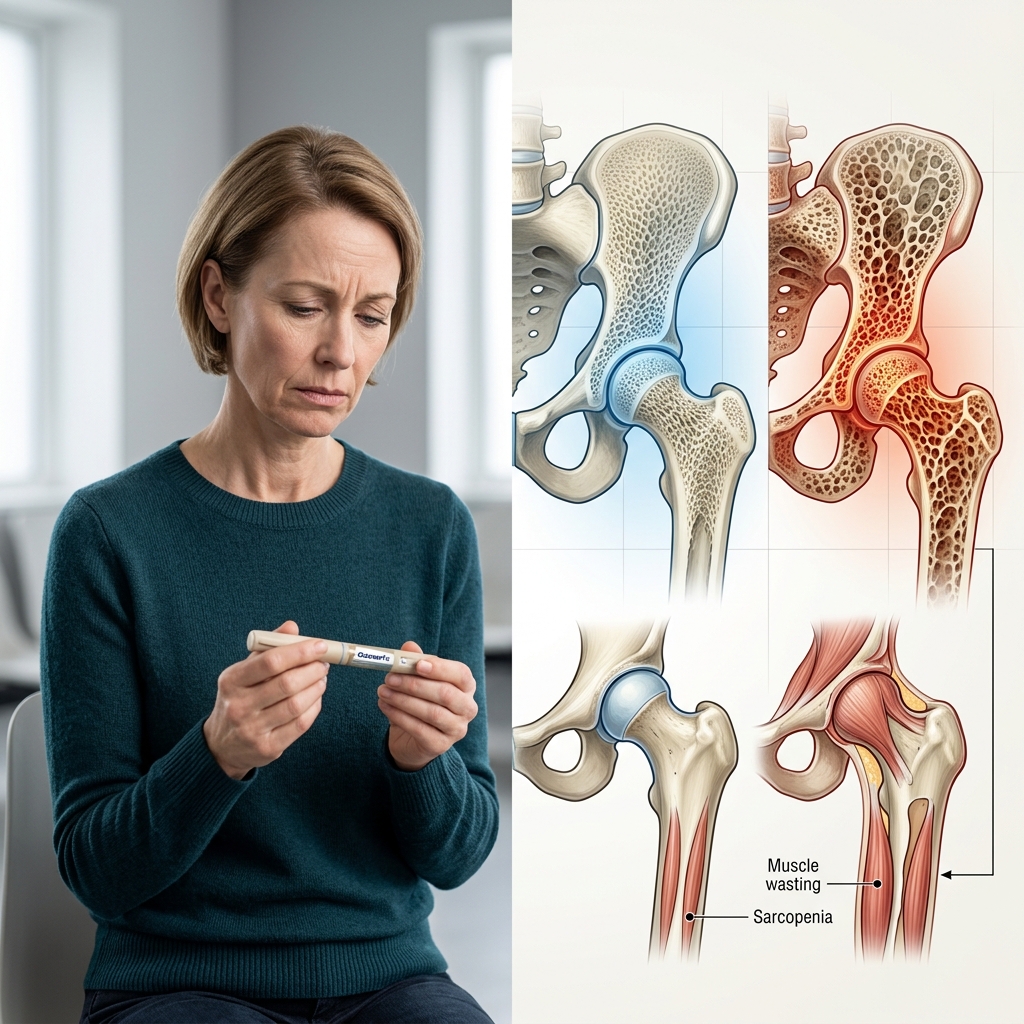
Featured image: Clinical composite showing GLP-1 medication concern with DEXA bone density comparison and muscle wasting illustration. Created for AyurPhysio editorial use. This article is for educational purposes only and does not constitute medical advice.
Dr. Dhanushika Dilshani
Expert Ayurvedic Wellness Doctor. Specialized in modern holistic wellness, optimizing dermal resilience, cosmetic radiance, and systematic diagnosis driven by traditional and evidence-based medical logic.
Medical Disclaimer
The information provided by AyurPhysio is for general educational and informational purposes only. It is not intended as a substitute for professional medical advice, diagnosis, or treatment. Always seek the advice of your physician or other qualified health providers with any questions you may have regarding a medical condition. Never disregard professional medical advice or delay in seeking it because of something you have read on this website.
Trending Guides
Luka Modrić's Daily Routine: Low-Impact Resistance Training and Midfield Longevity
4 min readHarry Kane's Daily Routine: Hamstring Preservation and Anti-Inflammatory Nutrition
4 min readKarim Benzema's Daily Routine: Cupping Therapy (Hijama) and HIIT Conditioning
4 min readNeymar Jr.'s Daily Routine: Joint Stabilization and Hyperbaric Oxygen Therapy
4 min readMohamed Salah's Daily Routine: Early Morning Conditioning and Hyperbaric Recovery
4 min readWeekly Wellness
Don't miss the next guide
Get holistic health tips and new guides delivered to your inbox.
Related Healing Guides
View All Guides →
Luka Modrić's Daily Routine: Low-Impact Resistance Training and Midfield Longevity
Harry Kane's Daily Routine: Hamstring Preservation and Anti-Inflammatory Nutrition