"Obstructive prostate enlargement is evaluated in traditional medicine as a localized manifestation of dry Vata stagnation and Kapha tissue accumulation. Reclaiming urinary freedom and pelvic vitality requires balancing the downward energy of Apana Vata, clearing metabolic congestion, and nourishing the reproductive tissues."
Global health media was filled with coverage regarding the health of King Charles III when Buckingham Palace announced he would undergo a corrective procedure for an enlarged prostate. The condition, medically identified as benign prostatic hyperplasia (BPH), is an exceedingly common aspect of aging for men worldwide. By sharing his diagnosis, the King initiated a global conversation on a topic that is often neglected, highlighting the importance of early diagnosis and integrative pelvic wellness.
While modern urological procedures are highly effective for relieving severe urinary blockages, traditional systems of medicine offer powerful, non-invasive pathways to manage early symptoms, prevent disease progression, and nourish the surrounding pelvic structures. In this clinical evaluation, we will analyze the physiology of BPH, examine the condition through the Ayurvedic framework of Apana Vata and Vatashthila, and outline a comprehensive prostate rejuvenation protocol.
The Physiology of BPH: Understanding Prostate Enlargement
The prostate is a walnut-sized gland located just below the bladder in men, surrounding the proximal urethra (the tube that carries urine from the bladder out of the body). The primary function of the prostate is to secrete alkaline fluid that nourishes and protects sperm, constituting a critical component of semen.
As men age, changes in hormone levels—particularly the accumulation of dihydrotestosterone (DHT)—stimulate the cellular proliferation of the prostate's transitional zone. This non-cancerous cellular growth is known as Benign Prostatic Hyperplasia. As the transitional zone expands, it compresses the prostatic urethra, leading to a cluster of Lower Urinary Tract Symptoms (LUTS):
- Urinary Hesitancy: Difficulty initiating the flow of urine due to the mechanical obstruction of the urethra.
- Weak Stream and Dribbling: A slow, interrupted flow of urine, ending in post-void dribbling.
- Nocturia: The need to wake up multiple times during the night to urinate, caused by incomplete bladder emptying.
- Urinary Urgency and Frequency: An irritable, overactive bladder muscle (detrusor) compensating for the high pressure required to expel urine.
If left unmanaged, chronic urinary retention can lead to recurring urinary tract infections (UTIs), bladder stones, or kidney congestion.
- BPH affects approximately 50% of men in their 50s, and up to 90% of men over the age of 80.
- Up to 30% of men with BPH will eventually require medical or surgical intervention to resolve moderate-to-severe urinary blockages.
- Ayurvedic herbal protocols combining Gokshura and Varuna have shown a 40% to 50% reduction in subjective urinary symptom scores in clinical trials.
- Long-term pelvic floor tension and poor digestive circulation can increase BPH-associated urinary urgency by up to 60%.
The Ayurvedic Diagnostic View: Apana Vata and Vatashthila
In Ayurvedic medicine, the lower abdomen, bladder, colon, and reproductive organs are governed by Apana Vata. This sub-dosha of Vata is responsible for the downward flow of energy and elimination (urine, feces, and semen). When Apana Vata becomes unbalanced—usually due to dry foods, excessive travel, chronic stress, or the natural dry quality of the aging process—its downward movement is blocked and flows upward or stays stagnant.
Prostate enlargement is diagnosed in Ayurveda as Vatashthila. The word "ashthila" refers to a hard, round stone. When stagnant Apana Vata accumulates in the pelvic space, it dries and hardens the local tissues. If Kapha dosha (the force of structure and growth) is also high, it leads to non-malignant tissue growth. This Vata-Kapha mixture blocks the urinary channels (Mutravaha Srotas), resulting in the characteristic symptoms of BPH.
To treat Vatashthila, Ayurveda does not simply focus on the localized gland. Instead, the clinical objective is to restore the natural downward movement of Apana Vata, clear Kapha-induced tissue congestion, and strengthen the digestive fire (Agni) to prevent the accumulation of toxins (Ama) that feed glandular swelling.
"In BPH management, we must address the systemic dryness of aging. While modern medicine uses alpha-blockers to relax the bladder neck, Ayurveda utilizes specific herbs to soothe the urinary tract and reduce glandular volume. We combine Gokshura to cool the pelvic heat, Varuna to break down the firm Kapha tissue, and Kanchanar Guggulu to clear blockages in the lymphatic and circulatory channels. This triple herbal strategy must be paired with lifestyle practices that calm Vata to prevent tension in the pelvic floor."
The Ayurvedic Prostate and Pelvic Rejuvenation Protocol
This integrative clinical protocol focuses on reducing prostate tissue congestion, balancing pelvic energy, and strengthening urinary flow.
- 1Phase 1: Clear Obstruction and Cool Heat (Weeks 1–4)Take Varuna (500mg) and Gokshura (500mg) twice daily after meals. Gokshura acts as a cooling diuretic, soothing the bladder lining and improving flow, while Varuna acts as an anti-inflammatory to reduce swelling. Prepare and drink warm cumin-coriander-fennel (CCF) tea daily to support digestive Agni and clear metabolic waste (Ama).
- 2Phase 2: Digest Ama and Balance Kapha (Weeks 5–8)Introduce Kanchanar Guggulu (2 tablets twice daily with warm water). This classical formula digests deep toxins and balances the structural Kapha growth, assisting in the gradual reduction of prostate volume. Avoid cold, dry, or processed foods, and prioritize warm, moist, easily digestible meals cooked with ghee and spices like ginger and turmeric.
- 3Phase 3: Calm Apana Vata and Release Pelvic Tension (Weeks 9–12+)Perform a gentle lower-abdomen and perineal self-massage (Abhyanga) using warm sesame oil or Mahanarayan oil before a warm bath to calm Vata. Practice pelvic-opening yoga postures like Baddha Konasana (Bound Angle Pose) and Viparita Karani (Legs-Up-The-Wall Pose) for 10-15 minutes daily to improve pelvic blood circulation and relax the pelvic floor muscles.
Systemic Vitality and Pelvic Health
Maintaining pelvic health requires balanced digestion and clean body channels. To understand how metabolic toxins build up and affect the body's organs, read our clinical guide on understanding Ama and chronic inflammation. To protect your body's immune defenses and support tissue health, read our post on the concept of Agni and digestive health.
King Charles III's public disclosure of his prostate treatment has brought vital attention to a key area of men's health. By combining modern clinical check-ups with the traditional wisdom of Ayurvedic Apana Vata and Vatashthila protocols, men can support their prostate health, improve urinary function, and maintain pelvic vitality as they age. The goal is to calm the pelvic dryness, clear tissue congestion, and build a strong foundation for long-term health and longevity.
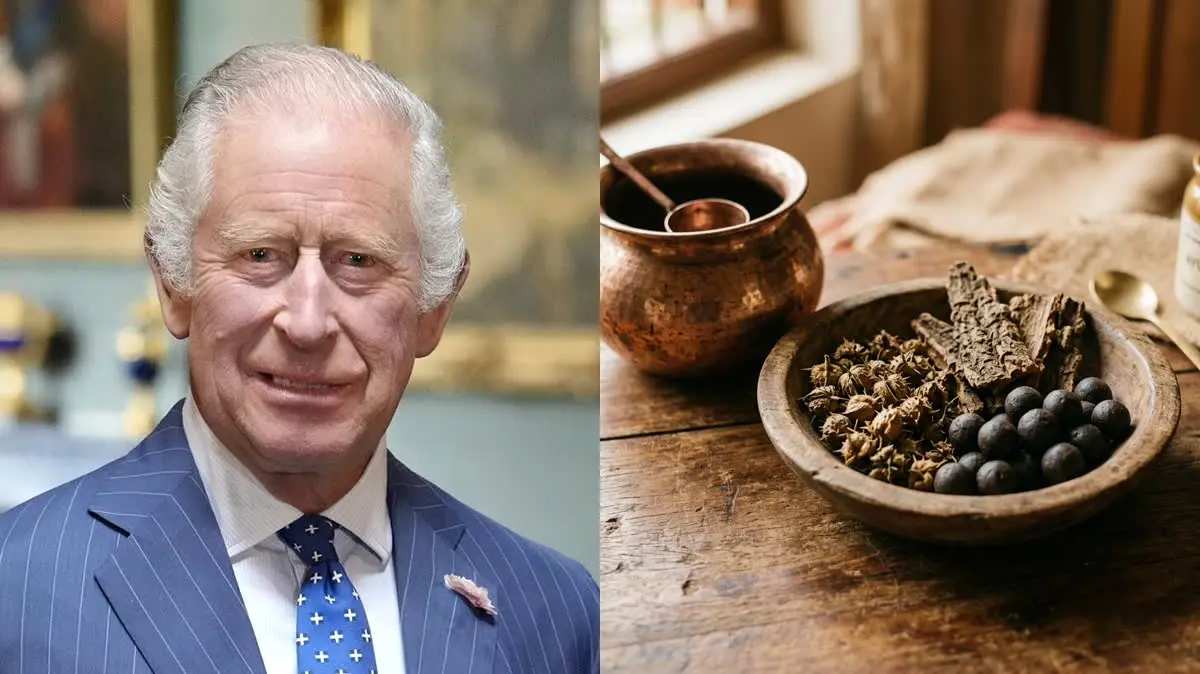
Featured image: Clinical side-by-side composite showing King Charles III (left) and an arrangement of Ayurvedic pelvic herbs Gokshura, Varuna, and Kanchanar Guggulu (right). Created for AyurPhysio editorial use. Wikimedia Commons attribution: King Charles III image by Northern Ireland Office licensed under CC BY 2.0. Modified by cropping and compositing.
Dr. Dhanushika Dilshani
Expert Ayurvedic Wellness Doctor. Specialized in modern holistic wellness, optimizing dermal resilience, cosmetic radiance, and systematic diagnosis driven by traditional and evidence-based medical logic.
Medical Disclaimer
The information provided by AyurPhysio is for general educational and informational purposes only. It is not intended as a substitute for professional medical advice, diagnosis, or treatment. Always seek the advice of your physician or other qualified health providers with any questions you may have regarding a medical condition. Never disregard professional medical advice or delay in seeking it because of something you have read on this website.
Trending Guides
Luka Modrić's Daily Routine: Low-Impact Resistance Training and Midfield Longevity
4 min readHarry Kane's Daily Routine: Hamstring Preservation and Anti-Inflammatory Nutrition
4 min readKarim Benzema's Daily Routine: Cupping Therapy (Hijama) and HIIT Conditioning
4 min readNeymar Jr.'s Daily Routine: Joint Stabilization and Hyperbaric Oxygen Therapy
4 min readMohamed Salah's Daily Routine: Early Morning Conditioning and Hyperbaric Recovery
4 min readWeekly Wellness
Don't miss the next guide
Get holistic health tips and new guides delivered to your inbox.
Related Healing Guides
View All Guides →
Luka Modrić's Daily Routine: Low-Impact Resistance Training and Midfield Longevity
Harry Kane's Daily Routine: Hamstring Preservation and Anti-Inflammatory Nutrition