"Stopping and cutting on a torn knee ligament is a structural impossibility—without the ACL to lock the shinbone in place, the joint slides into catastrophic failure under load."
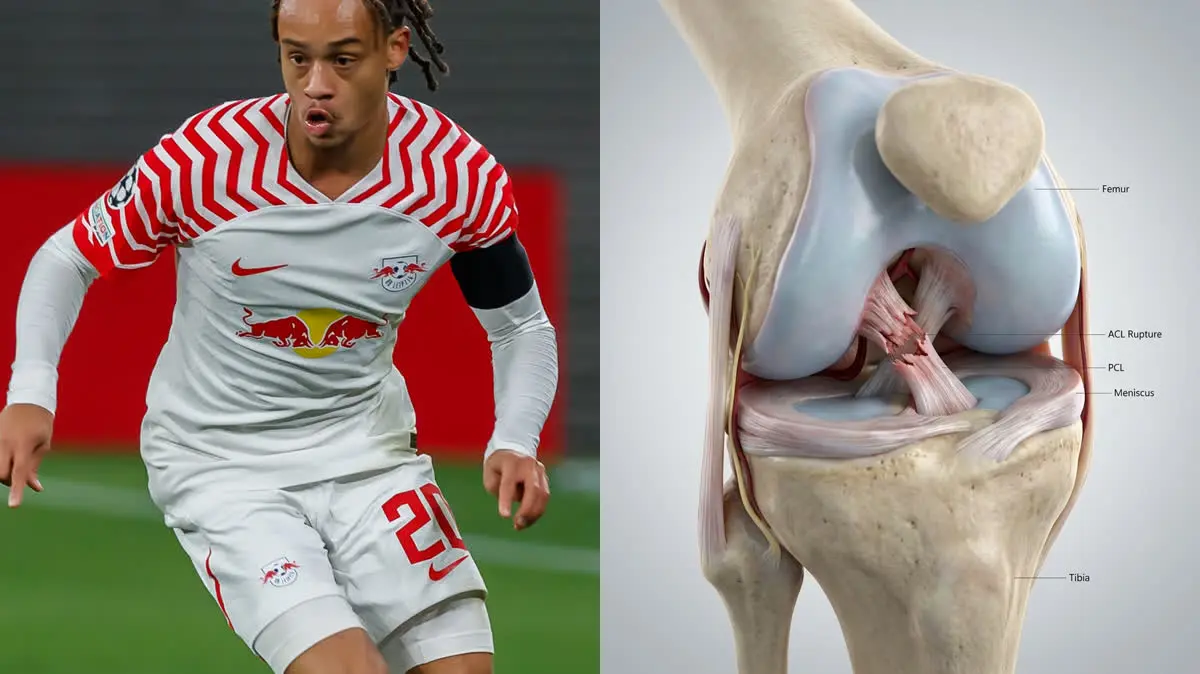
The football world was plunged into disappointment as news broke of the sudden and severe xavi simons injury. The young Dutch midfielder, currently playing for Tottenham Hotspur, suffered a ruptured anterior cruciate ligament (ACL) in his right knee, officially ruling him out of the 2026 FIFA World Cup.
For a player whose game relies on explosive acceleration, sharp changes of direction, and rapid deceleration, this injury represents a major biomechanical crisis. The ACL serves as the central stabilizer of the knee joint, preventing the tibia (shinbone) from shearing forward beneath the femur (thighbone). Rebuilding this joint requires a highly sophisticated physical rehabilitation program.
Achieving a complete acl rupture recovery demands an understanding of how these tissues heal and stabilize under dynamic loads. It is not merely a matter of surviving the post-surgical weeks; rather, it is about restoring the joint's capacity to absorb shear force. Let us examine the clinical biomechanics of ACL ruptures and outline the rehab protocols needed to return to elite competition.
The Pivot-Shift Crisis: Knee Joint Biomechanics
When a high-speed winger cuts sharply, the knee experiences forces that would make a carbon-fiber mountain bike frame groan under tension. The ACL is responsible for resisting knee rotational forces and preventing anterior tibial translation. During a rapid pivoting motion, the tibia is forced to slide forward and rotate inward relative to the femur.
If the foot is planted firmly on the turf and the knee is forced into valgus (collapsing inward) while rotating, the ACL is subjected to extreme tensile stress. In Simons' case, the impact of a collision added a direct force vector, causing the ligament fibers to stretch beyond their elastic limit and rupture. This trauma is accompanied by a 70% chance of meniscus or cartilage damage due to the joint surfaces grinding together.
After the ligament ruptures, the knee loses its passive structural integrity. The surrounding hamstring and quadriceps muscles must contract dynamically to keep the joint stable. Without a fully matured graft, however, these muscles cannot prevent the joint from shifting under high-impact cutting forces.
- The ACL absorbs up to 2.5 times body weight during rapid deceleration and high-velocity cutting maneuvers.
- Rupturing the ACL is accompanied by a 70% chance of associated meniscus or cartilage damage due to bone-on-bone shearing.
- Re-tear rates spike by over 300% if an athlete returns to competitive sport before achieving a 90% Limb Symmetry Index (LSI).
- Professional players typically require between 7 to 12 months of rehabilitation before they can safely return to match play.
Why Rushing the Ligamentization Phase Leads to Failure
When a major tournament like the World Cup is on the line, there is immense pressure on medical teams to speed up the recovery timeline. However, the biological process of graft healing cannot be accelerated by sheer willpower or intensive training. A newly reconstructed ligament must undergo a process called ligamentization, where the donor tissue transforms into a living ligament.
My clear, clinician-led perspective is that rushing an athlete back to sport before the graft has fully matured is a major therapeutic mistake. Rushing an athlete back from an ACL reconstruction is like taking a freshly baked cake out of the oven too early—it might look fine on the surface, but the structural core is bound to collapse under pressure. During the first twelve weeks, the graft actually weakens as it loses its blood supply before slowly rebuilding strength.
Clearing a player to return before the graft has reached optimal density increases the risk of re-rupture. Instead of focusing on arbitrary calendars, the rehabilitation team must use criteria-based milestones. This ensures the knee can handle rotational torque and absorb ground reaction forces before returning to play.
"In my clinic, I never clear an athlete for sport-specific drills based on time alone. We look at the Limb Symmetry Index (LSI) for quadriceps strength and hop tests. If the injured leg does not achieve at least a 90% LSI compared to the healthy leg, they are not ready. In soccer, players must make split-second reactive cuts. If the neuromuscular pathways cannot control the knee's alignment, the new graft will fail under the weight of the rotational shear."
Rebuilding the Knee's Neuromuscular Armor
A successful acl reconstruction rehab program must focus heavily on restoring neuromuscular control. When the ACL is torn, the nerve receptors inside the ligament are destroyed, which impairs the joint's proprioception. The brain loses its ability to sense the knee's position, leading to poor coordination during landing.
To rebuild this protective armor, the training must progress from simple straight-line movements to complex reactive drills. We begin with isometric quadriceps activation to prevent muscle wasting. We then progress to closed-chain exercises like squats and lunges to develop lower limb alignment.
Finally, the athlete transitions to perturbation training and agility drills, where they must respond to unpredictable external triggers. This teaches the brain to fire the hamstrings and glutes rapidly to stabilize the joint. Integrating this sensory-motor training is essential in modern sports physiotherapy.
Step-by-Step ACL Rehabilitation Progression
Execute this criteria-based loading sequence under strict clinical supervision. Stop immediately if you experience joint swelling, sharp pain, or instability in the knee:
-
1Phase 1: Isometric Quadriceps Setting (3 sets of 15 repetitions, 10-second holds) Lie on your back with a rolled-up towel under your knee. Tighten your quadriceps muscle, pressing the back of your knee down into the towel while pulling your toes toward your face. This movement prevents muscle wasting and restores patellar mobility. For general ACL recovery guidelines, check our ACL tear rehabilitation guide.
-
2Phase 2: Closed-Chain Eccentric Squats (3 sets of 10 repetitions, 4-second descents) Stand with feet shoulder-width apart, keeping your hips back and knees aligned over your toes. Slowly lower your body into a squat over 4 seconds, then return to standing. This eccentric loading develops quadriceps control. For comparison with other major knee reconstructions, view our analysis of Neymar's ACL and meniscus reconstruction.
-
3Phase 3: Single-Leg Drop Landings (3 sets of 8 repetitions per side) Stand on a low box, step off with one foot, and land softly on the ground, immediately flexing your hip, knee, and ankle to absorb the impact force. Keep your knee aligned over your second toe, preventing it from collapsing inward. This trains the joint to control rotational forces. For matching sports protocols, read our breakdown of the biomechanics of Rodrygo's ACL tear.
Restoring High-Performance Joint Resilience
Long-term knee health requires maintaining a strong kinetic chain. Ensure your hips and ankles have full mobility and strength, as a stiff ankle or weak hip forces the knee to absorb excess rotational shear. Focus on developing symmetric hamstring strength to act as a dynamic check against anterior tibial translation.
Treat your rehabilitation as a long-term investment in your athletic career. A disciplined, progressive approach is the only way to ensure a safe and successful return to play. Build your muscular strength, restore your neuromuscular coordination, and protect your joints from future injury.
Will dynamic, active loading prepare his knee for the high-intensity cuts of the Premier League in 2027, or will premature play trigger a recurrent knee joint crisis?
Featured image attribution: Left portrait "Xavi Simons (2023)" by Steffen Prößdorf, licensed under CC BY-SA 4.0. Right graphic is a clinical 3D rendering of knee joint anatomy showing an ACL rupture. Composited and modified for AyurPhysio.
Dr. Dhanushika Dilshani
Expert Ayurvedic Wellness Doctor. Specialized in modern holistic wellness, optimizing dermal resilience, cosmetic radiance, and systematic diagnosis driven by traditional and evidence-based medical logic.
Medical Disclaimer
The information provided by AyurPhysio is for general educational and informational purposes only. It is not intended as a substitute for professional medical advice, diagnosis, or treatment. Always seek the advice of your physician or other qualified health providers with any questions you may have regarding a medical condition. Never disregard professional medical advice or delay in seeking it because of something you have read on this website.
Trending Guides
Luka Modrić's Daily Routine: Low-Impact Resistance Training and Midfield Longevity
4 min readHarry Kane's Daily Routine: Hamstring Preservation and Anti-Inflammatory Nutrition
4 min readKarim Benzema's Daily Routine: Cupping Therapy (Hijama) and HIIT Conditioning
4 min readNeymar Jr.'s Daily Routine: Joint Stabilization and Hyperbaric Oxygen Therapy
4 min readMohamed Salah's Daily Routine: Early Morning Conditioning and Hyperbaric Recovery
4 min readWeekly Wellness
Don't miss the next guide
Get holistic health tips and new guides delivered to your inbox.
Related Healing Guides
View All Guides →
Luka Modrić's Daily Routine: Low-Impact Resistance Training and Midfield Longevity
Harry Kane's Daily Routine: Hamstring Preservation and Anti-Inflammatory Nutrition