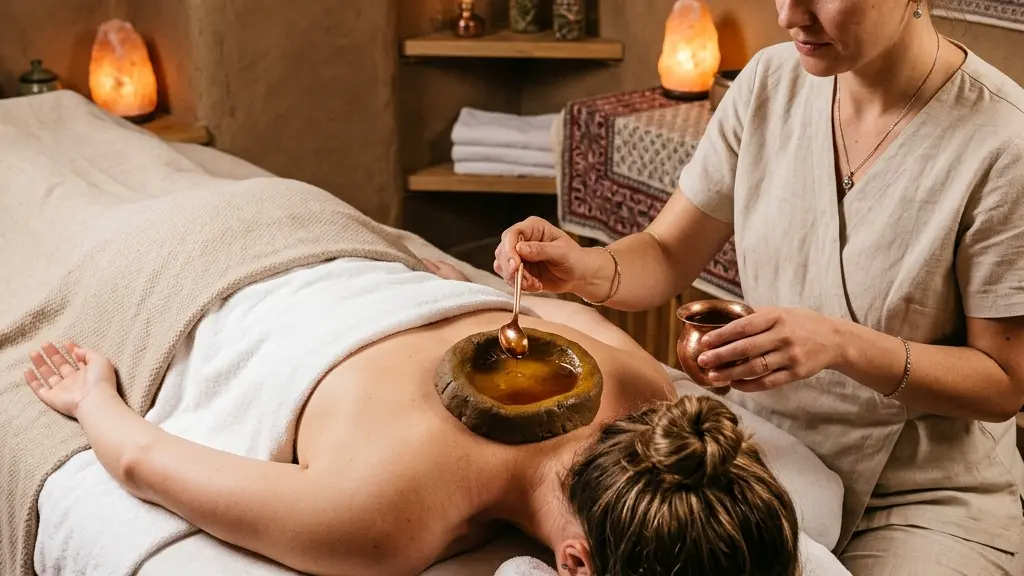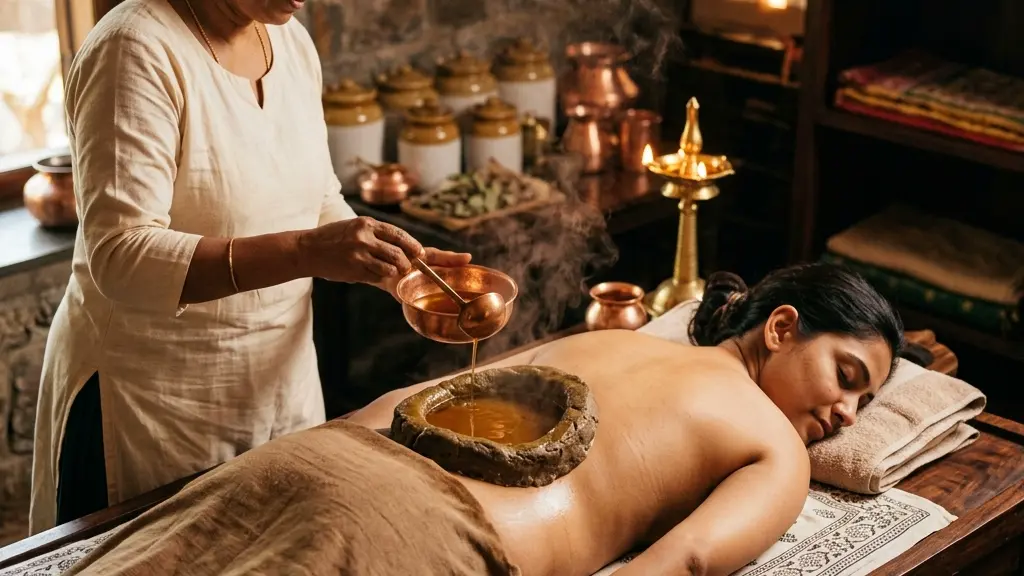
"Trying to align a dry, aggravated sacroiliac joint without local nourishment is like forcing a rusted hinge to turn. You must warm and lubricate the pelvic base first to allow smooth movement."
For those dealing with pelvic discomfort, every step can feel like a challenge. Sacroiliac (SI) joint pain—that dull, deep ache located just below your beltline on one side—can make walking, climbing stairs, or rolling over in bed feel incredibly difficult. Because the SI joint sits at the junction of the spine and the pelvis, any dry, aggravated Vata there reverberates through your entire lower body.
Systemic dryness often makes pelvic instability worse. Aggressive physical stretching when the tissues lack proper lubrication can irritate the nerves and aggravate Vata. This leaves your pelvic ring even more stiff and painful, prolonging your recovery cycle.
To achieve true sacroiliac joint pain relief, you must focus on targeted structural nourishment and local oleation. By utilizing the warming, deep-tissue lubrication of Ayurvedic Kati Basti, we can pacify Vata dosha and support the pelvic ligaments. This guide explains how this traditional oil pool therapy restores comfort.
Why the Pelvic Ring Needs Warmth and Lubrication
The sacroiliac joints are responsible for transferring load between the upper body and the legs. They are held together by a dense network of thick, strong ligaments. When Vata dosha becomes vitiated, these pelvic tissues lose their natural moisture and flexibility. This leads to dryness, joint friction, and muscle guarding around the sacrum.
Ayurveda identifies this condition as a classic Vata disorder characterized by joint dryness and structural instability. Medicated herbal oils help soothe this dryness, allowing the spasmed muscles to let go. Once the tissues are warmed and nourished, the joint can regain its natural alignment and comfort.
"Joint discomfort cannot be resolved while Vata-induced dryness remains in the ligaments. An ayurvedic spinal pool treatment, specifically Kati Basti, seals warm medicated oils like Mahanarayan or Sahacharadi over the sacrum. This deep heat penetrates the thick ligaments, calms local nerve root irritation, and restores tissue elasticity."
The Kati Basti SI Joint Recovery Protocol
This traditional approach focuses on deep local oil pooling to calm aggravated Vata and nourish the pelvic foundation:
- 1Dough Reservoir ConstructionA leak-proof circular dam made of black gram (urad dal) dough is shaped and placed securely over the sacrum and the affected SI joint. The seal must be perfect to retain the warm liquid oil. This localized reservoir ensures the herbs target the exact painful area.
- 2Medicated Oil Pooling (45 Minutes)Warm Mahanarayan taila or Sahacharadi taila is slowly poured into the dough ring. The oil is kept at a constant warm temperature (40–42°C) by replacing cooler oil with fresh warm oil. This continuous pooling bathes the dry ligaments and opens the circulation channels.
- 3Gentle Local Massage (Snehana)After the oil is removed, a very gentle, light massage is performed over the gluteal and lumbar region. This encourages the absorption of the medicated herbs and eases the surrounding muscle spasms. No heavy manipulation or cracking should be performed.
- 4Mild Steam Fomentation (Swedana)A warm herbal steam compress is applied to the lower back and sacrum. This helps the oil penetrate deeper into the joints, further reducing Vata-induced stiffness and clearing metabolic wastes. Perform this therapy weekly for a full course of 6 to 8 weeks.
When recovering from sacroiliac joint pain, avoid asymmetrical posture. Do not stand on one leg, avoid crossing your legs when sitting, and keep your weight evenly distributed across both hips. These simple precautions prevent the pelvic bones from shearing, allowing the ligaments to heal in their proper positions.
The Patient: Robert, a 52-year-old landscape architect, suffered from debilitating right-sided SI joint pain that made lifting heavy stone tiles impossible.
The Mistake: He hung from pull-up bars and stretched his hamstrings aggressively, which only increased his pelvic instability and led to a severe limp.
The Solution: We stopped all hanging and aggressive stretches. We introduced weekly Kati Basti sessions using Mahanarayan oil to warm the sacrum, followed by gentle, warm compresses and a Vata-pacifying diet.
The Outcome: Robert achieved 90% pain reduction within 5 weeks and returned to work on landscaping projects without joint stiffness.
Restoring Your Pelvic Foundation
Pelvic stability is a continuous process that depends on tissue nutrition. To protect your joints, incorporate warming daily routines and focus on maintaining symmetrical posture.
For adjacent healing guides, check out our guide on SI joint dysfunction guide and our article on Ayurvedic oils for pain. To learn how pelvic alignment affects other areas, read our guide on coccydynia physical therapy to balance the base of your spine.
Featured image: High-resolution clinical photograph displaying the application of a warm Kati Basti oil pool on a patient's lower back/sacrum region. Prepared for AyurPhysio clinical reference.
Dr. Dhanushika Dilshani
Expert Ayurvedic Wellness Doctor. Specialized in modern holistic wellness, optimizing dermal resilience, cosmetic radiance, and systematic diagnosis driven by traditional and evidence-based medical logic.
Medical Disclaimer
The information provided by AyurPhysio is for general educational and informational purposes only. It is not intended as a substitute for professional medical advice, diagnosis, or treatment. Always seek the advice of your physician or other qualified health providers with any questions you may have regarding a medical condition. Never disregard professional medical advice or delay in seeking it because of something you have read on this website.
Trending Guides
Luka Modrić's Daily Routine: Low-Impact Resistance Training and Midfield Longevity
4 min readHarry Kane's Daily Routine: Hamstring Preservation and Anti-Inflammatory Nutrition
4 min readKarim Benzema's Daily Routine: Cupping Therapy (Hijama) and HIIT Conditioning
4 min readNeymar Jr.'s Daily Routine: Joint Stabilization and Hyperbaric Oxygen Therapy
4 min readMohamed Salah's Daily Routine: Early Morning Conditioning and Hyperbaric Recovery
4 min readWeekly Wellness
Don't miss the next guide
Get holistic health tips and new guides delivered to your inbox.
Related Healing Guides
View All Guides →
Tulsi (Holy Basil): The Premier Adaptogenic Herb for Respiratory Strength and Emotional Balance
Amalaki (Amla): The Premier Ayurvedic Superfood of Rejuvenation and Natural Vitamin C