Patellofemoral Pain Syndrome (Runner’s Knee): Hip Abductor Weakness Fixes
“The knee is the innocent victim caught between the actions of the hip above and the foot below. To stop the knee screaming, you must silence the instability coming from the powerhouse driving the stride.”
It always begins as a vague, dull throb just behind the kneecap toward the end of a three-mile jog. But ignore it long enough, and Runner's Knee becomes a sharp, grinding agony that makes walking down a flight of stairs feel absolutely terrifying.
Medically labeled as patellofemoral pain syndrome, standard advice usually involves telling you to rest, strap on a neoprene brace, and stop running indefinitely. This fails miserably because it treats the mechanical symptom while completely ignoring the proximal biomechanical driver.
Clinical evidence proves that the problem isn't the kneecap itself; it is the track the kneecap runs in. When your hip muscles can't stabilize the thigh bone, that bone rotates inward, causing the tracks to violently collide with the wheels every single stride.
The Hip Internal Rotation Collapse
Your Gluteus Medius is the chief of lateral hip stability. When you land during running, this muscle must fire aggressively to keep your pelvis level and prevent your femur (thigh bone) from diving inward.
If the Glute Med is weak, the thigh dives inward, and the kneecap is pulled laterally against the femoral groove, creating high-friction shear loads. Extensive sports medical studies show that runners with patellofemoral pain show a significant 25% reduction in hip abductor strength compared to healthy pain-free controls.
Quad Strength Isn't The Golden Ticket
Historically, PTs purely trained the quadriceps to "pull the kneecap straight." My definitive clinical stance is that unless you build lateral hip control FIRST, strengthening the quads just increases the raw compressive force on an already damaged cartilage surface. You must pull the femur outward through the hip before accelerating.
Addressing structural misalignment upstream is critical to avoiding heavier structural tears later. Poor hip dynamics are the exact mechanism that cascades directly into traumatic outcomes like meniscus tear risks.
The 3 Critical Hip-First Activation Drills
To reclaim pain-free tracking and ensure success, weave these precise hip abductor weakness fixes into your daily regime.
- Clamshells with Posture Hold: Lying on your side with knees bent, lean slightly forward and lift the top knee without letting your back roll open. Place your thumb on the upper back portion of the buttock to confirm hard muscular contraction.
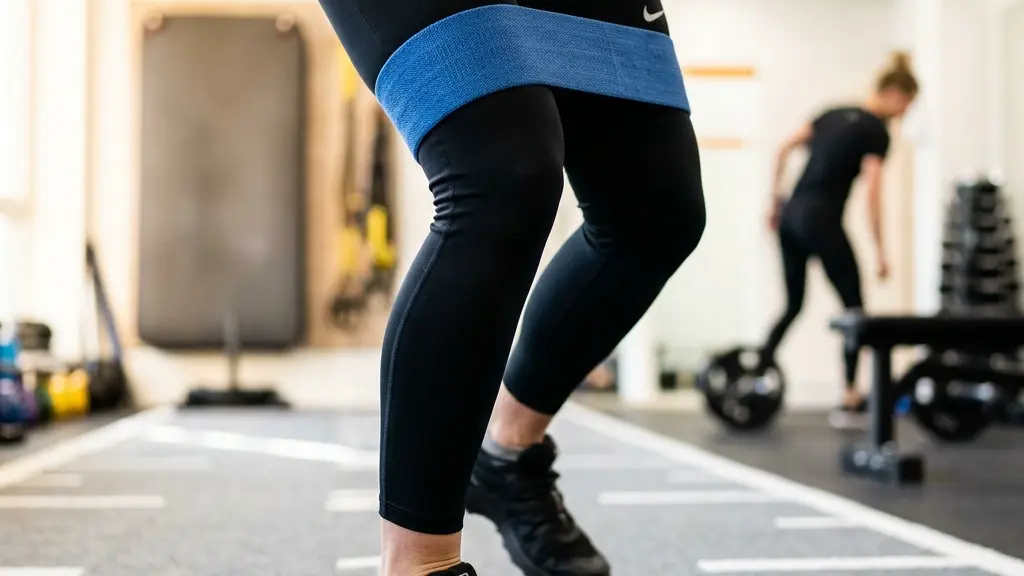
- Banded Monster Walks: Place a mini resistance band loop just above your knees. Get into a slight partial squat. Step dynamically to the side while keeping your knees forced outward directly over your pinky toes.
- The Single-Leg Hip Drop (Trendelenburg Control): Stand sideways on a low step with one foot dangling in mid-air. Keeping the stance leg locked straight, lower the free hip down and then hikers it back up high using only the stance hip's strength.
👤 Patient Spotlight: Rachel's Marathon Scare
The Patient: Rachel, 28, training for her first half-marathon when intense achy pain forced her to stop mid-run at mile 4.
The Mistake: She bought heavier cushioned shoes and tried "stretching her IT band," which had no impact on the mechanical tracking issues.
The Solution: We banned static stretching and forced heavy isometric side planks and weighted banded squats targeting hip abduction for 4 weeks.
The Outcome: Within 14 days her downhill stair pain vanished. She crossed the finish line of her race 6 weeks later completely pain-free.
Building Knee Armor For Life
Knee integrity doesn't happen at the knee; it happens at the heavy stabilizing cables holding the knee in space. If you ignore early runner's knee, the cumulative wear can place long-term strain on the entire joint sheath, increasing systemic injury potentials such as those discussed in ACL rehabilitation protocols.
Wake up your glutes. Widen your tracked base. Stop staring at your kneecap and reclaim the explosive, pain-free driving power in your hips.
Irushi Abeywardhana
Senior Physiotherapist & Founder of Physio Pulse. Senior Clinical Physiotherapist passionate about blending advanced movement science with functional resilience.
Medical Disclaimer
The information provided by AyurPhysio is for general educational and informational purposes only. It is not intended as a substitute for professional medical advice, diagnosis, or treatment. Always seek the advice of your physician or other qualified health providers with any questions you may have regarding a medical condition. Never disregard professional medical advice or delay in seeking it because of something you have read on this website.
Trending Guides
Luka Modrić's Daily Routine: Low-Impact Resistance Training and Midfield Longevity
4 min readHarry Kane's Daily Routine: Hamstring Preservation and Anti-Inflammatory Nutrition
4 min readKarim Benzema's Daily Routine: Cupping Therapy (Hijama) and HIIT Conditioning
4 min readNeymar Jr.'s Daily Routine: Joint Stabilization and Hyperbaric Oxygen Therapy
4 min readMohamed Salah's Daily Routine: Early Morning Conditioning and Hyperbaric Recovery
4 min readWeekly Wellness
Don't miss the next guide
Get holistic health tips and new guides delivered to your inbox.
Related Healing Guides
View All Guides →
Hyperlordosis: Tailoring Exercise Programs to Reduce Lumbar Shear Stress

Morning Lower Back Stiffness: The Biomechanical Causes and Quick, Safe Fixes