"Treating a deep muscle spasm with superficial cooling creams is like spraying water on the roof of a house when the electrical wiring is smoldering in the walls. You must warm and nourish the tissue directly to soothe Vata."
If your muscles feel like a tangled ball of wire fused together by constant stress, or if a localized spasm in your back makes sitting uncomfortable, you are likely dealing with myofascial trigger points. These tight muscle fibers create hard, painful knots that restrict movement and refer pain to other areas. In Ayurvedic medicine, this chronic muscle rigidity is recognized as Mamsagata Vata—Vata dosha invading the muscle tissues.
Many individuals seek relief by taking muscle relaxers daily or applying cold ice packs to the sore areas. While these choices offer temporary relief, they do not resolve the localized blood flow crisis and dryness inside the muscle knot. Cold temperatures constrict blood vessels and increase muscle stiffness, worsening the local lack of lubrication.
To find lasting relief, you must deactivate the muscle spasm and nourish the surrounding tissue. By utilizing traditional warm herbal oils, specifically Mahanarayan oil massage (Abhyanga) combined with heat therapy (Swedana), you can release stubborn knots, restore local blood flow, and establish long-term muscle health.
Why Stiff Muscles Need Oil and Heat to Heal
A myofascial muscle spasm is a hyperirritable spot within a tight band of muscle tissue. Under constant stress or repetitive strain, the muscle cells fail to relax, resulting in a sustained localized contraction. This persistent contraction squeezes surrounding blood vessels, cutting off the local supply of oxygen and nutrients. In Ayurvedic terms, this is recognized as Ama (metabolic wastes) blocking Vata (movement).
Warm medicated herbal oils are vital to counteract this dryness and lubricate the tight muscle bands. The heat and specific herbs increase microcirculation, helping the compressed fibers receive fresh nourishment and oxygen. This reduces Vata-induced spasms and helps the muscle return to its natural length.
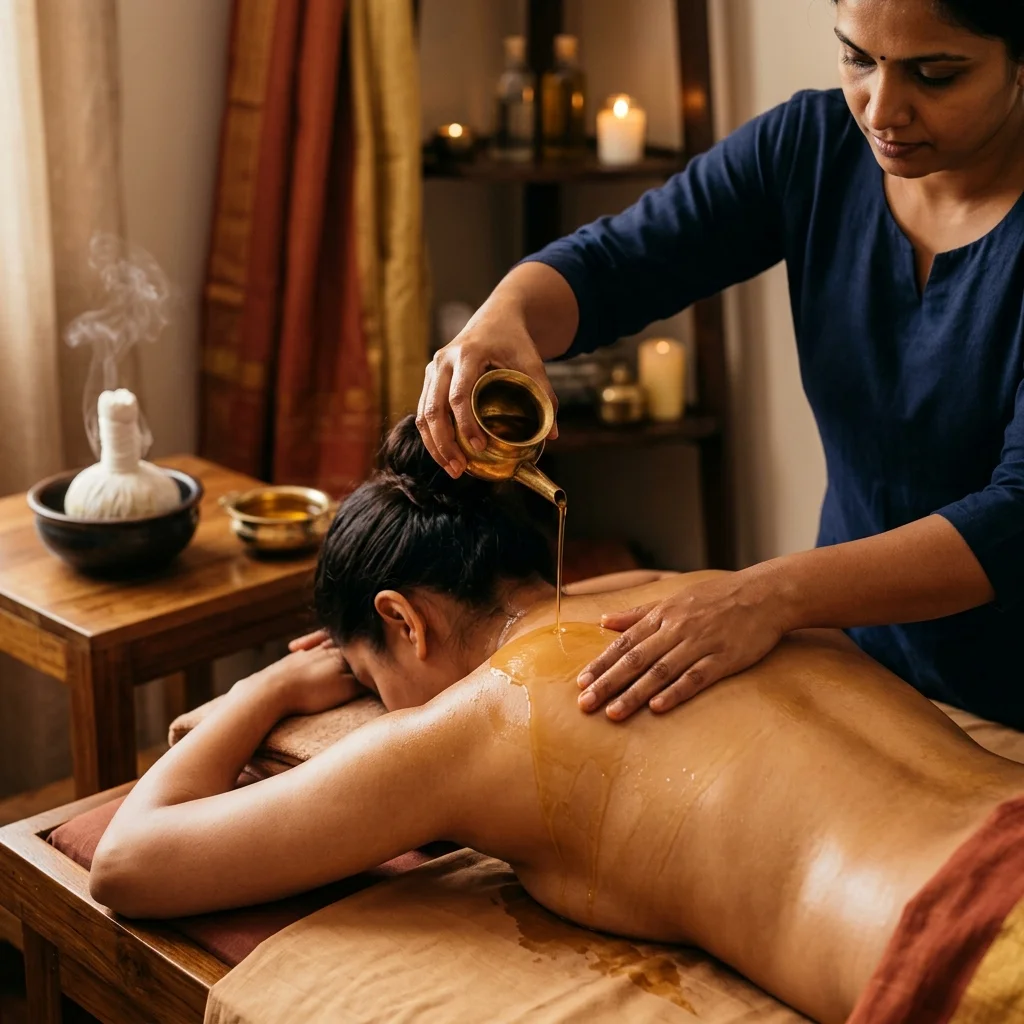
"Applying warm Mahanarayan oil to spasmed muscles provides deep relief by pacifying Vata. Sesame oil acts as a carrier, delivering anti-inflammatory herbs directly to the deeper muscle layers, which relaxes the muscle spindles and prevents spasms. Applying ice to these chronic knots is highly counterproductive as cold worsens Vata stiffness."
The Mahanarayan Oil Massage Protocol
To release stagnant muscle knots and restore healthy blood flow, implement these traditional steps daily:
- 1Mahanarayan Oil Warm-upWarm 2-3 tablespoons of Mahanarayan taila in a warm water bath. Mahanarayan oil is a classical Ayurvedic formulation containing over thirty anti-inflammatory herbs on a warming sesame oil base. Heating the oil helps it penetrate the skin barrier quickly.
- 2Targeted Abhyanga (Self-Massage)Massage the warm oil into the tight muscle groups using firm, sweeping strokes. Focus on the core knots, applying steady, gentle pressure with your thumbs or palms to release tension. This mechanical action and herbal penetration soothe irritated nerve endings.
- 3Localized Heat Therapy (Swedana)Place a warm moist heating pad or hot herbal compress over the oiled area for 15 minutes. The moist heat dilates local blood vessels, accelerating blood flow and helping the nourishing oil penetrate deeper into the released muscle fibers.
The Patient: Linda, a 50-year-old manager, presented with deep, burning muscle knots in her lower back that made standing difficult.
The Mistake: Linda took prescription muscle relaxers daily, which caused severe daytime fatigue and brain fog without resolving the deep back knots.
The Solution: We stopped the pills and initiated a program of warm Mahanarayan oil massage followed by local herbal steam therapy twice weekly, combined with a Vata-pacifying lifestyle.
The Outcome: Within five weeks, Linda reported complete relief from her muscle knots, stopped taking muscle relaxers, and regained full spinal comfort.
Deactivate Muscle Knots at the Root
True recovery requires deactivating the muscle spasm and nourishing the tissue. By combining warm Mahanarayan oil massage with moist heat, you restore normal circulation and help the muscle heal naturally.
To understand how metabolic waste drives tissue pain, read our analysis on how Ama toxins trigger joint inflammation. If you are experiencing systemic Vata issues, explore our guides on managing Vata imbalance. Additionally, our guide on Ayurvedic oils for pain outlines details on classical formulas.
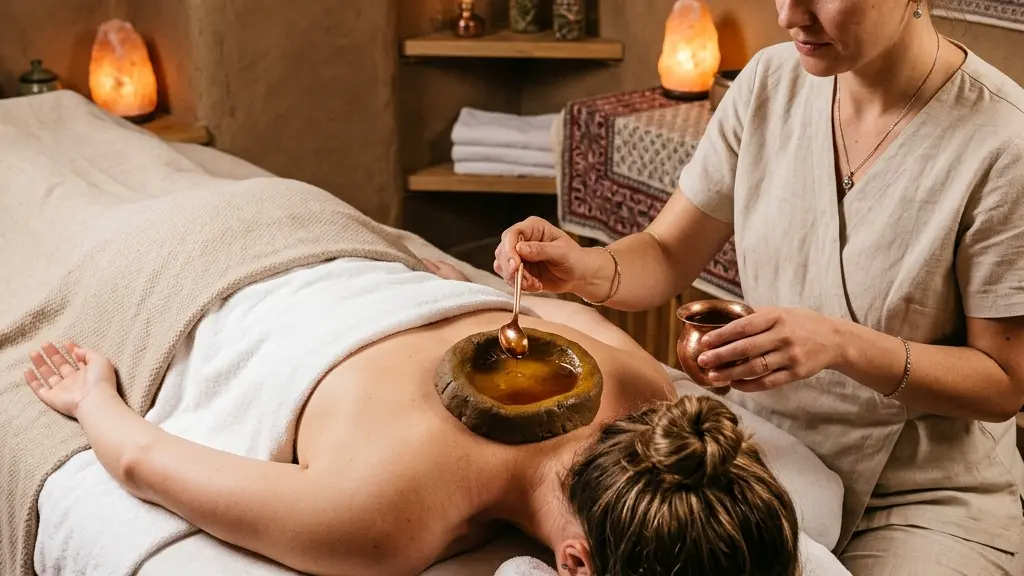
Featured image: Warm Mahanarayan oil being applied to target muscle spasms in an Ayurvedic clinical setting. Created for AyurPhysio editorial use.
Dr. Dhanushika Dilshani
Expert Ayurvedic Wellness Doctor. Specialized in modern holistic wellness, optimizing dermal resilience, cosmetic radiance, and systematic diagnosis driven by traditional and evidence-based medical logic.
Medical Disclaimer
The information provided by AyurPhysio is for general educational and informational purposes only. It is not intended as a substitute for professional medical advice, diagnosis, or treatment. Always seek the advice of your physician or other qualified health providers with any questions you may have regarding a medical condition. Never disregard professional medical advice or delay in seeking it because of something you have read on this website.
Trending Guides
Luka Modrić's Daily Routine: Low-Impact Resistance Training and Midfield Longevity
4 min readHarry Kane's Daily Routine: Hamstring Preservation and Anti-Inflammatory Nutrition
4 min readKarim Benzema's Daily Routine: Cupping Therapy (Hijama) and HIIT Conditioning
4 min readNeymar Jr.'s Daily Routine: Joint Stabilization and Hyperbaric Oxygen Therapy
4 min readMohamed Salah's Daily Routine: Early Morning Conditioning and Hyperbaric Recovery
4 min readWeekly Wellness
Don't miss the next guide
Get holistic health tips and new guides delivered to your inbox.
Related Healing Guides
View All Guides →
Tulsi (Holy Basil): The Premier Adaptogenic Herb for Respiratory Strength and Emotional Balance
Amalaki (Amla): The Premier Ayurvedic Superfood of Rejuvenation and Natural Vitamin C