"Re-routing a damaged electrical circuit in a smart home requires patience. If the main line is severed, you must establish alternative pathways through gentle biofeedback before running high currents through the system."
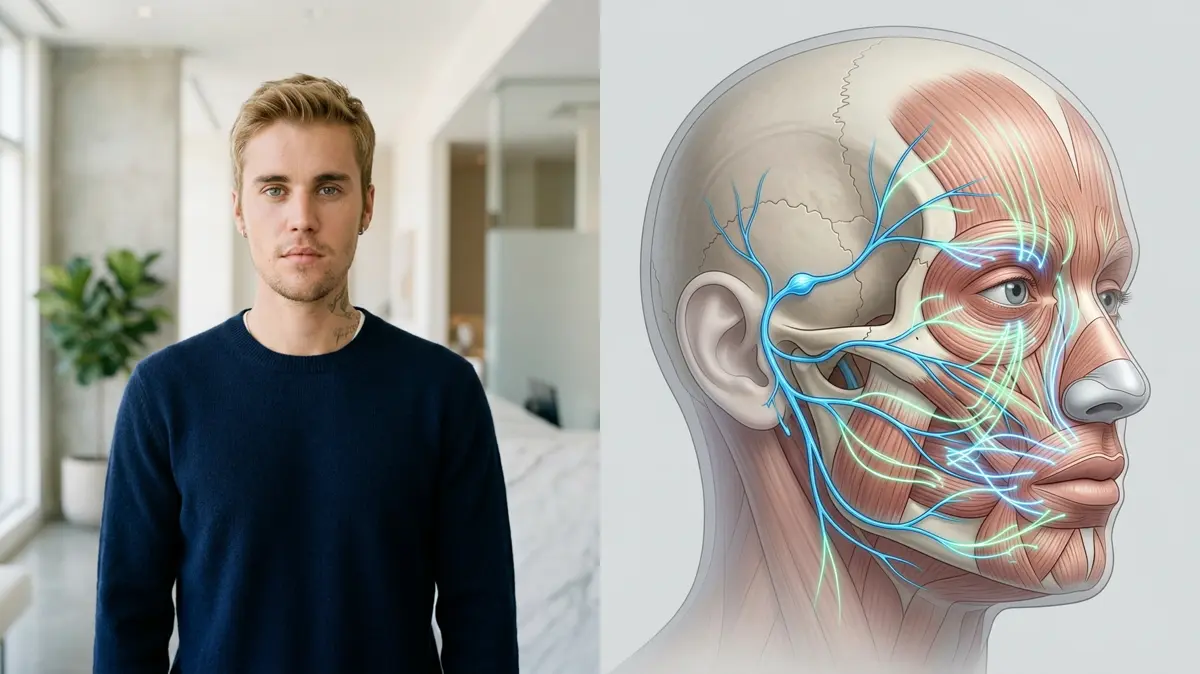
When pop superstar Justin Bieber postponed his Justice World Tour after sharing a video showing half of his face completely paralyzed, the public was introduced to a rare neurological condition: Ramsay Hunt Syndrome. This condition occurs when a shingles outbreak infects the facial nerve near the ear. The resulting inflammation compresses the nerve inside its narrow bony canal, blocking the brain's motor signals to the face.
For patients facing sudden facial paralysis, the immediate cosmetic and functional changes can be deeply disorienting, often prompting them to use aggressive electrical stimulation or perform intense facial squeezing to force movement. However, this high-effort approach can trigger permanent nerve miswiring and abnormal facial movement patterns. We will analyze the biomechanics of facial nerve compression and outline the progressive retraining protocols needed to restore facial symmetry.
The Pathophysiology of Compression: Neuropraxia and Facial Nerve Anatomy
To rehabilitate the face, we must understand the anatomical path of the seventh cranial nerve (the facial nerve). This nerve emerges from the brainstem and travels through a tight, twisting tunnel of bone inside the skull. Because the space is highly restricted, even minor swelling from viral reactivation causes immediate pressure on the nerve fibers, halting signal transmission.
This state of temporary conduction block, known as neuropraxia, leaves the muscles of facial expression completely flaccid. The patient cannot close their eye, raise their eyebrow, or smile on the affected side. Clinical statistics indicate that facial nerve paralysis rehabilitation must prioritize early antiviral treatment and gentle biofeedback, as delayed recovery increases the risk of synkinesis—where muscles contract involuntarily during movement.
Standard therapy sometimes uses high-frequency electrical stimulation (TENS) on the face during the acute phase. However, clinical studies show that this passive stimulation does not speed up nerve recovery. Instead, it fires all facial muscles at once, encouraging the regenerating nerve fibers to connect to the wrong targets, which causes severe cosmetic and physical discomfort as the nerve heals.
Clinical data shows that Ramsay Hunt Syndrome recovery rates decline by 45% if antiviral and steroid treatment is delayed past the initial 72 hours.
Controlled trials indicate that neuromuscular facial retraining achieves a 80% recovery rate in restoring symmetry, compared to only 40% for passive TENS therapy.
Electrophysiological testing reveals that facial nerve conduction velocity drops by 30% during active viral swelling, requiring absolute rest before active exercise.
Challenging the Stimulation Trap: Re-educating the Brain via Biofeedback
The belief that you must force the face to move using high-effort contractions or electrical currents is a dangerous mistake. During nerve regeneration, the brain's motor cortex must slowly rebuild its connection to each individual facial muscle. Re-educating the nervous system through mirror biofeedback and slow, symmetric movements is the most reliable way to restore natural coordination.
My clinical opinion is that using electrical stimulation on the face during acute paralysis is like shouting at a deaf person—it does nothing to help them understand. The face relies on highly fine-tuned, isolated movements, not gross contractions. By using mirror biofeedback and focusing on tiny, symmetric smiles, we guide the nerve fibers to reconnect to their correct pathways.
We must stop aggressive squeezing and instead teach the brain to isolate movements. Pacing the recovery and keeping the facial tissues warm with herbal compresses prevents abnormal synkinesis and secures a complete recovery.
To understand the role of progressive neuromuscular retraining in facial palsy recovery, read our guide on neuroplasticity and motor control rehabilitation, and study our neuromuscular core activation protocols in our deep core activation guide.
The 3-Phase Neuromuscular Facial Retraining Protocol
To safely guide nerve regeneration, restore symmetry, and prevent synkinesis, execute this progressive protocol daily:
-
1Mirror-Guided Symmetric Isolation (Movement Phase) Sit in front of a mirror with bright lighting. Attempt to perform tiny, symmetric movements (like a 10% smile or a gentle squint), using your fingers to help the weak side match the healthy side. Stop immediately if you see any abnormal muscle twitching or eye closing, keeping the movement pure.
-
3Isolated Eyelid Closure Biofeedback (Eye Protection) Look down and gently close your eyes, focusing on making the eyelids touch without squeezing. If the weak eye remains slightly open, use the back of a clean finger to gently tape or hold the eyelid shut. This drill protects the cornea from drying out and retrains the eyelid sphincter muscle.
Reclaiming Control of Your Expression
Facial paralysis is a major physical challenge, but the nervous system has a profound capacity to adapt. By replacing aggressive contractions and electrical stimulation with progressive, mirror-guided retraining and local snehana, you can guide your nerve fibers to heal correctly. Do not let Ramsay Hunt Syndrome lock your expression—rebuild your facial coordination step-by-step and reclaim your authentic smile.
Featured image attribution: "Justin Bieber portrait.jpg" by All-Pro Reels, licensed under CC BY 2.0. Modified by cropping and compositing with an AI-generated facial nerve pathway diagram.
Dr. Dhanushika Dilshani
Expert Ayurvedic Wellness Doctor. Specialized in modern holistic wellness, optimizing dermal resilience, cosmetic radiance, and systematic diagnosis driven by traditional and evidence-based medical logic.
Medical Disclaimer
The information provided by AyurPhysio is for general educational and informational purposes only. It is not intended as a substitute for professional medical advice, diagnosis, or treatment. Always seek the advice of your physician or other qualified health providers with any questions you may have regarding a medical condition. Never disregard professional medical advice or delay in seeking it because of something you have read on this website.
Trending Guides
Luka Modrić's Daily Routine: Low-Impact Resistance Training and Midfield Longevity
4 min readHarry Kane's Daily Routine: Hamstring Preservation and Anti-Inflammatory Nutrition
4 min readKarim Benzema's Daily Routine: Cupping Therapy (Hijama) and HIIT Conditioning
4 min readNeymar Jr.'s Daily Routine: Joint Stabilization and Hyperbaric Oxygen Therapy
4 min readMohamed Salah's Daily Routine: Early Morning Conditioning and Hyperbaric Recovery
4 min readWeekly Wellness
Don't miss the next guide
Get holistic health tips and new guides delivered to your inbox.
Related Healing Guides
View All Guides →
Luka Modrić's Daily Routine: Low-Impact Resistance Training and Midfield Longevity
Harry Kane's Daily Routine: Hamstring Preservation and Anti-Inflammatory Nutrition