Cervical Radiculopathy: Traction, Isometric Exercises, and Nerve Glides
"A pinched nerve in your neck is the mechanical equivalent of parking a heavy car tire directly on top of a flowing garden hose — it stops the signal, builds pressure, and causes damage until the load is lifted."
You sit down at your laptop, and within minutes, a familiar electric spark shoots down your arm. Your fingers start tingling, your shoulder blade burns, and no amount of rubbing seems to reach the source of the pain. If your neck feels like it is being squeezed in a mechanical bench vise, you are not dealing with a simple muscle knot.
This agonizing sensation is often caused by a pinched nerve in neck, a clinical condition known as cervical radiculopathy. When a spinal disc herniates or a bone spur encroaches on the narrow exit channel of your nerve root, it triggers local inflammation and radiating neurological symptoms down the arm. Restoring normal function requires a structured biomechanical approach, not passive rest.
Your head is essentially a 10-pound bowling ball balanced on a thin column of seven delicate vertebrae. When poor posture shifts that ball forward, the mechanical stress on your cervical joints spikes dramatically, narrowing the exit points of your spinal nerves. Let us look at how mechanical decompression, neural mobilization, and deep stabilization can relieve the pressure.
The Biomechanics of Cervical Nerve Compression
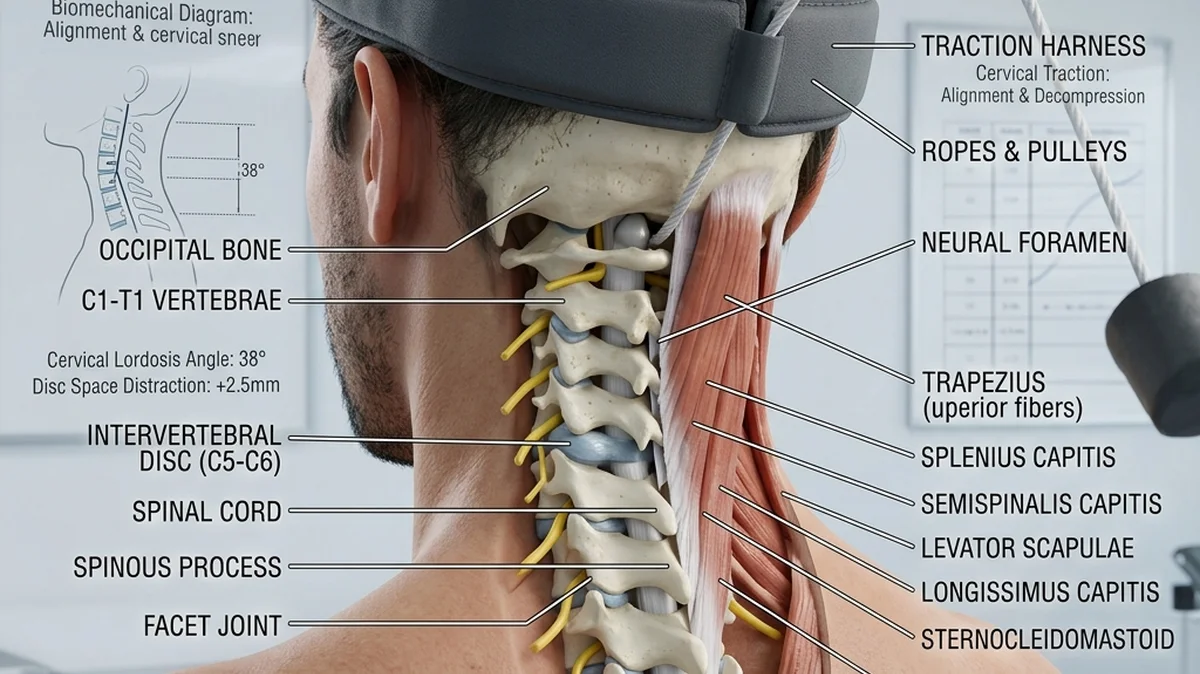
The nerve roots leaving your cervical spine travel through narrow bony tunnels called intervertebral foramina. Under normal conditions, these tunnels provide ample room for the nerves to slide and glide during head movement. However, cervical disc degeneration or sudden trauma can narrow these spaces, resulting in localized mechanical compression.
Once a nerve root is compressed, the localized blood supply is cut off, triggering severe neural edema and chemical inflammation. This inflammation sensitizes the nerve fibers, causing pain to radiate along the path of the nerve (a dermatome) into the shoulder, elbow, and hand. In severe cases, it can cause motor weakness, making simple actions like opening a jar feel nearly impossible.
Many patients react by pulling their head sideways or twisting their neck in an attempt to stretch the tight muscles. However, attempting to roll your head in deep circles to 'stretch it out' is like trying to free a caught sleeve from a zipper by pulling it harder — it only worsens the mechanical catch and increases tissue inflammation. True recovery requires creating space in the spinal column first.
- Sitting with a forward head posture of just 3 inches increases the mechanical load on your cervical spine to a staggering 42 lbs, spiking intra-discal pressure.
- Clinical trials show that combining mechanical traction with targeted stabilization exercises reduces radicular symptoms in 82% of patients within six weeks.
- Performances of specific cervical nerve glides achieve up to a 30% decrease in intraneural fluid pressure, restoring healthy blood flow to the nerve root.
Why Aggressive Stretching Worsens Nerve Irritation
Standard neck stretching is a critical mistake in acute cervical radiculopathy. Reaching for your ear and pulling your head sideways actually increases the tension on an already irritated nerve root, exacerbating the inflammation. When a nerve is compressed and inflamed, putting it under high tension acts as a mechanical irritant, worsening the shooting pain and sensory deficits.
Instead of pulling on the nerve, rehabilitation must focus on mechanical decompression (opening up the bony tunnels) and neural flossing. Neural flossing slides the nerve back and forth through its bony pathway without stretching it, which helps break down micro-adhesions and pumps fresh, nutrient-rich fluid to the injured tissue.
Once the acute inflammation is controlled, the focus shifts to performing specific cervical radiculopathy exercises. These drills strengthen the deep postural stabilizers of the neck, ensuring your spine can maintain a neutral alignment under load and preventing future compression episodes.
"In my clinical practice, the most common mistake I see patients make with a pinched nerve is aggressive neck stretching. They pull their head to the side, trying to relieve the stiffness, which actually pulls the inflamed nerve root tight against the herniated disc. It is a recipe for chronic nerve irritation. We must focus on opening the joint space with gentle manual traction and then stabilizing the deep neck flexors. Reprogramming posture is the only way to keep the nerve pressure-free long term."
The Three Pillars of Radiculopathy Rehabilitation
A successful clinical recovery protocol for cervical radiculopathy is built on three key phases that must be performed in sequence. First, we use mechanical decompression to create space. Second, we restore nerve mobility. Third, we build deep muscular support to hold the spine in a neutral position.
This progression ensures that you do not overload the joints while the nerve is still highly sensitized. By performing low-load exercises with high focus, you can rebuild strength in the stabilizing muscles without triggering compensatory movements in the upper back and shoulders.
Additionally, incorporating specific deep neck flexor drills helps provide long-term cervicogenic headache relief. This is because stabilizing the upper cervical spine reduces the compensatory muscle spasms in the suboccipital region that frequently trigger tension headaches.
The Patient: Mark, a 45-year-old software architect, presented with severe, burning pain radiating from his neck down his right arm to his thumb, accompanied by persistent tingling.
The Mistake: Mark spent weeks using a deep tissue massage gun directly on his neck muscles and performing aggressive side stretches, which left him with constant burning pain and weak hand grip.
The Solution: We suspended all active neck stretching, introduced daily home-based manual traction, initiated gentle neural flossing, and transitioned him to progressive isometric neck holds.
The Outcome: Mark achieved an 80% reduction in arm pain within 3 weeks. By week 6, his hand grip strength had fully recovered, and he returned to work pain-free with a modified ergonomic setup.
Your Daily Cervical Decompression & Rehab Protocol
Perform this focused clinical sequence daily. Focus entirely on maintaining a pain-free range of motion. If any movement increases the radiating pain down your arm, stop immediately and reduce the range of motion:
-
1Phase 1: Safe Home Cervical Self-Traction (1-2 minutes) Lie flat on your back on a firm surface. Place a rolled towel horizontally directly under the curve of your neck. Gently place your hands under the base of your skull. Apply a slow, steady pull upward (away from your shoulders) using light force. You should feel a gentle decompression in your neck joints. Hold for 10 seconds, release, and repeat.
-
2Phase 2: Median Nerve Gliding (10-12 reps) Stand tall with your arm at your side. Extend your wrist and fingers backward. Slowly raise your arm out to the side until it is parallel to the floor, keeping your wrist bent back. Next, bend your elbow to bring your hand toward your shoulder while tilting your head away from that arm. Then, straighten the elbow and wrist while tilting your head toward the arm. This neural glide slides the nerve through the cervical pathway without creating excessive tension.
-
3Phase 3: Multi-Directional Isometric Neck Exercises (5 holds per direction) Sit upright with a neutral posture. Place your hand on your forehead. Gently press your forehead forward into your hand while resisting any movement with your neck muscles. Hold this contraction at 20% effort for 5 seconds. Repeat this process by placing your hand on the back of your head (resisting backward force) and on the sides of your head (resisting lateral force). This builds deep muscular stability.
Restoring Postural Balance in the Kinetic Chain
Releasing the compressed nerve is only the beginning. To prevent the recurrence of cervical radiculopathy, you must look at how your daily habits impact your neck alignment. Long hours spent leaning forward over a mobile screen create severe postural imbalances that leave your spine vulnerable to injury.
To learn how to address this postural challenge directly, check out our guide on neck pain from mobile use and text neck syndrome. If you want to strengthen the deep muscles at the front of your neck to stabilize your head, read our clinical breakdown of deep neck flexor strengthening for headache relief. Additionally, to learn how to restore your neck's natural curve, explore our tips on forward head posture correction.
Your cervical spine is designed to support your head with ease, but it requires active muscular support and balanced alignment to do so. Stop letting poor posture pinch your nerves. Stabilize your neck, glide your nerves, and let your spine move the way it was designed to.
Is a forward head posture placing a constant mechanical load on your cervical spine and pinching your nerves?
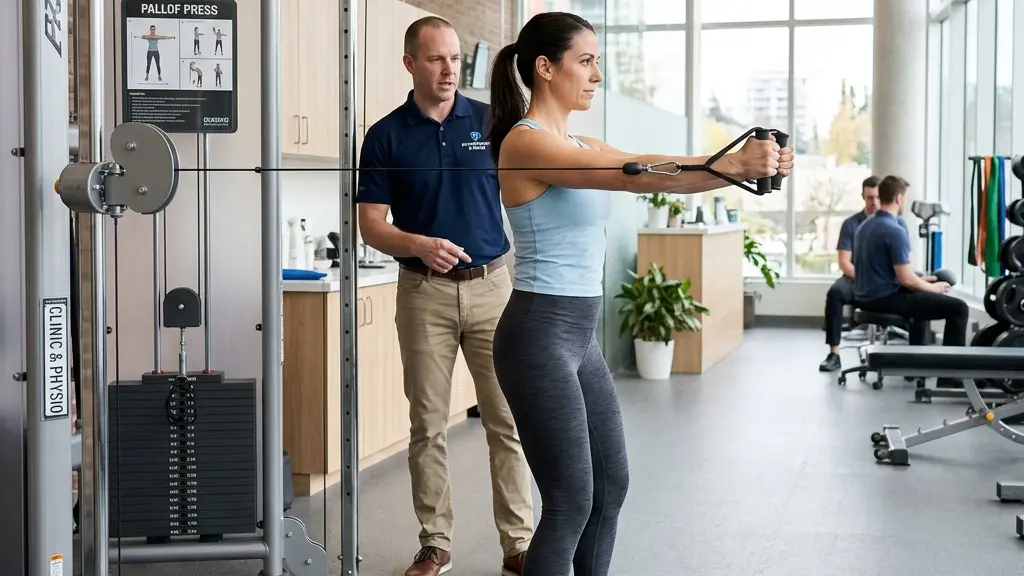
Featured image: A premium clinical vector illustration of a person with neck pain showing highlighted cervical spine area. A physical therapist is guiding them through cervical traction therapy in a clean, bright, modern clinical gym environment. Modern rehabilitation equipment is visible. Created for AyurPhysio educational resources.
Irushi Abeywardhana
Senior Physiotherapist & Founder of Physio Pulse. Senior Clinical Physiotherapist passionate about blending advanced movement science with functional resilience.
Medical Disclaimer
The information provided by AyurPhysio is for general educational and informational purposes only. It is not intended as a substitute for professional medical advice, diagnosis, or treatment. Always seek the advice of your physician or other qualified health providers with any questions you may have regarding a medical condition. Never disregard professional medical advice or delay in seeking it because of something you have read on this website.
Trending Guides
Luka Modrić's Daily Routine: Low-Impact Resistance Training and Midfield Longevity
4 min readHarry Kane's Daily Routine: Hamstring Preservation and Anti-Inflammatory Nutrition
4 min readKarim Benzema's Daily Routine: Cupping Therapy (Hijama) and HIIT Conditioning
4 min readNeymar Jr.'s Daily Routine: Joint Stabilization and Hyperbaric Oxygen Therapy
4 min readMohamed Salah's Daily Routine: Early Morning Conditioning and Hyperbaric Recovery
4 min readWeekly Wellness
Don't miss the next guide
Get holistic health tips and new guides delivered to your inbox.
Related Healing Guides
View All Guides →
Hyperlordosis: Tailoring Exercise Programs to Reduce Lumbar Shear Stress

Morning Lower Back Stiffness: The Biomechanical Causes and Quick, Safe Fixes