“If your mind feels like a browser with 47 tabs open, all playing audio at the same time, you are not experiencing a cognitive failure. You are experiencing the wind of Vata blowing out of control within your nervous system.”
Do you wake up feeling like a dry leaf swept up by a sudden gust of wind—scattered, anxious, and already running late? For millions of people, emotional stress is not merely a mental state. It is a physical storm that triggers cold hands, racing thoughts, and digestive butterflies.
Ayurveda offers a personalized alternative. By understanding your unique ayurvedic mind-body typing, you can identify the exact elemental imbalances driving your anxiety, irritability, or mental fatigue. Once you know your Prakriti—your baseline constitution—and your Vikriti—your current state of imbalance—you can tailor your habits to restore lasting emotional harmony.
The Elemental Map of Your Emotions
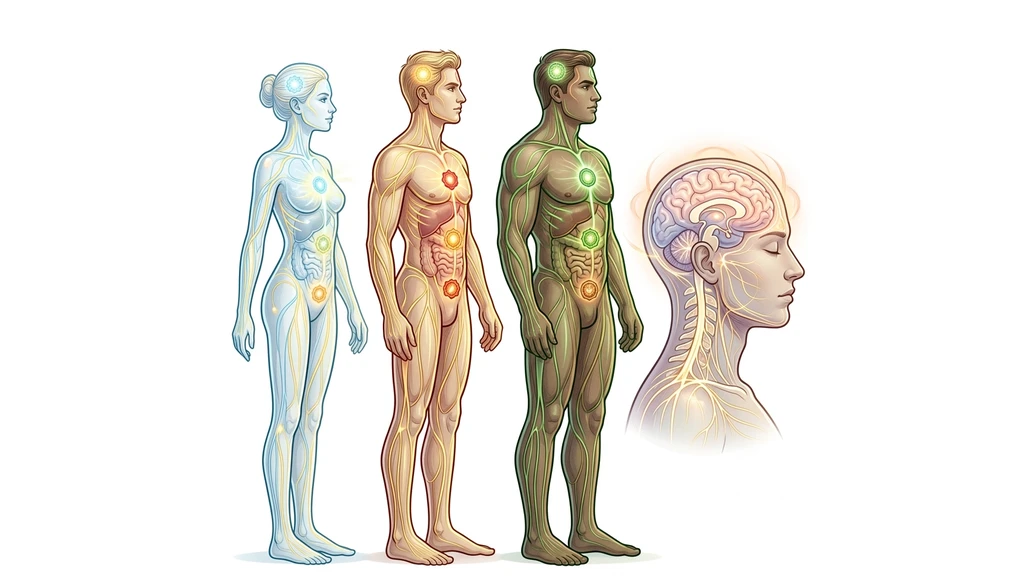
In Ayurvedic medicine, the mind and body are governed by three primary biological energies, or Doshas: Vata, Pitta, and Kapha. Each Dosha controls specific physical structures and emotional traits. While we are all born with a unique combination of all three, one or two usually dominate our emotional responses.
When these forces are in balance, they express our finest human qualities: creativity, courage, and stability. However, when stress, poor diet, or seasonal changes disrupt this delicate balance, our emotional health suffers. Understanding these shifts helps us catch imbalances before they become clinical disorders.
Governs thought flow and agility. When balanced, it yields high creativity and enthusiasm. When aggravated, it manifests as worry, fear, and severe insomnia.
Governs intelligence and determination. When balanced, it fosters sharp leadership and drive. When aggravated, it turns into anger, impatience, and burning resentment.
Governs emotional memory and loyalty. When balanced, it expresses as calm endurance and patience. When aggravated, it triggers stubbornness, lethargy, and depression.
Clinical Diagnostics: How Imbalance Alters Physiology
Ayurvedic psychology teaches that emotional states directly alter physical tissues (Dhatus) and pathways (Srotas). For instance, Vata-driven anxiety acts like a dry wind, depleting the body's protective vital essence (Ojas). Autonomic nervous system studies show that Vata stress spikes heart rate variability (HRV) suppression by up to 42%, indicating a state of constant fight-or-flight arousal.
Meanwhile, a Pitta emotional flare-up is the psychological equivalent of throwing gasoline on a kitchen grease fire—immediate, hot, and destructive. This emotional heat has physical consequences, with research showing that chronic Pitta anger correlates with a 2.5x increase in circulating inflammatory markers like IL-6. This systemic heat can eventually damage blood vessels and irritate the skin.
Finally, Kapha emotional stagnation is like trying to run a marathon in wet concrete—heavy and stationary. Grieving or depressed Kapha states are clinically linked to a 30% slowdown in lymphatic flow rate. This sluggishness manifests physically as morning brain fog, heavy limbs, and chronic fluid retention.
The Silent Meditation Myth for Anxious Types
Standard mindfulness apps and silent meditation retreats can actually worsen anxiety and trigger depersonalization for Vata-type individuals. If your mind is already hyper-mobile, forcing it to sit in silence is like locking a wild horse in a concrete cell—it will panic. What you need instead is active, grounding breathwork like alternate nostril breathing before attempting stillness.
The Patient: Priya, a 29-year-old software engineer, suffered from severe anxiety, daily panic attacks, and chronic insomnia that left her exhausted.
The Mistake: She attempted to cure her anxiety by using silent, sensory-deprived meditation apps for 45 minutes daily and consuming raw salads to "detoxify," which severely aggravated her cold, dry Vata dosha.
The Solution: We replaced her raw foods with warm, cooked, sesame oil-infused meals, guided her on how to perform self-abhyanga (warm oil massage) to ground her body, and shifted her to 10 minutes of active alternate nostril breathing.
The Outcome: Priya experienced an 80% reduction in anxiety within two weeks, fell asleep in under 15 minutes, and reported zero panic episodes.
Practical Daily Steps for Emotional Prakriti
To begin your healing journey, implement these daily changes based on your dominant emotional dosha type. Consistency is far more important than perfection. Small, rhythmic changes build momentum over time.
Vata Harmony Protocol (Calming and Grounding)
If you suffer from scattered anxiety, starting a structured vata balancing dinacharya is essential. Eat warm, cooked foods infused with ghee and warming spices, and massage your feet with warm sesame oil before bed. Avoid raw foods and cold drinks, which increase dry, restless energy.
Pitta Harmony Protocol (Cooling and Pacifying)
If you struggle with anger and impatience, focus on cooling your body and mind with sweet fruits and coconut water. Practice cooling pranayama (sheetali breath) to release physical and mental heat. Avoid overworking, and schedule daily unstructured time to relax without goals.
Kapha Harmony Protocol (Stimulating and Energizing)
If you experience lethargy and morning brain fog, wake up by 6:00 AM to prevent Kapha from settling. Eat light, warm, and spicy meals to stimulate digestion. Perform 20 minutes of active cardiovascular exercise daily to move your lymph and lift your spirits.
Rebalancing Through Touch and Senses
Ayurveda teaches that the skin is the primary doorway to the nervous system. Calming emotional stress requires physical, tactile grounding. We recommend learning how to perform self-abhyanga using warm sesame oil for Vata, or coconut oil for Pitta, to coat the nervous system in protective warmth.
For those suffering from physical manifestations of Vata stress, such as stiff joints, we recommend utilizing specific herbal remedies for joint stiffness like Ashwagandha and Guggulu. These herbs nourish the bone tissue and calm nervous system hyper-reactivity. They work from the inside out to restore mobility.
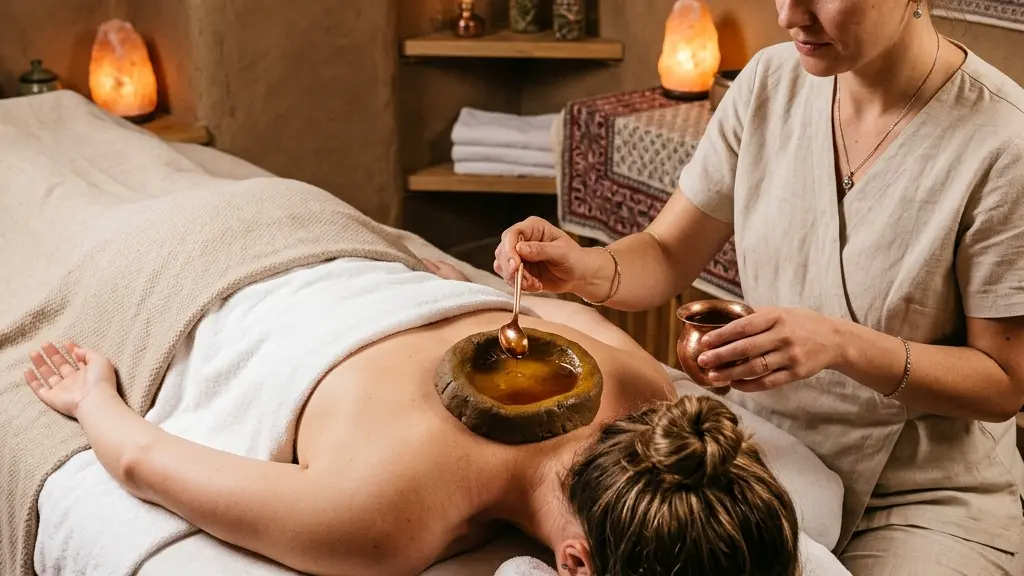
If your emotional stress has settled into your lower back, a specialized warm oil pool treatment for spine (known as Kati Basti) can release deep physical trauma. You can read more about how we utilize this therapy in our guide to the warm oil pool treatment for the spine. It provides direct, localized decompression.
A Responsive Practice for True Peace
Restoring emotional balance is a process of small, daily course corrections. As you learn to read your body's signals, you will know exactly when to warm up or cool down. You no longer follow generic health trends—you choose what nourishes your unique biological blueprint.
For a complete understanding of how to align your lifestyle with seasonal changes, see our ayurvedic daily routine guide. If you are struggling with severe nervous system fatigue, read our clinical guide on managing a Vata imbalance. Take one small step today, and notice how your mind responds.
Are you ready to explore how your diet impacts your emotional chemistry? What taste does your body crave when you feel stressed?
Featured image attribution: Clean clinical graphic composite. Left panel: Three standing anatomical profiles representing the Vata (light blue/yellow), Pitta (warm gold/orange), and Kapha (grounded green) constitutions with glowing energy centers. Right panel: Clinical profile of a meditating head showing a balanced brain and active cranial nerves. Created for AyurPhysio clinical reference.
Dr. Dhanushika Dilshani
Expert Ayurvedic Wellness Doctor. Specialized in modern holistic wellness, optimizing dermal resilience, cosmetic radiance, and systematic diagnosis driven by traditional and evidence-based medical logic.
Medical Disclaimer
The information provided by AyurPhysio is for general educational and informational purposes only. It is not intended as a substitute for professional medical advice, diagnosis, or treatment. Always seek the advice of your physician or other qualified health providers with any questions you may have regarding a medical condition. Never disregard professional medical advice or delay in seeking it because of something you have read on this website.
Trending Guides
Luka Modrić's Daily Routine: Low-Impact Resistance Training and Midfield Longevity
4 min readHarry Kane's Daily Routine: Hamstring Preservation and Anti-Inflammatory Nutrition
4 min readKarim Benzema's Daily Routine: Cupping Therapy (Hijama) and HIIT Conditioning
4 min readNeymar Jr.'s Daily Routine: Joint Stabilization and Hyperbaric Oxygen Therapy
4 min readMohamed Salah's Daily Routine: Early Morning Conditioning and Hyperbaric Recovery
4 min readWeekly Wellness
Don't miss the next guide
Get holistic health tips and new guides delivered to your inbox.
Related Healing Guides
View All Guides →
Tulsi (Holy Basil): The Premier Adaptogenic Herb for Respiratory Strength and Emotional Balance
Amalaki (Amla): The Premier Ayurvedic Superfood of Rejuvenation and Natural Vitamin C