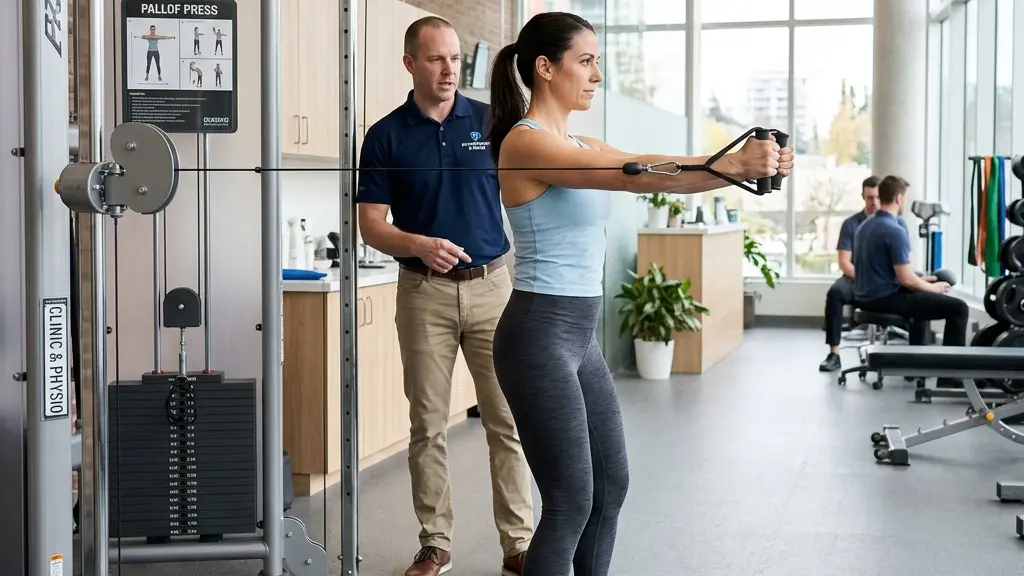
Thoracic Mobility: The Key to Unlocking Shoulder and Lower Back Pain

"Trying to fix shoulder pain without addressing a stiff mid-back is like trying to open a door with rusty hinges by just pulling harder on the handle. You are going to break the handle before the door ever opens."
If you are waking up with a nagging pinch in your shoulder or an unyielding ache in your lower back, you have probably spent countless hours stretching those specific areas. But what if the source of your pain isn't located where you feel the symptoms? The thoracic spine—the middle section of your back anchored by your rib cage—is the silent puppet master of your upper body biomechanics.
Modern lifestyles have turned our mid-backs into rigid blocks of concrete. When your thoracic spine loses its ability to rotate and extend, the joints immediately above and below it must sacrifice their stability to make up the difference. This biomechanical theft is the true catalyst for chronic inflammation.
By integrating targeted thoracic spine mobility into your daily routine, you can dismantle this chain of compensation. Let's explore why unlocking your mid-back is the ultimate key to achieving pain-free movement.
The Kinetic Chain: How Stiffness Travels
The human spine operates on an alternating pattern of mobility and stability. Your lumbar spine (lower back) is designed to be highly stable, protecting your internal organs and supporting your upright posture. Conversely, your thoracic spine is meant to be highly mobile, facilitating rotation and deep breathing.
When your mid-back becomes stiff from hours of slouching over a laptop, your body still demands movement to perform daily tasks. Because the thoracic spine is locked, the lumbar spine is forced to become hypermobile to compensate, leading to dangerous shear forces that can cause disc herniations.
Similarly, when you attempt to reach overhead, a stiff thoracic spine prevents your shoulder blades from tilting backward. This causes the humerus (arm bone) to crash into the acromion process, creating severe friction. This is why restoring mid-back movement is essential to relieve shoulder impingement and protect your rotator cuff tendons.
My strong clinical opinion is that isolated rotator cuff strengthening is a complete waste of time if the patient lacks thoracic extension. We see athletes doing hundreds of banded external rotations, yet their shoulder pain persists because their scapulae are resting on a rounded, kyphotic rib cage.
You cannot build strength on a dysfunctional foundation. Stabilizing a shoulder joint without first unlocking the thoracic spine is a recipe for recurrent injury. We must always prioritize proximal mobility before distal stability.
By the Numbers: The Cost of Immobility
The structural impact of a locked mid-back is profound and measurable. A rigid thoracic spine doesn't just cause discomfort; it fundamentally alters your movement mechanics.
- Normal thoracic rotation should be approximately 40 to 45 degrees in each direction. Losing just 10 degrees increases the rotational stress on the lumbar spine by up to 35%.
- When performing an overhead press, lacking 15 degrees of thoracic extension decreases the subacromial space in your shoulder by over 50%, causing immediate tendon compression.
- Studies show that patients with chronic mid-back stiffness have a 2.5x higher likelihood of developing symptomatic cervical radiculopathy (pinched nerves in the neck) due to forward head compensation.
Core Exercises to Unlock Your Mid-Back
Reversing years of postural neglect requires specific, daily interventions. These postural correction exercises are designed to forcefully but safely mobilize the facet joints of your thoracic spine.
-
1The Quadruped Thoracic Rotation (Thread the Needle) Begin on your hands and knees. Place one hand behind your head. Rotate your elbow down toward your opposite forearm, exhaling deeply. Then, rotate your elbow upward toward the ceiling, following it with your eyes. Perform 12 slow, controlled repetitions on each side to restore rotational glide to your facet joints.
-
2Foam Roller Thoracic Extensions Place a foam roller horizontally across your mid-back (avoid your lower back and neck). Support your head with your hands. Gently lean backward over the roller, keeping your hips planted on the floor. Hold the extension for a deep breath, then return to neutral. Move the roller up one inch and repeat to unlock each segment.
-
3The Open Book Stretch Lie on your side with your knees bent at 90 degrees and arms extended straight out in front of you. Keeping your knees glued to the floor, lift your top arm and rotate your chest open toward the ceiling, attempting to place your upper back flat on the ground. Hold for 3 seconds and return. Complete 10 sweeps per side.
If you find that your lower back is already suffering from hypermobility, you should integrate these drills with our guide on McKenzie Method Exercises to properly prevent lower back pain and restore total spinal health.
The Patient: Mark, a 38-year-old software developer, presented with sharp, stabbing pain in his right shoulder every time he reached for a high shelf. His MRI showed a mild rotator cuff tendinopathy, but months of standard shoulder physical therapy provided zero relief.
The Mistake: Mark was endlessly icing his shoulder and performing lightweight dumbbell raises while maintaining a deeply hunched posture from his 10-hour desk shifts. He was treating the victim, not the culprit.
The Solution: We halted all isolated shoulder exercises. We implemented aggressive foam roller extensions and the "Open Book" rotation drill twice daily to break up his thoracic stiffness.
The Outcome: Within 3 weeks, Mark regained 30 degrees of thoracic extension. His shoulder pain vanished entirely without a single rotator cuff exercise, and he returned to playing tennis with full overhead power.
Reclaiming Your Structural Freedom
Your spine is a highly interconnected mechanical system. When one section refuses to do its job, the others suffer the consequences. By committing to just 5 minutes of targeted thoracic mobility work each day, you are actively preventing the mechanical breakdown of your shoulders and lower back.
For a comprehensive approach to releasing deeply ingrained muscle tension, consider pairing your mechanical exercises with ancient techniques. Learn how Ayurvedic daily routines can help flush out the cellular toxins that contribute to chronic joint stiffness.
Are you ready to stop treating the symptoms and start fixing the structural root cause? Grab a foam roller today and take the first step toward unlocking your spine. What movement will you reclaim once your mid-back is free?
Irushi Abeywardhana
Senior Physiotherapist & Founder of Physio Pulse. Senior Clinical Physiotherapist passionate about blending advanced movement science with functional resilience.
Medical Disclaimer
The information provided by AyurPhysio is for general educational and informational purposes only. It is not intended as a substitute for professional medical advice, diagnosis, or treatment. Always seek the advice of your physician or other qualified health providers with any questions you may have regarding a medical condition. Never disregard professional medical advice or delay in seeking it because of something you have read on this website.
Trending Guides
Luka Modrić's Daily Routine: Low-Impact Resistance Training and Midfield Longevity
4 min readHarry Kane's Daily Routine: Hamstring Preservation and Anti-Inflammatory Nutrition
4 min readKarim Benzema's Daily Routine: Cupping Therapy (Hijama) and HIIT Conditioning
4 min readNeymar Jr.'s Daily Routine: Joint Stabilization and Hyperbaric Oxygen Therapy
4 min readMohamed Salah's Daily Routine: Early Morning Conditioning and Hyperbaric Recovery
4 min readWeekly Wellness
Don't miss the next guide
Get holistic health tips and new guides delivered to your inbox.
Related Healing Guides
View All Guides →
Hyperlordosis: Tailoring Exercise Programs to Reduce Lumbar Shear Stress

Morning Lower Back Stiffness: The Biomechanical Causes and Quick, Safe Fixes