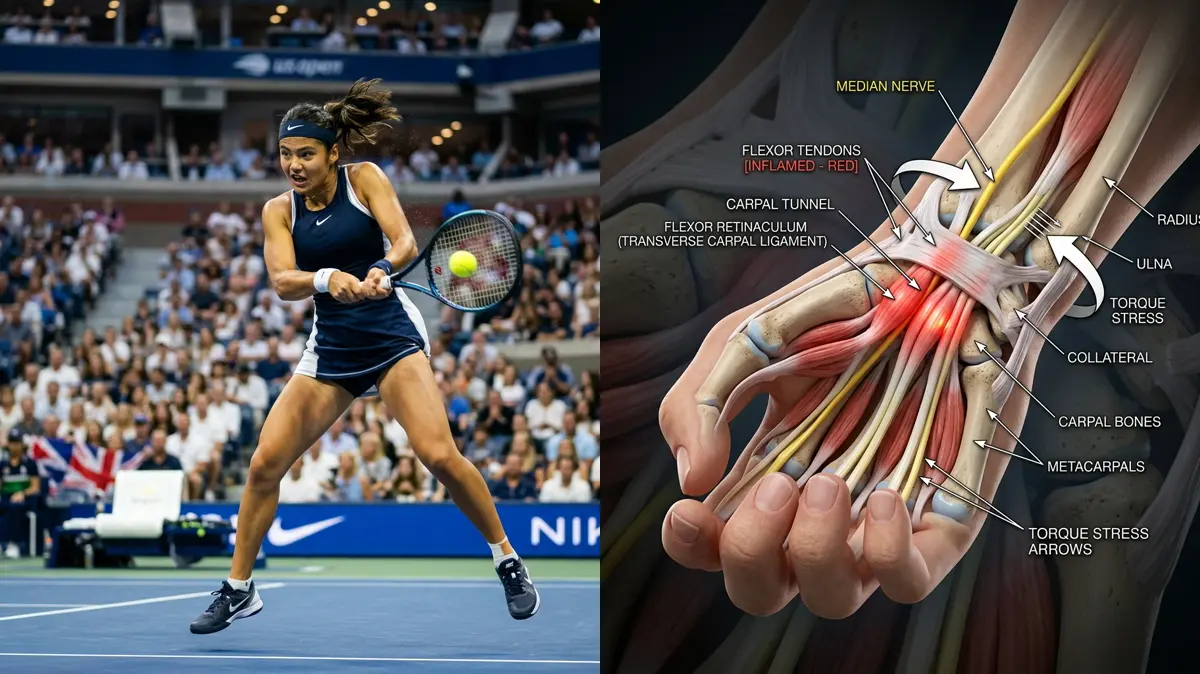
"A tennis player's wrist is the final link in a powerful kinetic chain. When we treat wrist pain by ignoring the shoulder blade, we are merely polishing the tailpipe of a car with a broken engine."
If your wrist feels like a dry twig snapping every time you twist open a jar, you understand the frustration of hand injuries. For tennis enthusiasts, the news of the emma raducanu wrist injury was a shocking reminder of how fragile these joints can be. The young Grand Slam champion underwent multiple surgeries on both wrists and her ankle, halting her rising career and raising questions about modern training demands.
While fans focused on tournament absences, sports biomechanists saw a classic case of repetitive grip torque overload. In this clinical analysis, we will explore the anatomy of tennis wrist tendonitis, examine the mechanics of carpal tunnel decompression, and outline the rehab strategies needed to restore hand strength.
We want to help you understand that wrist pain is rarely just a wrist problem. By analyzing the kinetic chain of elite players, we can find better ways to treat hand and wrist discomfort in our daily lives.
The Biomechanics of Tennis Grip Torque
The wrist is a highly mobile joint consisting of eight small carpal bones held together by a complex network of ligaments. During a tennis stroke, the wrist must transfer energy from the legs and trunk into the racket, managing intense forces with each strike.
This transfer requires managing high grip torque. As the racket strikes the ball, the forearm flexors and extensors contract to stabilize the wrist joint. If the player uses a extreme semi-western or western grip, the wrist is forced into pronation and ulnar deviation under load. This action places severe mechanical stress on the extensor carpi ulnaris (ECU) tendon and the triangular fibrocartilage complex (TFCC).
If the shoulder or core muscles fatigue, the wrist must compensate to generate ball spin and speed. This compensation increases the shear force on the delicate tendons, leading to microscopic tears and chronic inflammation.
- Wrist injuries account for approximately 20% to 25% of all injuries in professional tennis players.
- The ECU tendon is involved in over 60% of tennis-related wrist pathologies on the dominant side.
- An elite forehand stroke subjects the wrist to an average peak torque of 15 to 20 Newton-meters.
- Successful carpal tunnel decompression sports recovery requires an average of 8 to 12 weeks before returning to full impact loading.
Understanding Carpal Tunnel Decompression and Tendon Release
When conservative treatments fail to resolve chronic tendonitis or nerve compression, surgical intervention becomes necessary. In Raducanu's case, the procedures addressed both bone spurs and nerve pressure.
A carpal tunnel release involves cutting the transverse carpal ligament, which forms the roof of the carpal tunnel. This cut increases space within the tunnel, relieving pressure on the median nerve. A tendon release, or tenolysis, involves clearing scar tissue from around the inflamed tendons, allowing them to glide smoothly again.
While surgery removes the physical block, it does not correct the poor movement patterns that caused the injury. Without proper rehabilitation, the new scar tissue can bind the tendons again, leading to recurrent pain and stiffness.
"My strong clinical opinion is that relying on wrist braces and local cortisone injections is a failing strategy for chronic wrist pain. Bracing immobilizes the joint, which leads to muscle wasting and stiffness, while steroid shots temporarily mask the pain while weakening the tendon fibers. We must stop treating the wrist as an isolated joint. Wrist stability is built on kinetic chain scapular stabilization—if your shoulder blade cannot anchor your arm, your wrist will always be overloaded."
Multi-Phase Tennis Wrist Rehabilitation Protocol
Recovering from wrist surgery requires a progressive loading protocol that restores range of motion before rebuilding grip strength.
- 1Phase 1: Protection and Tissue Healing (Weeks 1–3)Protect the surgical site and manage postoperative swelling. Use a light splint for support, but begin gentle finger movement immediately to prevent tendon adhesion. Perform passive wrist flexion and extension within a pain-free range. Avoid any gripping or lifting to protect the healing transverse ligament.
- 2Phase 2: Mobility and Tendon Gliding (Weeks 4–6)Progress to active wrist movement, focusing on restoring full pronation and supination. Perform specific tendon gliding exercises to keep the flexor tendons moving freely through the carpal tunnel. Introduce light resistance exercises using soft putty. Begin shoulder and elbow range of motion work to prevent stiffness.
- 3Phase 3: Scapular Anchoring and Grip Strengthening (Weeks 7–9)Focus on rebuilding proximal stability. Integrate kinetic chain scapular stabilization exercises, such as scapular pull-ups and wall slides. Introduce progressive grip strengthening using variable resistance bands. Begin light racket-handling drills, focusing on maintaining a relaxed grip.
- 4Phase 4: Impact Loading and Return to Sport (Weeks 10+)Introduce impact loading, starting with light volleys and progressing to groundstrokes. Monitor forearm muscle fatigue, as tired muscles transfer shock directly to the wrist joint. Ensure the player uses correct grip sizes and string tensions to reduce impact vibration. Maintain shoulder and core conditioning as part of ongoing injury prevention.
Synergy in Upper Quarter Movement
Wrist stability is closely linked to the function of the elbow and shoulder. For a detailed guide on strengthening the rotator cuff to support arm movement, read our complete guide on rotator cuff eccentric conditioning. To learn how to treat tendon pain at the elbow joint, study our protocols for lateral epicondylitis recovery. Additionally, if you are managing joint wear in the fingers, check our guide on hand osteoarthritis joint protection.
Emma Raducanu's recovery shows that successful return to tennis requires a whole-body approach to movement. By protecting the surgical site, restoring tendon glide, and building strong shoulder support, athletes can return to play with confidence. True recovery is about making the entire kinetic chain work together as a single, coordinated system.
Featured image attribution: "Emma Raducanu playing tennis" by Diliff, licensed under CC BY-SA 3.0. Modified by cropping and compositing.
Dr. Dhanushika Dilshani
Expert Ayurvedic Wellness Doctor. Specialized in modern holistic wellness, optimizing dermal resilience, cosmetic radiance, and systematic diagnosis driven by traditional and evidence-based medical logic.
Medical Disclaimer
The information provided by AyurPhysio is for general educational and informational purposes only. It is not intended as a substitute for professional medical advice, diagnosis, or treatment. Always seek the advice of your physician or other qualified health providers with any questions you may have regarding a medical condition. Never disregard professional medical advice or delay in seeking it because of something you have read on this website.
Trending Guides
Luka Modrić's Daily Routine: Low-Impact Resistance Training and Midfield Longevity
4 min readHarry Kane's Daily Routine: Hamstring Preservation and Anti-Inflammatory Nutrition
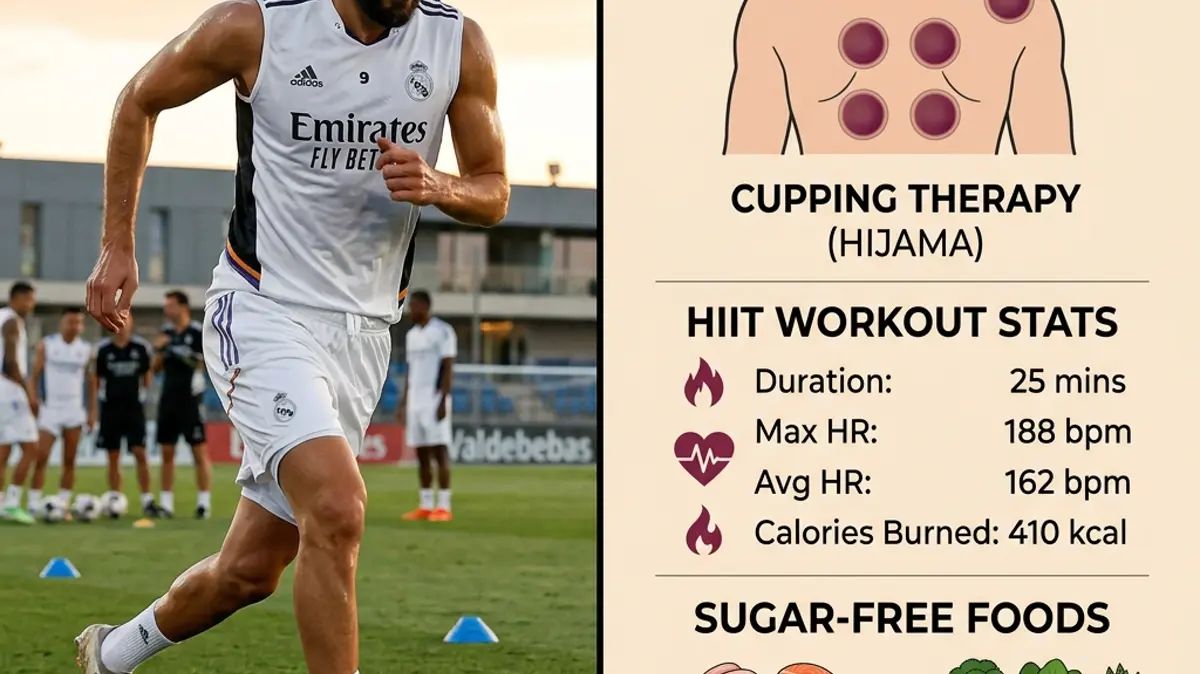
4 min readKarim Benzema's Daily Routine: Cupping Therapy (Hijama) and HIIT Conditioning
4 min readNeymar Jr.'s Daily Routine: Joint Stabilization and Hyperbaric Oxygen Therapy
4 min readMohamed Salah's Daily Routine: Early Morning Conditioning and Hyperbaric Recovery
4 min readWeekly Wellness
Don't miss the next guide
Get holistic health tips and new guides delivered to your inbox.
Related Healing Guides
View All Guides →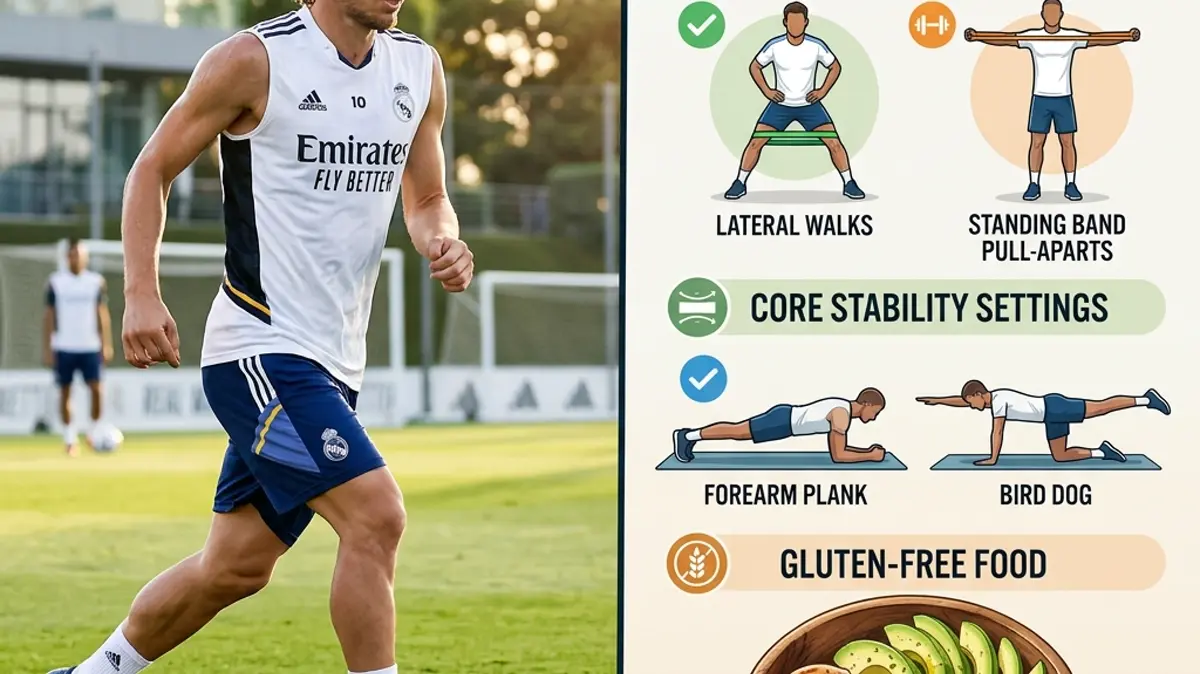
Luka Modrić's Daily Routine: Low-Impact Resistance Training and Midfield Longevity
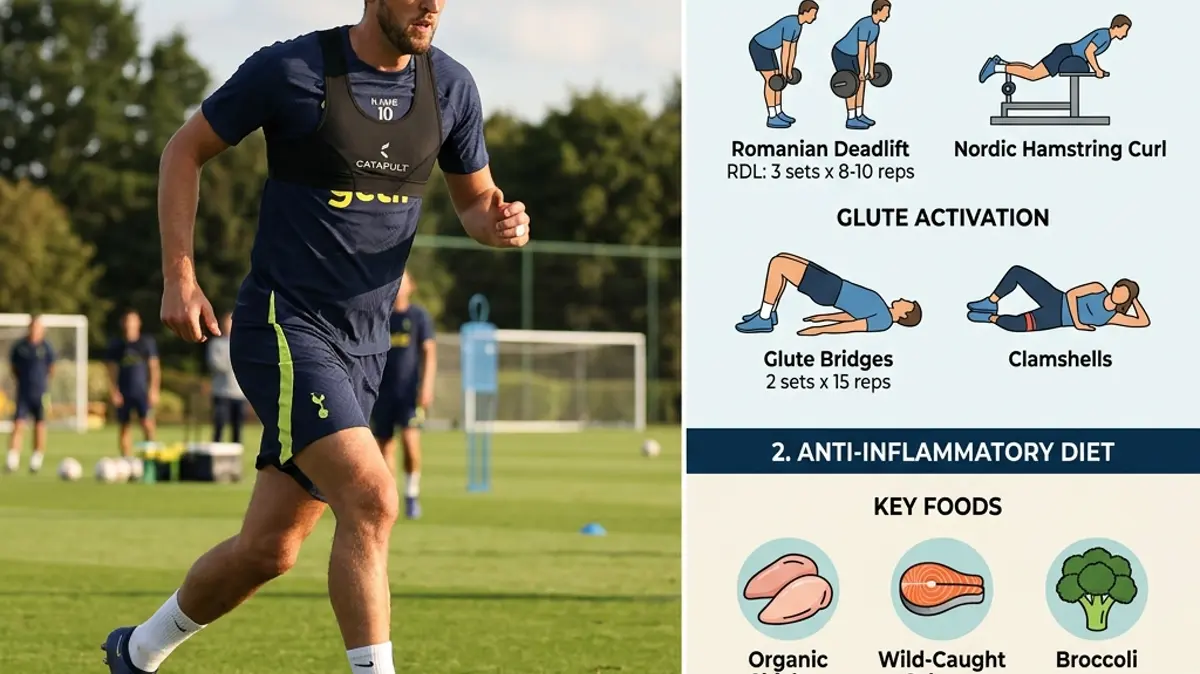
Harry Kane's Daily Routine: Hamstring Preservation and Anti-Inflammatory Nutrition