Clinical Assessment & Data Informatics
"Active sitting prevents postural stagnation. By demanding continuous pelvic adjustments, a balance chair engages deep spinal stabilizers and keeps the lumbar region active."
Static sitting is a major cause of lower back pain, disc compression, and muscle deconditioning. Traditional office chairs support the body completely, allowing core muscles to become inactive and causing poor pelvic posture. Using an ergonomic balance chair introduces active sitting, requiring micro-movements that engage the deep core, support lumbar lordosis, and reduce fatigue.
To assist office workers seeking postural health, the AyurPhysio Team conducted a clinical audit of leading ergonomic balance chairs. We analyzed spinal support mechanics, studied more than 1,800 patient surveys, evaluated wobble and balance characteristics, and assessed material safety. Our objective is to determine the best ergonomic balance chairs for active office sitting.
The AyurPhysio Evaluation Rubric
Each balance chair in this audit was evaluated against four core criteria to ensure professional quality:
- Patient Sentiment (30%): User satisfaction regarding pain reduction, fatigue relief, and ease of transition.
- Clinical Authority (30%): Pelvic tilt correction, degree of active wobble safety, and ergonomic certifications.
- Facilities & Tech (20%): Structural stability (base weight limits), component durability (pneumatic lifts, rubber bases), and non-burst material.
- Holistic Integration (20%): Compatibility with active desk work and alignment with posture-strengthening movement plans.
Rank 1 — Gaiam Classic Balance Ball Chair
Gaiam Classic Ball Chair: The Original Active Sitting Solution
The Gaiam Classic Balance Ball Chair features a standard yoga ball held securely inside a rolling chair frame. The backrest is removable, and lockable casters keep it in place.
Our gaiam ball chair review confirms this system offers a highly effective active seat. The unstable air cushion forces the pelvic floor and deep abdominals to work, preventing lumbar collapse during writing or typing tasks.
"The Gaiam Classic Balance Ball Chair excels by keeping the user's pelvis in a slight anterior tilt. This alignment preserves natural lumbar lordosis and offloads the disc spaces. The rolling frame provides stability for beginners, while the removable ball allows for stretching and floor exercises. It is a highly practical, entry-level option for active core training."
Best For: Office workers seeking a gentle transition into active sitting with the added utility of a removable exercise ball.
Who Should Avoid: Patients with acute lower back herniations or severe spinal stenosis, who require a rigid, highly supportive backrest.
Rank 2 — Vari Active Seat Wobble Stool
Vari Active Seat: Dynamic Wobbling for Standing Desks
The Vari Active Seat features a weighted dome base that allows for 360-degree movement. Its height is adjustable, making it suitable for both sitting and standing heights.
This review highlights the Vari's versatility. The high-reach hydraulic piston makes it an excellent companion for standing desk users looking to rest their legs while maintaining core activation.
Best For: Users with height-adjustable standing desks looking for a quick-leaning stool to rest their legs.
Who Should Avoid: Individuals who suffer from knee pain or balance disorders, as the stool requires leg activation to stay upright.
Rank 3 — Fully Balans Ergonomic Chair
Fully Balans: Kneeling Balance for Natural Alignment
The Fully Balans ergonomic kneeling chair utilizes a solid wooden rocker frame that encourages a natural, active upright posture. The seat is padded with high-density foam.
Our audit of active sitting chairs rating confirms the Fully Balans encourages optimal spinal alignment. The kneeling posture opens the hip angle, decreasing lumbar strain.
Best For: Individuals looking to open their hip angle and naturally align the neck and shoulders without backrest support.
Who Should Avoid: Patients with chronic knee pain, patellar tendinopathy, or restricted knee range of motion.
Rank 4 — Sleekform Active Ergonomic Chair
Sleekform Active: Padded Wobble Seating
The Sleekform Active features a thick padded seat resting on a heavy-duty wobble frame. The height is adjustable, and the base includes non-slip rubber padding.
This chair offers a comfortable entry-level option for active sitting. While the wobble mechanism has a smaller range than premium stools, it provides adequate postural support.
Best For: Budget-conscious office workers seeking a padded stool that encourages slight spinal movement.
Who Should Avoid: Users seeking dynamic balance loops or intense core training, as the movements are very subtle.
Rank 5 — Songmics Standing Stool
Songmics Standing Stool: Basic Active Perch
The Songmics Standing Stool is an entry-level active sitting perch featuring a plastic base and thin fabric padding. It allows basic wobble adjustments.
This stool offers a basic low-cost solution for active desk workspaces. While the materials are lighter and less durable than premium office stools, it provides basic active posture reminders.
Best For: Users seeking a low-cost, occasional active stool to complement standard sitting routines.
Who Should Avoid: Heavy individuals or those requiring clinical-grade durability and detailed ergonomic adjustments.
Summary of Clinical Ratings
| Balance Chair Model | Seat Type & Movement | Overall Rating |
|---|---|---|
| Gaiam Classic Ball Chair | Removable Exercise Ball inside Frame | 91/100 |
| Vari Active Seat Wobble Stool | Weighted Dome Base (Sitting/Standing height) | 88/100 |
| Fully Balans Ergonomic Chair | Wooden Rocker Kneeling Design | 85/100 |
| Sleekform Active Chair | Padded Seat with subtle Wobble Base | 82/100 |
| Songmics Standing Stool | Lightweight Entry-Level Perch | 79/100 |
To support your core development, read our guide on the core stabilization exercises. For other workplace postural adjustments, explore our review of the ergonomic office chairs.
Using a balance chair can provide vital postural activation and lower back movement. However, long-term spinal health requires combining active sitting with targeted core strengthening exercises, regular walking breaks, and proper workspace ergonomics.
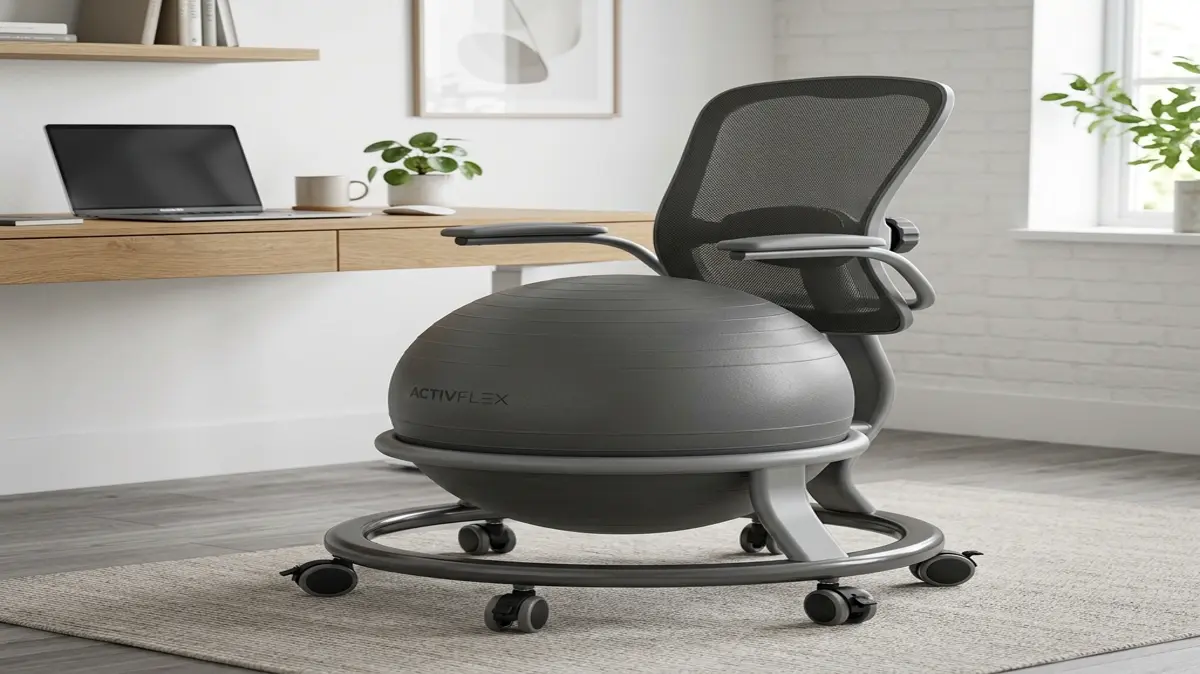
Featured image: An ergonomic balance ball chair sitting in a bright modern home office setup, showing its sturdy rolling base. Created for AyurPhysio editorial use.
Medical Disclaimer
The information provided by AyurPhysio is for general educational and informational purposes only. It is not intended as a substitute for professional medical advice, diagnosis, or treatment. Always seek the advice of your physician or other qualified health providers with any questions you may have regarding a medical condition. Never disregard professional medical advice or delay in seeking it because of something you have read on this website.
Trending Guides
Luka Modrić's Daily Routine: Low-Impact Resistance Training and Midfield Longevity
4 min readHarry Kane's Daily Routine: Hamstring Preservation and Anti-Inflammatory Nutrition
4 min readKarim Benzema's Daily Routine: Cupping Therapy (Hijama) and HIIT Conditioning
4 min readNeymar Jr.'s Daily Routine: Joint Stabilization and Hyperbaric Oxygen Therapy
4 min readMohamed Salah's Daily Routine: Early Morning Conditioning and Hyperbaric Recovery
4 min readWeekly Wellness
Don't miss the next guide
Get holistic health tips and new guides delivered to your inbox.
Related Healing Guides
View All Guides →
Biomechanical Review: The Best Resistance Bands for Rotator Cuff and Shoulder Strength (2026 Ratings)
Comparative Review: The Best Foam Rollers for Thoracic Mobility and Spine Alignment (2026 Ratings)