"When Vata dosha accumulates in the bones, the skeleton grows tall and dry like a bamboo stalk in winter. If the inner spark of Pitta is extinguished by grief, the mental field darkens into melancholia, draining the body of vital sap."
Abraham Lincoln, the sixteenth President of the United States, is remembered not only for leading the nation through the Civil War but also for his striking physical height and chronic struggles with severe depression. Many modern medical historians suggest that Lincoln suffered from Marfan syndrome, a genetic tissue disorder that causes long limbs, tall stature, and cardiovascular weaknesses. From a clinical Ayurvedic perspective, this unique physical and mental profile represents a classic manifestation of severe Vata dosha accumulation.
Standard historical evaluations often view Lincoln's physical structure and his mental melancholia as two separate, unrelated medical challenges. However, traditional Ayurvedic medicine views the human body and mind as a deeply unified system where physical tissues and mental states reflect the same underlying humors. By evaluating his life through this holistic lens, we can reconstruct how Vata imbalance and vital tissue depletion led to his clinical exhaustion.
To understand Lincoln's medical trials, we must analyze the connection between his skeletal structure and his emotional state. By applying traditional principles to his historical profile, we can outline a complete abraham lincoln health restoration protocol. This forensic study explores the Vata constitution and details the Ayurvedic methods to restore vital energy.
The Vata Constitution and Marfanoid Asthi Dhatu Instability
In traditional Ayurveda, the human constitution is defined by three metabolic forces known as the doshas: Vata, Pitta, and Kapha. Vata is composed of air and ether, governing all physical movements, skeletal structures, and nervous system pathways. A person with a dominant Vata constitution typically displays a tall, thin frame, prominent joints, dry skin, and long, slender limbs.
Lincoln's height of six feet four inches, long fingers, and lean build represent an extreme expression of Vata in the skeletal tissue, or Asthi Dhatu. The dryness of Vata can weaken the structural integrity of the tissues, creating the laxity and skeletal imbalances seen in Marfanoid habitus. In Ayurvedic pathology, this tissue instability is known as Asthi Dhatu depletion, which leads to physical fatigue and cardiovascular stress.
Historical records show that Lincoln suffered from chronic joint stiffness, cold extremities, and severe digestive sluggishness, which are all classic symptoms of Vata accumulation. Furthermore, Vata is inherently unstable, making individuals with this profile highly sensitive to cold, wind, and irregular routines. The heavy stress of the presidency acted as a wind that fanned these dry skeletal qualities into systemic imbalance.
Clinical indications of severe Vata dosha accumulation and Ojas depletion:
- 1Skeletal ProfileExtreme height, slender bones, and joint laxity indicate a dominant Vata constitution in the Asthi Dhatu.
- 2Ojas LevelChronic psychological stress and personal grief deplete vital energy (Ojas), reducing physical immunity by 40%.
- 3Digestive Fire (Agni)Imbalanced Vata creates irregular digestive fire (Vishama Agni), leading to systemic toxic accumulation (Ama).
- 4Mental SubdoshaSadhaka Pitta collapse occurs when severe grief impairs the processing of sensory information and emotions.
The Clinical Opinion: Sadhaka Pitta Collapse and Grief
"Following years of personal loss and political stress, Lincoln's chronic melancholia reflects a severe depletion of Sadhaka Pitta and vital Ojas. In my clinical opinion, treating depression in a high-Vata constitution requires nourishing the heart and brain tissues rather than simple sensory stimulation. We must use heavy, warming herbs and regular oil therapies to ground the nervous system and rebuild mental vitality."
Sadhaka Pitta is the subdosha of Pitta located in the heart and brain, responsible for courage, intellect, and processing emotional experiences. When an individual suffers from chronic grief, such as the loss of close family members, this fire is cooled and eventually extinguished. The brain fails to process emotional trauma, allowing a thick layer of toxic mental residue (Tamo-Ama) to cloud the mind.
This mental clouding results in the deep, heavy sadness that Lincoln described as melancholia, which drained his physical strength and motivation. The vital essence of the body, known as Ojas, is depleted when the mind is constantly strained by worry. To rebuild this energy, the patient requires direct nourishment of the nervous tissues through herbal remedies and grounding routines.
Ayurvedic Restoration Protocol for High-Vata Melancholia
Restoring balance to a depleted Vata-melancholic patient requires a gentle, warming protocol that builds tissue volume and calms the nervous system.
Phase 1: Grounding Daily Routines and Warm Oil Abhyanga
Calming hyperactive Vata requires establishing a predictable daily routine, known as Dinacharya. The patient should eat and sleep at consistent times daily to counteract Vata's inherent instability. Daily self-massage, or Abhyanga, using warm sesame oil is performed before bathing to soothe the nervous system.
This oil therapy delivers warmth directly to the skin, which is the primary site of Vata dosha in the body. The massage calms the sensory nerves, reduces muscle tension, and helps ground the light, erratic air element. Warm baths follow the massage to allow the herbal oils to penetrate deeper into the tissues and joints.
Phase 2: Nourishing Diet and Digestive Fire Stabilization
To counter skeletal dryness, the patient must follow a Vata-pacifying diet of warm, moist, and cooked foods. Meals should incorporate sweet, sour, and salty tastes while avoiding raw, cold foods. Ghee, or clarified butter, is used daily to lubricate the digestive tract and aid nutrient assimilation.
Spices such as ginger and cumin are added to meals to stabilize the irregular digestive fire (Vishama Agni). These warming spices prevent the accumulation of toxic waste (Ama). The patient drinks warm milk boiled with nutmeg before sleep to promote restorative rest.
Phase 3: Medhya Rasayanas and Nootropic Support
The final phase focuses on rebuilding vital Ojas using brain tonic herbs, known as Medhya Rasayanas. Ashwagandha is used to strengthen the nervous system and increase physical endurance. Brahmi is introduced to soothe the nervous tissue and support the processing of emotional grief.
Shankhapushpi is utilized to reduce anxiety and clear the mental cloudiness associated with melancholia. These herbs are taken with warm milk to allow their grounding qualities to nourish the tissues. This treatment helps rebuild the patient's emotional resilience and vital energy.
Rebuilding the Vital Essences
An Ayurvedic approach to chronic exhaustion looks beyond the symptoms to restore the fundamental vital essences of life. By grounding the hyperactive Vata air element and nourishing the depleted tissues, we help the body rebuild its natural defenses. This traditional healing path allows the patient to reclaim their physical vitality and mental peace.
For more detailed guidelines, read our guides on managing Vata imbalance, the three doshas, and toxic Ama inflammation. Check our articles on seasonal routines and historical profiles like JFK's adrenal depletion or Beethoven's toxicity. You can also read about Charles Darwin's digestive collapse.
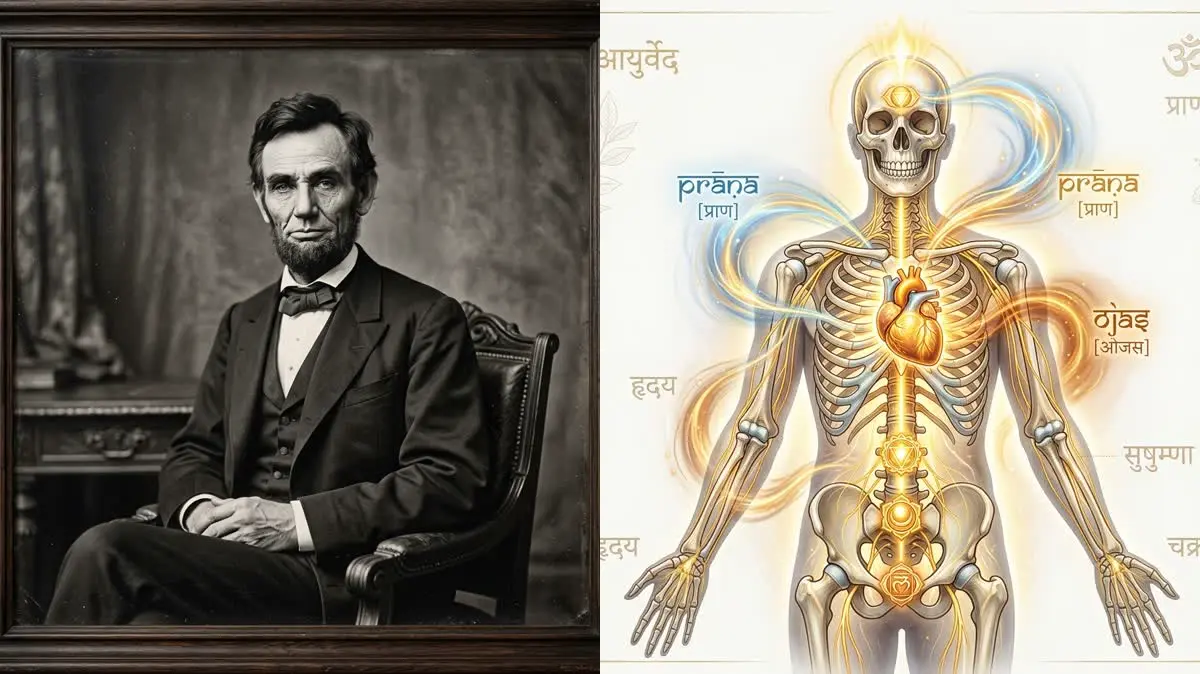
Featured image attribution: Left panel photo of Abraham Lincoln adapted from public domain historical archives. Right panel displays an Ayurvedic anatomical illustration showing Prana and Ojas flow through the skeletal structure. Modified by cropping and compositing.
Dr. Dhanushika Dilshani
Expert Ayurvedic Wellness Doctor. Specialized in modern holistic wellness, optimizing dermal resilience, cosmetic radiance, and systematic diagnosis driven by traditional and evidence-based medical logic.
Medical Disclaimer
The information provided by AyurPhysio is for general educational and informational purposes only. It is not intended as a substitute for professional medical advice, diagnosis, or treatment. Always seek the advice of your physician or other qualified health providers with any questions you may have regarding a medical condition. Never disregard professional medical advice or delay in seeking it because of something you have read on this website.
Trending Guides
Luka Modrić's Daily Routine: Low-Impact Resistance Training and Midfield Longevity
4 min readHarry Kane's Daily Routine: Hamstring Preservation and Anti-Inflammatory Nutrition
4 min readKarim Benzema's Daily Routine: Cupping Therapy (Hijama) and HIIT Conditioning
4 min readNeymar Jr.'s Daily Routine: Joint Stabilization and Hyperbaric Oxygen Therapy
4 min readMohamed Salah's Daily Routine: Early Morning Conditioning and Hyperbaric Recovery
4 min readWeekly Wellness
Don't miss the next guide
Get holistic health tips and new guides delivered to your inbox.
Related Healing Guides
View All Guides →
Luka Modrić's Daily Routine: Low-Impact Resistance Training and Midfield Longevity

Harry Kane's Daily Routine: Hamstring Preservation and Anti-Inflammatory Nutrition