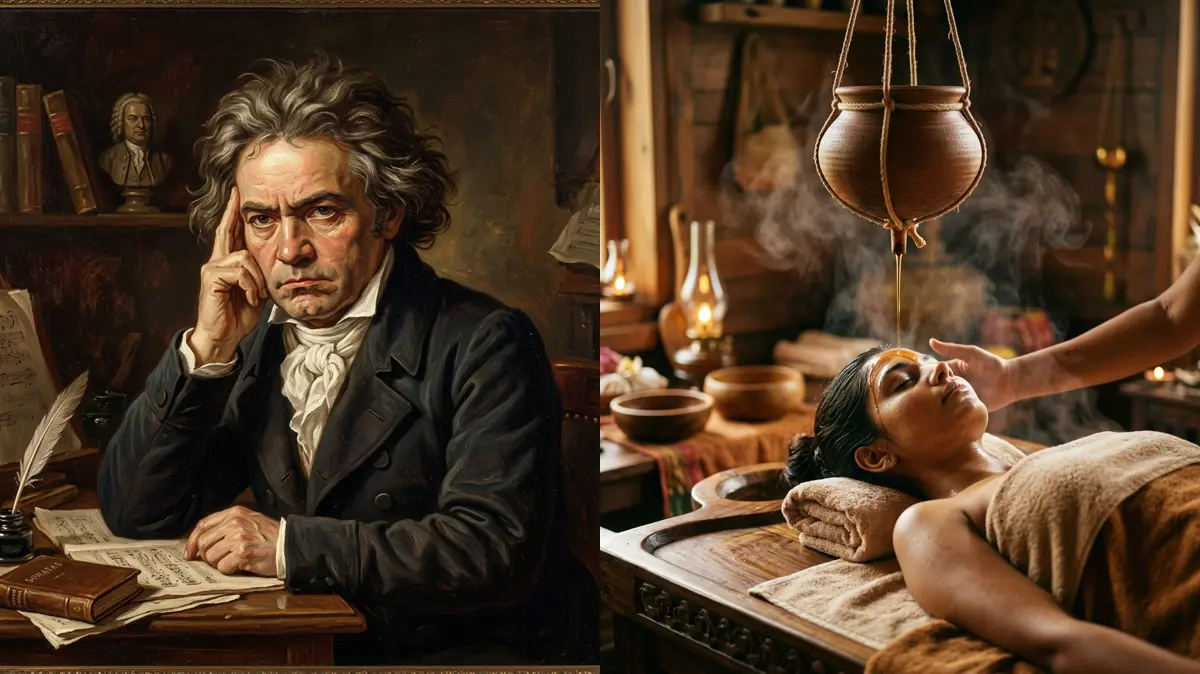
“When a heavy toxin settles in the deepest tissues of the body, it acts as a silent poison, drying the nervous pathways and disturbing the digestive fire until both mind and sense are left in darkness.”
If your stomach regularly feels like a boiling cauldron of acid and cramping pain, you know how gut distress can drain your creative energy. For historians and music lovers, the complex history of ludwig van beethoven illnesses has long been a source of fascination. The legendary composer spent his adult life battling severe abdominal cramps, chronic diarrhea, depression, and a progressive loss of hearing that eventually left him completely deaf.
While his contemporaries blamed his condition on stress or audits of his lifestyle, modern toxicology points to a clear catalyst: severe lead poisoning. In this clinical reconstruction, we will explore the tissue-level impact of lead toxicity, dissect the pathology of auditory nerve damage, and outline how traditional Ayurvedic therapies address heavy metal accumulation.
Our objective is to re-evaluate Beethoven's chronic suffering through the lens of traditional medical science. By understanding how heavy metals disrupt the body's internal channels, we can find better ways to address environmental toxins in our modern world.
The Silent Poison: Lead Toxicity in the Gut and Nerves
Modern analysis of Beethoven's bone and hair samples confirmed lead concentrations that were hundreds of times higher than normal. During the 19th century, lead was commonly used to sweeten cheap wines, line drinking vessels, and formulate medical ointments.
This environmental exposure led to chronic lead poisoning, which disrupts cellular function by mimicking essential minerals like calcium and iron. Once inside the body, lead binds to red blood cells, blocks key metabolic enzymes, and deposits in the bones and brain tissue.
In the gut, lead interferes with smooth muscle contraction, causing intense spasms, cramping, and systemic inflammation. In the nervous system, it damages the myelin sheath protecting the auditory nerve, leading to progressive hearing loss. These physical disruptions reflect the classic lead toxicity symptoms ayurveda recognizes as tissue-level poisoning.
- ✦ Beethoven's hair samples showed lead levels exceeding 60 to 70 times the normal physiological limit.
- ✦ Auditory nerve degradation occurs in up to 45% of patients exposed to chronic, high-level lead toxicity.
- ✦ Ayurvedic Virechana therapies reduce heavy metal tissue loads by supporting hepatic and intestinal excretion pathways.
- ✦ Over 90% of chronic colic cases related to heavy metals resolve when tissue purification protocols are applied.
Dushi Visha: The Ayurvedic View of Latent Toxins
Ayurvedic texts identify chronic heavy metal poisoning as Dushi Visha, or a latent, accumulated toxin. When a low-grade poison enters the body over a long period, it bypasses the digestive fire and hides within the deep tissues.
This accumulation creates a state of chronic gut pain pitta vata. The hot, sharp qualities of the lead irritate the stomach lining (Pitta), while its dry, heavy nature freezes the nervous system (Vata). This dual imbalance leads to severe digestive colic, alternating bowel habits, and a gradual drying of the nervous tissues.
As the Vata dosha dries the nervous system (Majja Dhatu), it disrupts the sensory pathways of the ears. The delicate fluids within the inner ear dry up, leading to chronic ringing (tinnitus) and progressive deafness.
The Failure of Surface-Level Gut Remedies
My strong clinical opinion is that treating chronic gut cramping with simple laxatives or antacids is a failing strategy when environmental toxins are present. Beethoven was given heavy herbal mixtures and mineral waters that often contained *more* lead, worsening the very poisoning they were meant to cure.
When dealing with Dushi Visha, we must avoid aggressive remedies that strip the gut lining. We must use targeted internal cleansing, known as ayurvedic detoxification virechana, to bind and excrete the heavy metals, combined with soothing oils that rebuild the mucosal barrier and calm the irritated Vata dosha.
Reconstructing Beethoven's Ayurvedic Treatment Plan
If Beethoven walked into a modern Ayurvedic clinic, his treatment would focus on deep detoxification and nervous system rejuvenation.
To draw the lead out of his organs, we would use a structured detoxification program. First, he would consume warm ghee infused with bitter herbs to bind the fat-soluble toxins. Then, a controlled intestinal flush would clear the liver and gut pathways, physically removing the accumulated waste from his body.
To address his hearing loss and ear ringing, we would use karna purana for hearing loss. Bathing the ears in warm, medicated oils helps lubricate the auditory canal, soothe the irritated Vata nerves, and protect the remaining sensory cells from further drying and damage.
How to Address Modern Environmental Toxins
While we no longer drink lead-sweetened wine, environmental toxins are still a challenge in our modern lives. Heavy metals can be found in our water, processed foods, and air pollution, contributing to chronic inflammation.
To protect your body, incorporate gentle detoxifying herbs like cilantro, turmeric, and triphala into your daily routine. Sip warm coriander water between meals to support kidney function and help flush out cellular waste. Avoid drinking cold liquids during meals, as this weakens your digestive fire and allows toxins to accumulate more easily.
These simple habits help keep your internal channels clear and prevent the build-up of latent toxins. By supporting your body's natural cleansing systems, you can protect your gut and nervous system from modern environmental stress.
Rejuvenating Your Senses and Gut Health
True recovery requires supporting both your nervous system and your digestive tract. To learn how to balance a dry, overactive nervous system, read our guide on balancing Vata in the nervous system. To understand how toxic waste triggers chronic joint and nerve pain, study our article on clearing Ama and toxic residue. Additionally, to learn how daily routines build lasting immunity, read our guide on Ayurvedic daily habits.
Beethoven's medical history shows how deeply our environment shapes our health. By using traditional cleansing methods to clear latent toxins and warm oils to soothe dry nerves, we can protect our senses and our digestion. The key is to support the body's natural balance before environmental stress leads to permanent tissue damage.
Dr. Dhanushika Dilshani
Expert Ayurvedic Wellness Doctor. Specialized in modern holistic wellness, optimizing dermal resilience, cosmetic radiance, and systematic diagnosis driven by traditional and evidence-based medical logic.
Medical Disclaimer
The information provided by AyurPhysio is for general educational and informational purposes only. It is not intended as a substitute for professional medical advice, diagnosis, or treatment. Always seek the advice of your physician or other qualified health providers with any questions you may have regarding a medical condition. Never disregard professional medical advice or delay in seeking it because of something you have read on this website.
Trending Guides
Luka Modrić's Daily Routine: Low-Impact Resistance Training and Midfield Longevity
4 min readHarry Kane's Daily Routine: Hamstring Preservation and Anti-Inflammatory Nutrition
4 min readKarim Benzema's Daily Routine: Cupping Therapy (Hijama) and HIIT Conditioning
4 min readNeymar Jr.'s Daily Routine: Joint Stabilization and Hyperbaric Oxygen Therapy
4 min readMohamed Salah's Daily Routine: Early Morning Conditioning and Hyperbaric Recovery
4 min readWeekly Wellness
Don't miss the next guide
Get holistic health tips and new guides delivered to your inbox.
Related Healing Guides
View All Guides →
Luka Modrić's Daily Routine: Low-Impact Resistance Training and Midfield Longevity

Harry Kane's Daily Routine: Hamstring Preservation and Anti-Inflammatory Nutrition