"When a sharp, hot poison enters the heart's channels, the fire of Pitta flares up to consume the mind's clarity. If Vata's wind is fanned by this heat, the perception of reality is scattered like dry leaves in a storm."
Vincent van Gogh, the brilliant Dutch post-impressionist painter, is remembered as much for his artistic genius as for his severe mental instability, culminating in the famous ear mutilation incident and his eventual suicide. Many modern medical historians suggest that Van Gogh suffered from bipolar disorder, temporal lobe epilepsy, or acute porphyria, all exacerbated by his heavy consumption of absinthe. From a clinical Ayurvedic perspective, this tragic profile represents a severe manifestation of Pitta-Vata mental imbalance, known as Unmada, triggered by toxic accumulation.
Standard historical evaluations often view Van Gogh's intense artistic passion, his hallucinations, and his toxic lifestyle as separate, unrelated medical challenges. However, traditional Ayurvedic medicine views the mind and body as a deeply unified system where a heated diet and toxic substances directly corrupt the channels of consciousness. By evaluating his life through this holistic lens, we can reconstruct how absinthe toxicity and tissue depletion led to his mental collapse.
To understand Van Gogh's medical struggles, we must analyze the connection between his toxic exposure and his mental state. By applying traditional principles to his historical profile, we can outline a complete vincent van gogh health restoration protocol. This forensic study explores the Pitta-Vata mind-body constitution and details the Ayurvedic methods to restore mental balance.
Pitta-Vata Unmada and the Poison of Absinthe (Garavisha)
In traditional Ayurveda, severe psychiatric disorders and hallucinations are classified under Unmada, which represents a deep disturbance of the mind's channels, or Manovaha Srotas. This condition occurs when imbalanced doshas—particularly hot, sharp Pitta and mobile, unstable Vata—block the channels of perception, impairing judgment and coordination. Van Gogh's extreme emotional sensitivity and intense focus represent a dominant Pitta-Vata mental constitution.
Van Gogh's heavy consumption of absinthe acted as a compiled poison, known in Ayurveda as Garavisha. Absinthe, made from wormwood and high-proof alcohol, possesses hot (Ushna), sharp (Teekshna), and toxic (Visha) qualities. These intense properties fanned the mental fire of Sadhaka Pitta, while drying out the nervous tissue, or Majja Dhatu, aggravating Vata. This combined dosha surge blocked his mental channels, leading to hallucinations, anxiety, and his tragic self-harm episode.
Historical records note that Van Gogh suffered from severe digestive heat, insomnia, and erratic emotional swings, which are all classic signs of Pitta-Vata accumulation. Furthermore, Vata governs the movement of sensory information, making individuals with this profile highly sensitive to environmental stressors. The toxic heat of absinthe acted as a hot wind, turning these imbalances into severe psychosis.
Clinical indications of severe Pitta-Vata accumulation and mental channel blockage:
- 1Unmada PathologyPitta-Vata blockage in the Manovaha Srotas disrupts sensory processing, leading to visual and auditory hallucinations.
- 2Garavisha AccumulationChronic intake of hot, sharp alcohol acts as a slow poison, depleting vital Ojas and reducing mental resilience by 50%.
- 3Majja Dhatu DrynessAggravated Vata dries out the nervous tissue, causing tremors, sleep loss, and cognitive instability.
- 4Sadhaka Pitta InflammationExtreme emotional heat and frustration build toxic mental waste (Tamo-Ama), clouding his perception of reality.
The Clinical Opinion: Cooling the Brain and Purifying the Blood
"Following years of poor nutrition, emotional strain, and toxic alcohol exposure, Van Gogh's mental crisis reflects a severe depletion of Majja Dhatu and vital Ojas. In my clinical opinion, treating psychosis in a high Pitta-Vata constitution requires deeply cooling, blood-purifying therapies rather than simple isolation. We must use heavy, brain-soothing herbs, sheetali breathing, and regular nasal oil therapies to cool the brain and clear mental toxins."
Treating severe mental imbalance in a Vata-Pitta constitution requires cooling the heat of Pitta while grounding the movement of Vata. When the mind is exposed to hot, toxic substances, the brain's channels become inflamed and dry. This state impairs the processing of sensory information, allowing toxic mental waste to distort reality.
To rebuild this stability, the patient requires direct purification of the blood tissue (Rakta Dhatu) and direct nourishment of the brain tissues. These cooling therapies help calm the sensory nerves, reduce tissue inflammation, and restore the vital protective sap of the body. By clearing the toxic residue of alcohol, we allow the mind to return to its natural state of clarity and peace.
Ayurvedic Restoration Protocol for Pitta-Vata Unmada
Restoring balance to a toxic, hyper-irritated Vata-Pitta mental patient requires a gentle, cooling protocol that purifies the tissues and calms the mind.
Phase 1: Cooling Therapies and Blood Purification
The first phase focuses on cooling brain heat and clearing toxins from the blood tissue. The patient undergoes gentle purification therapies, using bitter herbs like Neem and Manjistha to purify the liver and blood. Daily head massage with cooling Bhringaraj or Ksheerabala oil helps calm the sensory nerves and reduce mental heat.
Cooling nasal therapy, known as Nasya, is performed using warm ghee or Anu oil to clear the head channels, improve sleep quality, and calm Prana Vata. The patient practices Sheetali pranayama (cooling breath) daily to reduce body temperature and calm emotional anger. Warm, gentle baths follow to soothe the nervous system.
Phase 2: Nourishing Vata-Pitta Pacifying Diet
To counter tissue dryness and brain heat, the patient must follow a Vata-Pitta pacifying diet of sweet, bitter, and astringent foods. Ghee is used daily in meals to lubricate the digestive tract, aid nutrient absorption, and nourish the brain tissue. Avoid hot, spicy, sour, and fermented foods, which aggravate Pitta and increase tissue inflammation.
Warming but non-irritating spices like fennel, coriander, and turmeric are added to meals to stabilize the digestive fire. The patient drinks warm milk boiled with Shankhapushpi and a small amount of ghee before sleep to promote restorative rest. This diet helps rebuild the vital protective fluids of the body.
Phase 3: Medhya Rasayanas and Nootropic Support
The final phase focuses on rebuilding the nervous tissue using brain tonic herbs, known as Medhya Rasayanas. Brahmi is utilized daily to soothe the nervous system, clear brain heat, and support mental clarity. Shankhapushpi is introduced to reduce anxiety and calm hyperactive thoughts.
Saraswatarishta, a traditional liquid formulation containing Brahmi and gold, is given to support cognitive function, improve memory, and clear the mental cloudiness associated with Unmada. These remedies are taken with warm milk or ghee to allow their grounding qualities to nourish the deep tissues. This treatment helps rebuild the patient's neurological resilience and vital energy.
Rebuilding the Vital Essences
An Ayurvedic approach to mental health looks beyond the symptoms to restore the body's fundamental metabolic balance. By clearing toxic accumulation and cooling the inflamed Pitta fire, we help the body rebuild its natural defensive barrier. This traditional healing path allows the patient to reclaim their natural radiance and mental peace.
For more detailed guidelines, read our guides on the Ayurvedic approach to mental health, toxic Ama inflammation, and nasal Nasya therapy. Check our articles on brain tonics like Brahmi nervous support and Shankhapushpi stress relief to support your nervous system health.
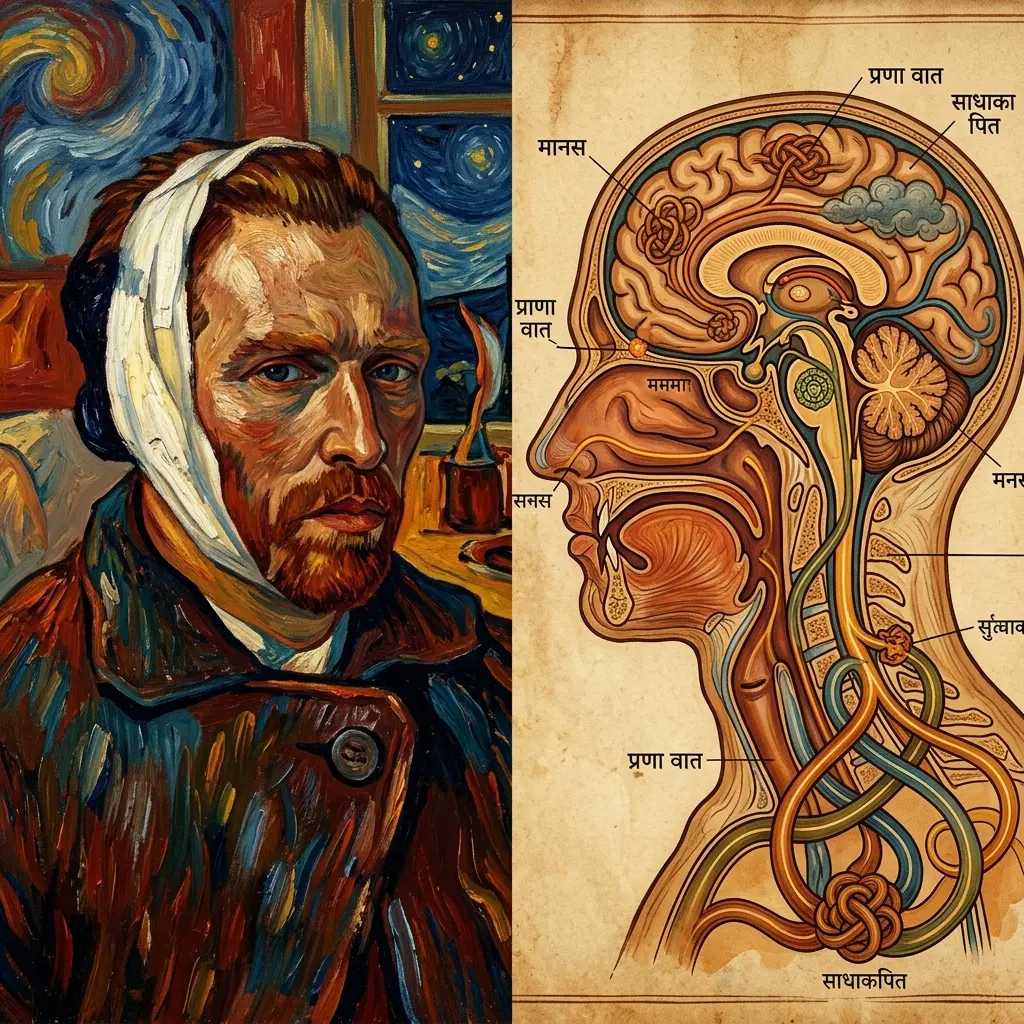
Featured image attribution: Left panel photo of Vincent van Gogh adapted from his historical self-portraits. Right panel displays an Ayurvedic illustration showing Sadhaka Pitta and Prana Vata flow through the mind's channels. Modified by cropping and compositing.
Dr. Dhanushika Dilshani
Expert Ayurvedic Wellness Doctor. Specialized in modern holistic wellness, optimizing dermal resilience, cosmetic radiance, and systematic diagnosis driven by traditional and evidence-based medical logic.
Medical Disclaimer
The information provided by AyurPhysio is for general educational and informational purposes only. It is not intended as a substitute for professional medical advice, diagnosis, or treatment. Always seek the advice of your physician or other qualified health providers with any questions you may have regarding a medical condition. Never disregard professional medical advice or delay in seeking it because of something you have read on this website.
Trending Guides
Luka Modrić's Daily Routine: Low-Impact Resistance Training and Midfield Longevity
4 min readHarry Kane's Daily Routine: Hamstring Preservation and Anti-Inflammatory Nutrition
4 min readKarim Benzema's Daily Routine: Cupping Therapy (Hijama) and HIIT Conditioning
4 min readNeymar Jr.'s Daily Routine: Joint Stabilization and Hyperbaric Oxygen Therapy
4 min readMohamed Salah's Daily Routine: Early Morning Conditioning and Hyperbaric Recovery
4 min readWeekly Wellness
Don't miss the next guide
Get holistic health tips and new guides delivered to your inbox.
Related Healing Guides
View All Guides →
Luka Modrić's Daily Routine: Low-Impact Resistance Training and Midfield Longevity
Harry Kane's Daily Routine: Hamstring Preservation and Anti-Inflammatory Nutrition