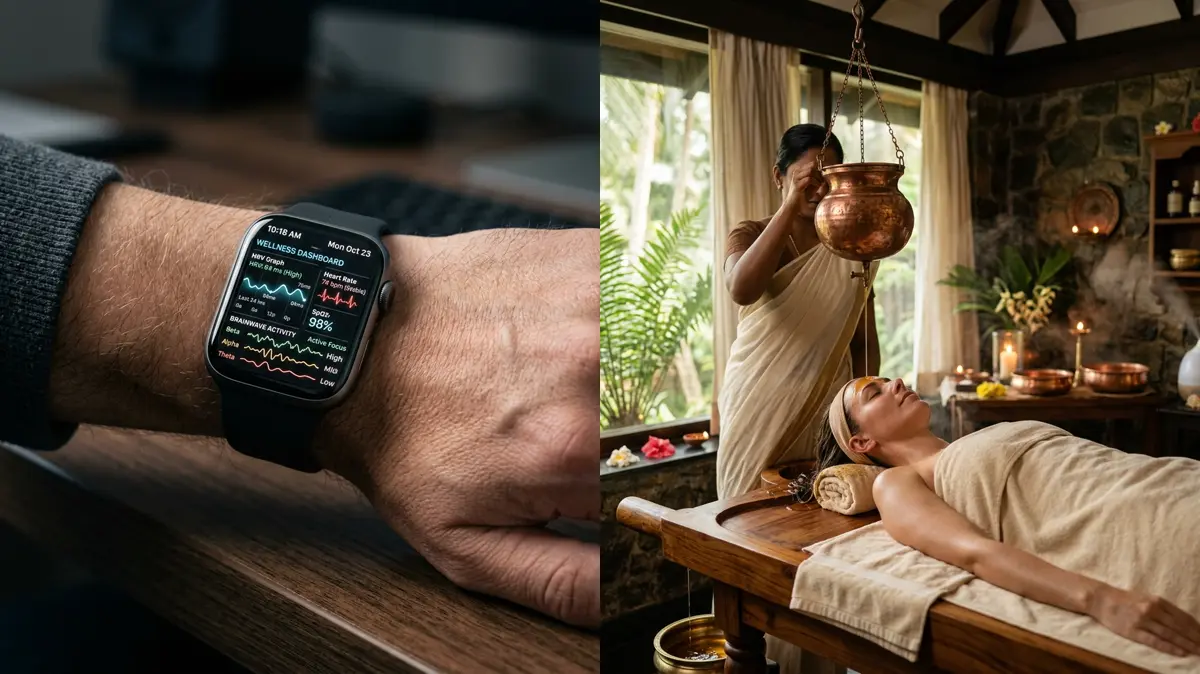
"Staring at a smartwatch screen to check if your nervous system is calm is the modern equivalent of using a magnifying glass to check if a boiling kettle is hot—you are only adding steam to the fire."
The global health landscape has been swept by the neurowellness trend 2026. From wearable electroencephalography bands to biofeedback rings, millions are adopting somatic wellness technology to monitor their stress. Yet, despite this high-tech surveillance, chronic nervous system exhaustion and cognitive fatigue remain at an all-time high.
AyurPhysio looks beyond digital metrics to address the root cause of this modern epidemic. Traditional Ayurvedic medicine offers a time-tested, chemical-free path to deep peace that electronic devices simply cannot replicate. True recovery requires soothing the subtle energies that govern our consciousness rather than merely measuring our stress response.
Let us explore the intersection of modern biofeedback and traditional Vata-pacification protocols. We will dissect the energetics of nervous system overload and outline practical natural therapies. You will discover how ancient rituals provide a profound method of ayurvedic nervous system regulation.
The Vata-Prana Axis: The Energetic Seat of Stress
In Ayurvedic physiology, the nervous system is closely linked with Vata dosha, the dynamic force of air and space. Vata governs all movement, sensory perception, and cognitive impulses within the body. When you are exposed to constant digital stimulation, the mobile and dry qualities of Vata increase rapidly.
This accumulation of excess Vata destabilizes Prana Vata, the sub-dosha responsible for mental focus, sensory integration, and inhalation. As Prana Vata becomes erratic, it depletes Ojas, the vital essence that protects our emotional resilience. This depletion manifests as sleep disturbances, racing thoughts, and chronic sensory overwhelm.
A hyperactive mind causes a physical depletion of the bodily tissues, particularly the nervous tissue. Unlike tech sensors that only flag stress after it manifests, Ayurveda identifies these imbalances in their subtle stage. This allows us to apply natural remedies before the body enters a state of systemic exhaustion.
- Over 75% of corporate workers using wellness wearables report high levels of mental fatigue despite positive sleep scores.
- Clinical studies demonstrate that traditional Shirodhara therapy reduces sympathetic nervous activity by up to 40%.
- Vata-related imbalances account for nearly 60% of sleep disorders reported in urban digital-first environments.
- Regular practice of Nadi Shodhana pranayama improves heart rate variability (HRV) metrics by over 25% within four weeks.
Why Biofeedback Apps Cannot Heal Vata Imbalance
A central myth of the modern wellness movement is that tracking your stress is the same as curing it. Wearables can display heart rate variability and sleep stages, but they cannot restore tissue hydration or pacify dry Vata. Staring at charts of your stress often increases mental tension, creating a feedback loop of anxiety.
My clear, clinician-led perspective is that relying solely on biofeedback devices to regulate your mind is a therapeutic mistake. Expecting a smartwatch to calm your nervous system is like buying a thermometer to cure a high fever—it monitors the crisis but does nothing to cool the blood. To quiet a hyperactive mind, you must introduce warm, heavy, and grounding substances that nourish the senses.
We must nourish the nervous system through the five senses using oil, heat, and silence. Tracking devices serve as a useful diagnostic mirror, but the actual medicine lies in lifestyle changes. Pacifying Vata requires turning off the digital sensors and immersing the body in traditional calming rituals.
"In my practice, I find that patients who obsess over their daily recovery scores are often the ones with the most severely aggravated Vata. The constant tracking feeds the hyperactive, mobile nature of Vata, preventing the mind from entering a state of surrender. True regulation happens when we step away from the digital screen and apply warm herbal oils to the head and ears, which directly pacifies the drying winds of the nervous system."
The Science of Shirodhara and Sensory Pacification
To pacify Vata, we use the classical treatment known as Shirodhara. During this therapy, a continuous stream of warm, herb-infused oil is poured onto the forehead, specifically the third eye region. This localized thermal stimulation calms the mind and triggers a deep parasympathetic response.
A structured shirodhara stress reduction program helps restore the natural flow of Prana Vata. The warm oil penetrates the scalp, nourishing the sensory pathways and calming the nervous system. This process helps lower stress hormones and improves mental clarity.
We combine Shirodhara with a grounding diet and calming herbs like Ashwagandha and Brahmi to nourish the nervous tissue. This holistic approach supports the body's natural resilience and helps prevent future burnout. By calming the mind through the senses, we build a foundation of lasting emotional stability.
Step-by-Step Vata-Calming Daily Routine
Implement this grounding sequence to soothe your mind and balance Vata. Follow these practices during the early morning hours, before engaging with any digital screens:
-
1Phase 1: Warm Sesame Oil Self-Massage (Perform daily for 15 minutes before bathing) Gently massage warm organic sesame oil into your scalp, ears, and the soles of your feet using slow, circular motions. Leave the oil on your skin for 15 minutes before washing it off with warm water to create a grounding sensory boundary. This practice shields the nervous system from sensory overload, as detailed in our guide on managing Vata imbalances in the nervous system.
-
2Phase 2: Nadi Shodhana Pranayama (Perform 3 sets of 9 rounds, twice daily) Sit in a comfortable, upright posture. Perform alternate nostril breathing, inhaling through the left, exhaling through the right, and then reversing the flow to complete one round. This breathing technique balances the hemispheres of the brain to settle Prana Vata, which is compared with digital tracking in our analysis of sleep tech tracking versus Ayurvedic Ojas.
-
3Phase 3: Evening Trataka Candle Gazing (Perform for 5 minutes before sleep) Place a lit beeswax candle at eye level, approximately three feet away from your seat. Gaze steadily at the tip of the flame without blinking, then close your eyes and visualize the flame in your mind's eye to gather scattered mental energy. This practice prepares the system for deep rest, facilitating recovery as detailed in our guide on Ayurvedic sleep hygiene and deep Ojas sleep.
Nourishing the Subtle Essences of the Mind
True nervous system health requires adopting a structured vata pacifying daily routine. Avoid eating cold, dry, or raw foods, which increase the rough and cold qualities of Vata. Instead, choose warm, moist, cooked meals spiced with ginger, cumin, and cardamom to support your digestion.
We must also establish regular sleep and waking times to help stabilize the body's natural rhythms. Ensure your bedroom is free of electronic devices and blue light, which disrupt the natural flow of Prana. This simple sensory boundary allows the nervous system to rest and rebuild its energetic reserves.
Approach your daily wellness as a sacred commitment to mental clarity. Follow the natural rhythms of the day, nourish your body with warm substances, and protect your mind from sensory overstimulation. This simple path of self-care is the key to maintaining true balance in the modern age.
Will committing to a sensory-calming lifestyle restore your inner peace, or will relying on digital tracking devices keep your nervous system in a state of constant Vata imbalance?
Featured image: Left slice showing a clinical smartwatch biofeedback dashboard. Right slice is a professional wellness photograph showing traditional Shirodhara therapy. Composited and modified for AyurPhysio.
Dr. Dhanushika Dilshani
Expert Ayurvedic Wellness Doctor. Specialized in modern holistic wellness, optimizing dermal resilience, cosmetic radiance, and systematic diagnosis driven by traditional and evidence-based medical logic.
Medical Disclaimer
The information provided by AyurPhysio is for general educational and informational purposes only. It is not intended as a substitute for professional medical advice, diagnosis, or treatment. Always seek the advice of your physician or other qualified health providers with any questions you may have regarding a medical condition. Never disregard professional medical advice or delay in seeking it because of something you have read on this website.
Trending Guides
Luka Modrić's Daily Routine: Low-Impact Resistance Training and Midfield Longevity
4 min readHarry Kane's Daily Routine: Hamstring Preservation and Anti-Inflammatory Nutrition
4 min readKarim Benzema's Daily Routine: Cupping Therapy (Hijama) and HIIT Conditioning
4 min readNeymar Jr.'s Daily Routine: Joint Stabilization and Hyperbaric Oxygen Therapy
4 min readMohamed Salah's Daily Routine: Early Morning Conditioning and Hyperbaric Recovery
4 min readWeekly Wellness
Don't miss the next guide
Get holistic health tips and new guides delivered to your inbox.
Related Healing Guides
View All Guides →
Luka Modrić's Daily Routine: Low-Impact Resistance Training and Midfield Longevity

Harry Kane's Daily Routine: Hamstring Preservation and Anti-Inflammatory Nutrition