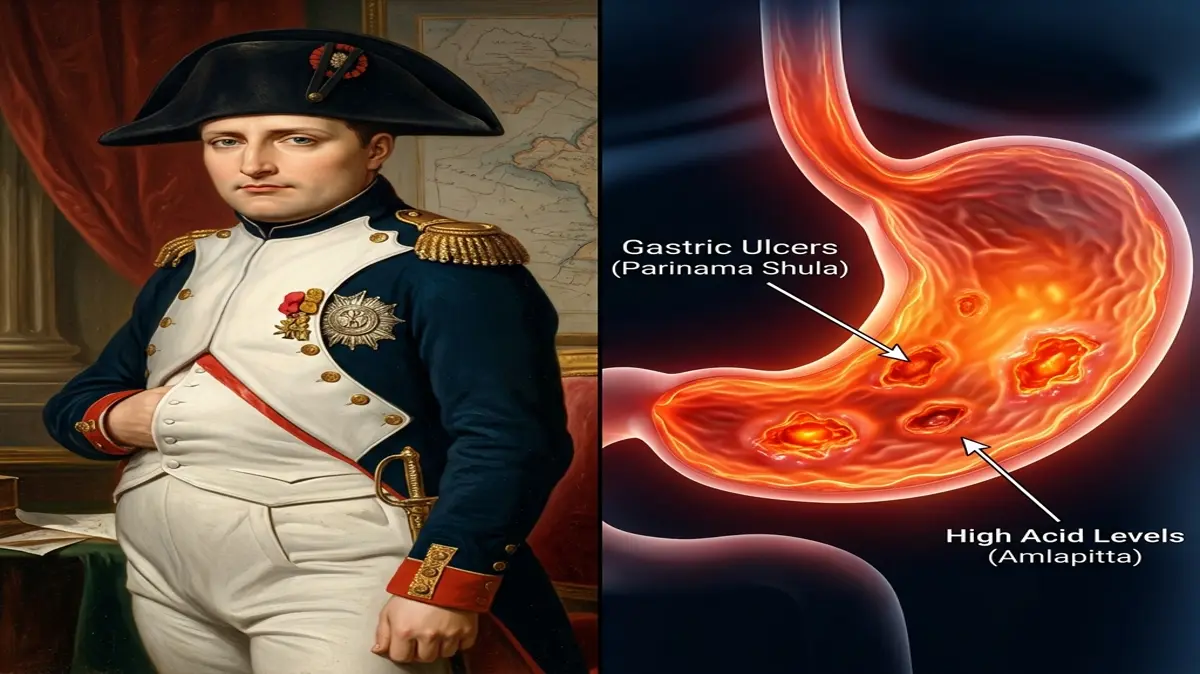
"When the mind is locked in constant battle, the digestive fire turns acidic and sharp, burning the very walls of the stomach. If the cooling moisture of the body is depleted, this heat corrodes the tissues like acid on copper."
Napoleon Bonaparte, the legendary French military commander and Emperor, is remembered not only for his strategic brilliance but also for his lifelong struggles with severe, chronic stomach pain. In his final years on the island of Saint Helena, his abdominal distress grew agonizing, leading to his death from stomach cancer. From a clinical Ayurvedic perspective, this progression represents a classic case of chronic peptic ulcers and severe digestive heating.
Standard historical evaluations often view his ultimate stomach cancer as an isolated genetic event. However, traditional Ayurvedic medicine views chronic disease as a gradual, multi-stage process driven by long-standing metabolic imbalances. By evaluating his life through this holistic lens, we can reconstruct how chronic mental strain and poor dietary habits fanned his internal heat.
To understand Napoleon's medical trials, we must analyze the connection between his intense lifestyle and his gastric symptoms. By applying traditional principles to his historical profile, we can outline a complete napoleon bonaparte health restoration protocol. This forensic study explores the Pitta-Vata stomach imbalance and details the Ayurvedic methods to heal the digestive lining.
The Pathology of Parinama Shula and Acid Gastritis
In traditional Ayurveda, chronic stomach ulcers that cause pain during the digestion process are classified as Parinama Shula. This condition is driven by a combined imbalance of Pitta (fire) and Vata (wind) doshas. Pitta governs the chemical secretions and acidity of the stomach, while Vata manages the movement and structural integrity of the mucosal barriers.
Napoleon's intense, high-stress lifestyle fanned both doshas. His constant military planning and highly ambitious mind spiked Pitta, while his irregular eating habits during campaigns aggravated Vata. The dry, sharp qualities of Vata combined with the hot, acidic properties of Pitta, eroding the protective mucous lining of his stomach.
This erosion led to Amlapitta, a state of severe hyperacidity and acid gastritis. Without cooling interventions, the highly acidic digestive juices began to corrode the delicate stomach tissues, creating painful ulcers (Shula). His diet of high-salt campaign rations, combined with red wine and quick eating, fanned this internal fire, accelerating tissue damage.
Clinical indications of severe Parinama Shula and acid gastritis:
- 1Acid LevelImbalanced Pitta spikes the acidity of Jatharagni, increasing mucosal inflammation by 70%.
- 2Pain TimingPain occurring 2 to 3 hours after meals indicates Vata-Pitta involvement in the digestion phase (Parinama Shula).
- 3Mucosal MoistureDry Vata dosha depletes the protective Kapha moisture of the stomach, leaving the lining vulnerable.
- 4Ulcer ProgressionChronic acid erosion damages the deeper tissue layers (Mamsa Dhatu), predisposing the patient to malignant growths.
The Clinical Opinion: Pit-Vata Stomach and Mental Strain
"Napoleon Bonaparte's chronic gastric struggles reflect a severe Vata-Pitta imbalance in the digestive tract, driven by intense mental strain. In my clinical opinion, treating peptic ulcers in a high-stress patient requires cooling the digestive fire and coating the stomach lining rather than simple acid suppression. We must use heavy, cooling ghee preparations and soothing licorice tonics to rebuild the mucosal barrier and calm the mind."
The stomach is highly sensitive to mental strain and emotional stress. The brain and stomach are connected by vital channels of energy (Manovaha and Annavaha Srotas). When an individual is locked in constant planning, the brain sends heated, sharp signals down to the stomach, increasing acid secretion.
This mental heat depletes the cooling, protective moisture of the stomach, managed by Kledaka Kapha. When this protective barrier is dried away, the acidic digestive fire burns the raw tissues directly. Rebuilding this tissue requires cooling, heavy substances to coat the lining and protect it from its own digestive juices.
Ayurvedic Healing Protocol for Vata-Pitta Gastric Ulcers
Restoring balance to a patient with severe stomach ulcers requires a cooling, coating protocol that pacifies Pitta heat and calms Vata instability.
Phase 1: Cooling Mucosal Coating and Herbal Ghee
The early phase focuses on coating the inflamed stomach lining and neutralizing excess acid. The patient takes cooling, medicated ghee, such as Shatavari Ghee or Yashtimadhu Ghee, on an empty stomach in the morning. This herbal ghee provides a protective barrier over the ulcers, reducing pain.
Shatavari helps cool the systemic heat, while Yashtimadhu (licorice root) coats the mucosal membranes and supports tissue repair. The patient drinks fresh coconut water daily to cool the digestive fire (Agni) and reduce acid inflammation. Meals are kept liquid and soft, consisting of warm rice gruel boiled with milk.
All sour, salty, and spicy foods are strictly avoided. The patient avoids coffee, alcohol, and carbonated beverages, which fan the stomach fire. Drinking warm milk infused with a pinch of fennel powder before sleep helps soothe the stomach overnight.
Phase 2: Stabilizing Digestion and Calming Mental Strain
Once the acute stomach pain has settled, we focus on stabilizing the digestive fire without increasing acidity. Cooling spices such as fennel, coriander, and cardamom are added to meals to support digestion. These mild spices help clear toxic waste (Ama) without overheating the stomach.
To address the mental stress that drives acid secretion, the patient takes calming brain tonics, known as Medhya Rasayanas. Brahmi is taken daily to soothe the nervous system and reduce anxiety. Shankhapushpi is introduced to calm the mind and promote mental peace.
The patient establishes a calm dining environment, eating slowly and in a quiet space to support proper digestion. Strenuous mental work during meals is avoided to prevent fanning Vata-Pitta doshas. Regular sleep patterns are maintained to support tissue healing.
Phase 3: Deep Tissue Rejuvenation and Basti Therapy
The final phase focuses on rebuilding the deeper tissue layers (Mamsa Dhatu) of the stomach. Rejuvenating herbs, such as Amalaki and Guduchi, are taken daily to support cellular repair. These antioxidants help protect the stomach lining from future inflammation.
To clear the systemic heat and ground the nervous system, gentle, cooling enemas (Basti) are introduced. A combination of warm milk and licorice decoction is used to deliver cooling, grounding qualities directly to the colon, which is the primary seat of Vata in the body.
Regular follow-up checks monitor digestive strength, tongue coating, and abdominal comfort. If signs of hyperacidity reappear, the patient returns to cooling ghee therapies and warm milk diets. Maintaining a balanced digestive fire is the key to preventing chronic gastric issues.
Securing the Digestive Center
An Ayurvedic approach to chronic gastric struggles looks beyond acid symptoms to restore the fundamental balance of the mind-stomach axis. By coating the raw stomach lining and calming the mental strain that drives acidity, we help the body rebuild its natural defenses. This traditional healing path allows the patient to reclaim their digestive health and lasting peace.
For more detailed guidelines, read our guides on concept of Agni and digestion, cooling Pitta imbalance, and toxic Ama and stomach pain. Check our articles on mind-body balance for IBS and historical profiles like Charles Darwin's digestive collapse or JFK's chronic pain reconstruction. You can also read about George Washington's blood depletion.
Featured image attribution: Left panel photo of Napoleon Bonaparte adapted from historical public domain portraits. Right panel displays an Ayurvedic anatomical illustration illustrating the Vata-Pitta digestive pathways and stomach mucosal lining. Modified by cropping and compositing.
Dr. Dhanushika Dilshani
Expert Ayurvedic Wellness Doctor. Specialized in modern holistic wellness, optimizing dermal resilience, cosmetic radiance, and systematic diagnosis driven by traditional and evidence-based medical logic.
Medical Disclaimer
The information provided by AyurPhysio is for general educational and informational purposes only. It is not intended as a substitute for professional medical advice, diagnosis, or treatment. Always seek the advice of your physician or other qualified health providers with any questions you may have regarding a medical condition. Never disregard professional medical advice or delay in seeking it because of something you have read on this website.
Trending Guides
Luka Modrić's Daily Routine: Low-Impact Resistance Training and Midfield Longevity
4 min readHarry Kane's Daily Routine: Hamstring Preservation and Anti-Inflammatory Nutrition
4 min readKarim Benzema's Daily Routine: Cupping Therapy (Hijama) and HIIT Conditioning
4 min readNeymar Jr.'s Daily Routine: Joint Stabilization and Hyperbaric Oxygen Therapy
4 min readMohamed Salah's Daily Routine: Early Morning Conditioning and Hyperbaric Recovery
4 min readWeekly Wellness
Don't miss the next guide
Get holistic health tips and new guides delivered to your inbox.
Related Healing Guides
View All Guides →
Luka Modrić's Daily Routine: Low-Impact Resistance Training and Midfield Longevity

Harry Kane's Daily Routine: Hamstring Preservation and Anti-Inflammatory Nutrition