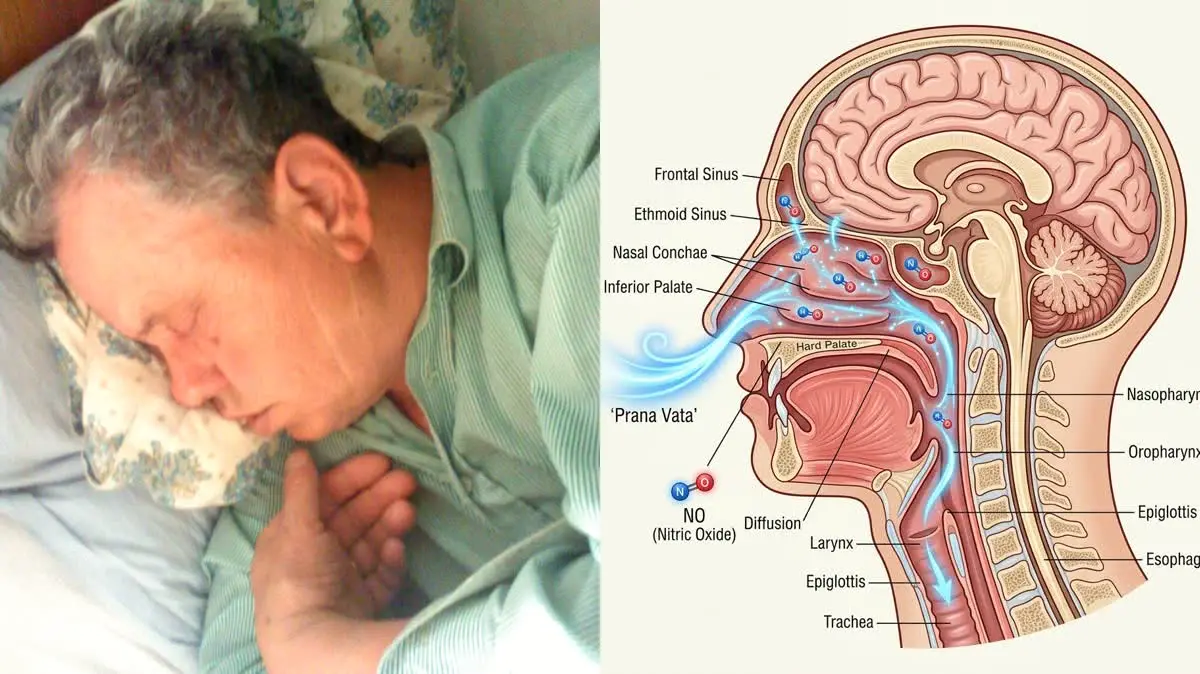
"The breath entering through the nose is the primary vehicle of Prana Vata, the vital wind. When we breathe through the mouth, this wind becomes chaotic, drying the throat and disrupting the internal balance of the mind."
The practice of mouth taping has gained significant attention on social media as a simple way to improve sleep quality. Proponents claim that keeping the lips closed with tape during the night encourages nasal breathing, leading to reduced snoring and deeper rest. In Ayurvedic medicine, this modern trend aligns with the ancient practice of regulating Prana Vata, the vital life force that governs our breathing and nervous system.
Using tape on the mouth when your nasal passages are congested is a common mistake. Forcing nasal breathing when the sinuses are blocked by excess mucus (Kapha) can lead to respiratory distress and elevated stress levels during the night. Rebuilding healthy breathing patterns requires clearing the nasal passages before introducing structural supports like tape.
To safely explore mouth taping for sleep trend, you must understand how nasal breathing affects both body and mind. This guide examines the physiological benefits of nasal breathing and provides a safe approach to nitric oxide nasal breathing benefit and Prana Vata regulation.
The Physiology of Nasal breathing and Nitric Oxide
Nasal breathing serves as the body's natural filtration and humidification system. As air passes through the nasal conchae (turbinates), it is warmed and moistened, protecting the delicate tissue of the lungs from dry, cold, and unconditioned air. Crucially, nasal breathing triggers the release of nitric oxide (NO), a molecule synthesized by the cells in the paranasal sinuses. Nitric oxide is a powerful vasodilator, meaning it relaxes and widens blood vessels in the lungs, which increases blood flow and improves systemic oxygen absorption in the lungs by up to 10% to 15%. This gaseous transmitter also possesses mild anti-microbial properties, helping filter inhaled air before it reaches the bronchial tubes.
In Ayurveda, the movement of breath through the nose is the path of Prana Vata, the subdosha of Vata that resides in the head and chest. Prana Vata regulates breathing, swallowing, and mental clarity. When we breathe through the mouth, the cold, dry air vitiates Vata, leading to an overactive nervous system, dry mouth, and restless sleep patterns.
Modern clinical data support these observations. Chronic mouth breathing is associated with elevated sympathetic nervous system activity, higher resting heart rates, and disrupted sleep stages. By encouraging nasal breathing, we support parasympathetic activation, which lowers blood pressure and promotes deeper, more restorative stages of sleep.
Generates nitric oxide, increases oxygen absorption, and calms Vata, helping to stabilize the nervous system for deep rest.
Dries the airways, reduces oxygen efficiency, and increases Vata instability, leading to lighter, more fragmented sleep.
The Clinical Opinion: Clear Your Sinuses Before Taping
"I see many people who attempt to tape their mouth while suffering from chronic sinus congestion. In my clinical opinion, this is unsafe. If your nasal passages are blocked by excess Kapha, forcing your mouth shut causes your system to panic, raising cortisol levels. You must first clear your sinuses using nasal irrigation (Neti) and warming oils before trying mouth tape."
A 3-Step Nasal Breathing and Sleep Reset
To safely transition to nasal breathing during sleep, clear your airways, practice daytime breathing exercises, and introduce tape gradually.
Phase 1: Clear the Nasal Passages
Before sleep, ensure your nasal passages are clear. Use a Neti pot with warm saline water to rinse the sinuses, clearing excess mucus. Follow this with Nasya therapy, applying 2 to 3 drops of warm Anu taila or sesame oil to each nostril. This oil application lubricates the nasal membranes, preventing dryness and reducing Vata imbalance during the night.
Phase 2: Daytime Nasal Awareness and Exercises
Practice conscious nasal breathing during the day. Sit comfortably and perform alternate nostril breathing (Nadi Shodhana) for 5 to 10 minutes. This exercise balances the two channels of energy (Ida and Pingala) and trains the respiratory muscles to rely on nasal airflow. Focus on keeping your tongue resting on the roof of your mouth, which naturally supports nasal breathing.
Phase 3: Gradual Introduction of Mouth Tape
When your sinuses are clear and you feel comfortable breathing through your nose, introduce a gentle, hypoallergenic medical tape. Start by applying a small vertical strip over the center of your lips during the day while reading or working. Once you feel comfortable, use the tape during sleep, ensuring it can be easily removed if needed. Continue this practice daily.
Long-Term Breathing and Sleep Health
Supporting your breathing requires consistent habits. To protect your sleep quality, maintain a clean bedroom environment, use a supportive pillow that keeps your head aligned, and avoid eating large meals close to bedtime, as a full stomach can press against the diaphragm, making nasal breathing more difficult during sleep.
In addition, practice diaphragmatic breathing exercises during the day. Deep, belly-focused breathing expands the lower lobes of the lungs fully, stimulating the vagus nerve and maximizing the absorption of nasal nitric oxide. Nurturing your respiratory system through clear airways, relaxed breathing, and a regular daily routine is your best foundation for deep, restorative sleep.
For more nasal health and sleep guides, read our article on Neti Pot safety and check our analysis of Nasya therapy benefits. To learn about sleep metrics, read our guide on HRV tracking and sleep quality to optimize your nightly rest.
Featured image attribution: "Sleeping Man" by Unknown Author, licensed under CC BY-SA 2.0. Modified by cropping and compositing with an anatomical render.
Dr. Dhanushika Dilshani
Expert Ayurvedic Wellness Doctor. Specialized in modern holistic wellness, optimizing dermal resilience, cosmetic radiance, and systematic diagnosis driven by traditional and evidence-based medical logic.
Medical Disclaimer
The information provided by AyurPhysio is for general educational and informational purposes only. It is not intended as a substitute for professional medical advice, diagnosis, or treatment. Always seek the advice of your physician or other qualified health providers with any questions you may have regarding a medical condition. Never disregard professional medical advice or delay in seeking it because of something you have read on this website.
Trending Guides
Luka Modrić's Daily Routine: Low-Impact Resistance Training and Midfield Longevity
4 min readHarry Kane's Daily Routine: Hamstring Preservation and Anti-Inflammatory Nutrition
4 min readKarim Benzema's Daily Routine: Cupping Therapy (Hijama) and HIIT Conditioning
4 min readNeymar Jr.'s Daily Routine: Joint Stabilization and Hyperbaric Oxygen Therapy
4 min readMohamed Salah's Daily Routine: Early Morning Conditioning and Hyperbaric Recovery
4 min readWeekly Wellness
Don't miss the next guide
Get holistic health tips and new guides delivered to your inbox.
Related Healing Guides
View All Guides →
Luka Modrić's Daily Routine: Low-Impact Resistance Training and Midfield Longevity

Harry Kane's Daily Routine: Hamstring Preservation and Anti-Inflammatory Nutrition