"An unstable shoulder blade is like trying to shoot a heavy cannon out of a light wooden canoe—without a stable base, the recoil will tear the joint apart. Your rotator cuff muscles are like a team of tightrope walkers trying to keep a heavy bowling ball centered on a small saucer during a storm."
If your shoulder feels like it is popping out of its socket when you reach overhead, or if throwing a ball triggers a sharp, pinching pain deep inside the joint, you are dealing with joint instability. These symptoms are common after physical trauma or repetitive overhead movements.
Many individuals try to manage this by aggressively stretching their shoulder backward to relieve the tightness, or by resting the arm completely in a sling. While these actions feel productive, they increase joint laxity and allow the stabilizing muscles to wither. To restore stability, you must anchor the shoulder blade.
By utilizing targeted scapular dyskinesis rehab and focused stabilization exercises, you can decompress the joint, protect the labrum, and maintain healthy rotator cuff longevity seniors rely on for an active life.
The Anatomy of Shoulder Instability: The Loose Socket
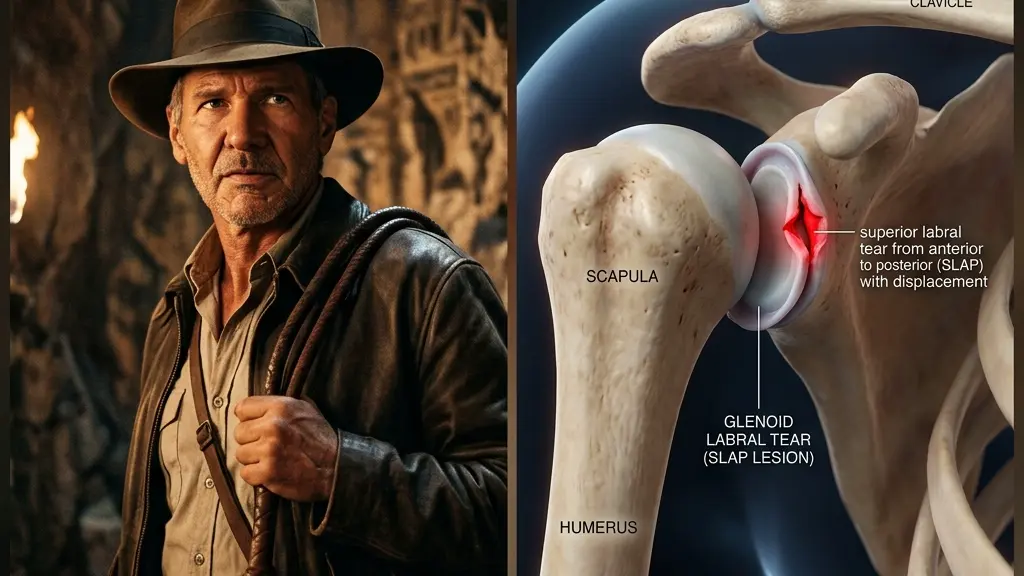
The shoulder is a ball-and-socket joint designed for maximum mobility rather than stability. The socket, or glenoid fossa, is very shallow—comparable to a golf tee holding a golf ball. To deepen this socket and keep the humerus in place, the joint is lined with a ring of tough cartilage called the glenoid labrum.
During high-energy movements or falls, the humerus can slide forward, tearing the labrum from the bone. This mechanical failure leads to chronic instability. When the labrum is torn, the surrounding rotator cuff muscles must work double-time to hold the joint together, which often leads to tendonitis and secondary tears.
Clinical audits and orthopedic shoulder studies highlight the prevalence of tears and the efficacy of conservative training:
- Orthopedic data reveals that rotator cuff tears are present in over 50% of asymptomatic seniors aged 80 and older.
- To prevent impingement, the shoulder blade must rotate upward in a precise 2:1 ratio with arm elevation.
- Clinical trials demonstrate that structured physical therapy successfully resolves symptoms in 75% of degenerative labral tears.
If the shoulder blade fails to move in sync with the arm—a condition known as scapular dyskinesis—the humerus pinches the rotator cuff tendons against the acromion bone. Rebuilding control of the muscles that anchor the shoulder blade is the primary way to protect the joint from chronic wear and tear.
Why Passive Slings and Aggressive Overhead Stretching Fail
When shoulder pain flares up, many patients are told to wear a sling for weeks to rest the joint, or they attempt to stretch the arm overhead to break up stiffness.
My decisive clinical opinion is that immobilizing an unstable shoulder in a sling or stretching a torn labrum actively worsens joint degeneration. Prolonged immobilization causes rapid atrophy of the rotator cuff, while stretching an already loose joint increases laxity and shear forces.
When a joint is chronically loose or unstable, the body's natural protective response is to tighten the surrounding chest and neck muscles to prevent the ball from sliding out. If you try to stretch these muscles without first stabilizing the joint socket, you bypass this protective barrier and place massive stretching forces directly onto the torn labrum. This can worsen the tear and increase joint inflammation.
To resolve the issue, you must implement a structured protocol of glenohumeral joint stabilization. This means performing exercises that compress the ball into the socket, protecting the labrum while initiating targeted shoulder labral tear exercises. Strengthening the rotator cuff muscles provides a dynamic sleeve that locks the joint in place during movement, eliminating the need for passive slings or dangerous stretching.
Three Clinical Steps to Anchor the Shoulder Blade
To restore healthy scapular movement and stabilize the joint, perform these three exercises daily:
-
1Scapular Setting and Retraction Drills Stand tall with your arms relaxed at your sides. Gently squeeze your shoulder blades downward and backward, as if trying to tuck them into your back pockets. Hold this contraction for 5 seconds, then slowly release. Perform 3 sets of 10 repetitions to retrain the rhomboids and lower trapezius muscles. This is the foundation of correcting harrison ford shoulder injury complications.
-
2Serratus Anterior Wall Slides Stand facing a wall with your forearms resting vertically against it, elbows bent to 90 degrees. Wrap a resistance band around your wrists and pull outward slightly. Slowly slide your forearms up the wall, keeping your shoulder blades flat against your rib cage. Slide back down to the start, performing 2 sets of 12 slides to strengthen the serratus muscle and prevent shoulder blade winging.
-
3Isometric Rotator Cuff Compression Stand facing a wall holding a small, soft exercise ball against the wall at shoulder height. Press your hand firmly into the ball, compressing your shoulder joint into the socket. Keeping the pressure constant, slowly draw small circles with your hand on the ball for 30 seconds. Perform 3 sets on each side to build active stability in the rotator cuff.
Decompress the Shoulder Joint for Active Living
Rebuilding your scapular muscles and stabilizing your rotator cuff are the most effective ways to preserve shoulder joint health and avoid surgery.
To learn more about strengthening the shoulder tendons, read our guide on rotator cuff tendinopathy and eccentric exercises. If you are experiencing upper back stiffness, see our mobility drills for shoulder impingement and scapular rhythm. For acute joint displacements, review our protocols for shoulder subluxation and instability.
But as you restore the stability of your shoulder girdle, how is the systemic nutrition of your muscles supporting your overall tissue integrity?
Dr. Dhanushika Dilshani
Expert Ayurvedic Wellness Doctor. Specialized in modern holistic wellness, optimizing dermal resilience, cosmetic radiance, and systematic diagnosis driven by traditional and evidence-based medical logic.
Medical Disclaimer
The information provided by AyurPhysio is for general educational and informational purposes only. It is not intended as a substitute for professional medical advice, diagnosis, or treatment. Always seek the advice of your physician or other qualified health providers with any questions you may have regarding a medical condition. Never disregard professional medical advice or delay in seeking it because of something you have read on this website.
Trending Guides
Luka Modrić's Daily Routine: Low-Impact Resistance Training and Midfield Longevity
4 min readHarry Kane's Daily Routine: Hamstring Preservation and Anti-Inflammatory Nutrition
4 min readKarim Benzema's Daily Routine: Cupping Therapy (Hijama) and HIIT Conditioning
4 min readNeymar Jr.'s Daily Routine: Joint Stabilization and Hyperbaric Oxygen Therapy
4 min readMohamed Salah's Daily Routine: Early Morning Conditioning and Hyperbaric Recovery
4 min readWeekly Wellness
Don't miss the next guide
Get holistic health tips and new guides delivered to your inbox.
Related Healing Guides
View All Guides →
Luka Modrić's Daily Routine: Low-Impact Resistance Training and Midfield Longevity
Harry Kane's Daily Routine: Hamstring Preservation and Anti-Inflammatory Nutrition