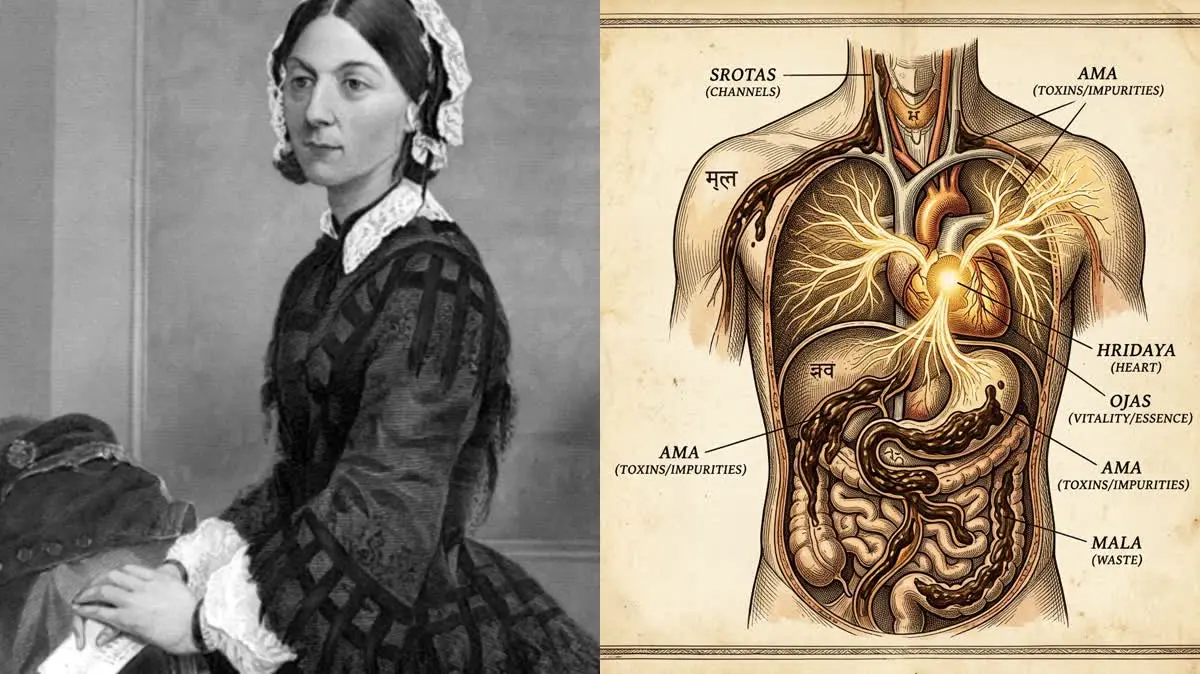
"When a severe infection clears, it often leaves behind cold, sticky debris that clogs the bodily channels. This block deprives the tissues of nutrients, slowly draining the body's protective energy until only exhaustion remains."
Florence Nightingale, the founder of modern nursing, lived a private life marked by chronic illness. After contracting Crimean fever in 1856, she suffered from debilitating fatigue, joint pain, heart palpitations, and severe depression that kept her housebound for over thirty years. Today, medical historians view her condition as a classic case of chronic fatigue syndrome, which provides a historical look at post-viral recovery through Ayurvedic principles.
Treating post-viral fatigue with intense exercise or aggressive cleansing is a common mistake. When the body's channels are blocked by metabolic debris (Ama) and its energy reserves (Ojas) are depleted, forced activity causes further fatigue. Rebuilding vitality requires a gentle, step-by-step approach that supports recovery rather than pushing the system to its limits.
To recover from post viral fatigue syndrome ayurveda, you must understand how viral residue affects tissue health. This guide provides an Ayurvedic perspective on Nightingale's historic illness and outlines a restorative protocol to clear ama toxicity chronic fatigue and rebuild vital energy.
The Pathophysiology of Post-Viral Ama
In Ayurvedic medicine, a viral infection is considered a sharp attack on the body's digestive fire (Agni). When Agni is weakened, the body cannot fully process food or metabolic byproducts, creating a sticky, toxic residue known as Ama. This residue enters the circulation and settles in the bodily channels (Srotas), particularly the nervous system channels (Pranavaha Srotas) and joint tissues.
As Ama accumulates, it blocks the flow of nutrients to the tissues (Dhatus). According to Ayurvedic physiology, Rasa Dhatu (plasma) is the first tissue to be affected, followed by Rakta (blood) and Mamsa (muscle) tissues. The body's vital essence—Ojas, which is responsible for immune strength, mental clarity, and physical stamina—begins to decline as a direct consequence of this systemic starvation. This state of Ojas depletion (Ojas Kshaya) leads to the core symptoms of chronic fatigue, including persistent brain fog, unrefreshing sleep, extreme fatigue after minor tasks, and sensitivity to sensory stimuli.
This explanation aligns with modern research on post-viral syndromes. Studies suggest that viral infections can trigger long-term inflammation, mitochondrial dysfunction, and nervous system imbalances. The buildup of metabolic waste and inflammation in the body's tissues mirrors the traditional description of sticky Ama blocking the channels.
Sticky residues block the channels, preventing the distribution of nutrients to tissues and causing feelings of heaviness and brain fog.
A decline in Ojas reduces immune function and stamina, leaving the body sensitive to physical and mental stress.
The Clinical Opinion: Avoid Aggressive Cleansing Early On
"Many patients with chronic fatigue try aggressive detox diets or strong herbal laxatives to clear toxins. In my clinical opinion, this is harmful. When your energy is depleted, strong cleanses further weaken your Agni and deplete your Ojas. You must first support your digestion with warm, spiced liquids before introducing nourishing herbs to rebuild your strength."
A 3-Step Ayurvedic Restorative Protocol
Rehabilitating from post-viral fatigue requires a gradual process: kindling digestion, clearing blocked channels, and nourishing the nervous system.
Phase 1: Kindling Agni and Clearing Ama
Focus on gently warming the digestive system to help digest Ama. Drink warm water infused with fresh ginger, cumin, and coriander seeds throughout the day. These spices kindle Agni without generating excess heat. Keep meals simple and warm, choosing soups or soft rice dishes. Avoid heavy, cold, raw, or processed foods. Continue this approach for 2 to 3 weeks to clear channel blockages.
Phase 2: Rebuilding Tissues and Digesting Debris
Once your digestion is stable, introduce gentle herbs like Guduchi (Tinospora cordifolia) and Pippali (Piper longum). Guduchi is a premier bitter herb that helps clear residual heat and toxins from the deep tissues while supporting the body's natural immune defense mechanisms. Pippali works as a powerful bio-enhancer (Yogavahi), helping to clear the respiratory and circulatory channels so nutrients can reach depleted cells. Eat warm kitchari cooked with ghee, which provides gentle nourishment without overloading your digestive capacity. Perform this routine for 4 weeks.
Phase 3: Rejuvenating Ojas and Nourishing the Mind
To rebuild your vitality, introduce nourishing adaptogens (Rasayanas) such as Ashwagandha and Shatavari. Take Ashwagandha with warm milk and a teaspoon of ghee before bed to soothe the nervous system and promote restful sleep. Practice gentle breathing exercises (Pranayama) and ensure you get adequate rest, avoiding physical and mental overexertion. Perform this phase daily.
Long-Term Vitality and Channel Preservation
Rebuilding your health requires consistent routines. To protect your body's energy, sleep by 10:00 PM to support tissue regeneration, and avoid skipping meals. It is also beneficial to limit cold foods and drinks, as they weaken your digestive fire, making it easier for metabolic waste to accumulate in your channels during times of stress.
Additionally, practice mindfulness or gentle yoga to soothe your nervous system. Chronic stress increases Vata imbalance, which accelerates the depletion of Ojas. Nurturing your vital energy through warm meals, adequate rest, and a consistent routine is your best support for long-term health.
For more Ayurvedic recovery guides, read our article on nasal cleansing best practices and check our analysis of Ayurvedic oils for pain relief. To learn about nervous system support, view our post on sleep health and Ojas tracking to optimize your daily rest.
Featured image attribution: "Florence Nightingale" by Unknown Author, licensed under Public Domain. Modified by cropping and compositing with an anatomical render.
Dr. Dhanushika Dilshani
Expert Ayurvedic Wellness Doctor. Specialized in modern holistic wellness, optimizing dermal resilience, cosmetic radiance, and systematic diagnosis driven by traditional and evidence-based medical logic.
Medical Disclaimer
The information provided by AyurPhysio is for general educational and informational purposes only. It is not intended as a substitute for professional medical advice, diagnosis, or treatment. Always seek the advice of your physician or other qualified health providers with any questions you may have regarding a medical condition. Never disregard professional medical advice or delay in seeking it because of something you have read on this website.
Trending Guides
Luka Modrić's Daily Routine: Low-Impact Resistance Training and Midfield Longevity
4 min readHarry Kane's Daily Routine: Hamstring Preservation and Anti-Inflammatory Nutrition
4 min readKarim Benzema's Daily Routine: Cupping Therapy (Hijama) and HIIT Conditioning
4 min readNeymar Jr.'s Daily Routine: Joint Stabilization and Hyperbaric Oxygen Therapy
4 min readMohamed Salah's Daily Routine: Early Morning Conditioning and Hyperbaric Recovery
4 min readWeekly Wellness
Don't miss the next guide
Get holistic health tips and new guides delivered to your inbox.
Related Healing Guides
View All Guides →
Luka Modrić's Daily Routine: Low-Impact Resistance Training and Midfield Longevity

Harry Kane's Daily Routine: Hamstring Preservation and Anti-Inflammatory Nutrition