"Water is the nectar that cools the internal fire and sustains the tissues. Depriving the body of this moisture is like leaving a hot engine to run dry—the metal soon warps, and the oil burns away."
The dry fasting trend has gained massive popularity in the alternative health community, promoted as a powerful way to accelerate fat loss, trigger deep autophagy, and cleanse the cells. Proponents claim that dry fasting is three times more powerful than water fasting because it forces the body to burn fat to create metabolic water. However, from a clinical Ayurvedic perspective, this extreme fluid deprivation represents a dangerous path to Vata-Pitta vitiation and tissue wasting, or Dhatu Kshaya.
Many individuals attempt dry fasts to cure chronic inflammation or lose weight, only to experience severe fatigue, rapid heart rates, and kidney pain. Modern wellness trends often focus on short-term cellular stress metrics, ignoring the systemic depletion of vital fluids. Reconditioning the body requires understanding how internal moisture preserves tissue longevity.
Restoring tissue health demands an evaluation of hydration dynamics. By studying how fluid loss impacts the circulatory channels and utilizing traditional hydration principles, we can protect our vital organs. This article examines the dry fasting trend, the pathology of fluid deprivation, and the Ayurvedic guidelines for safe fasting.
The Pathology of Dhatu Kshaya and Fluid Depletion
In traditional Ayurveda, the body is sustained by seven tissue layers, or Dhatus, which must be nourished sequentially. The first tissue is Rasa Dhatu, the plasma and lymph, which depends directly on the intake of fluids. Rasa Dhatu is responsible for hydrating all tissues, maintaining skin moisture, and carrying nourishment throughout the body.
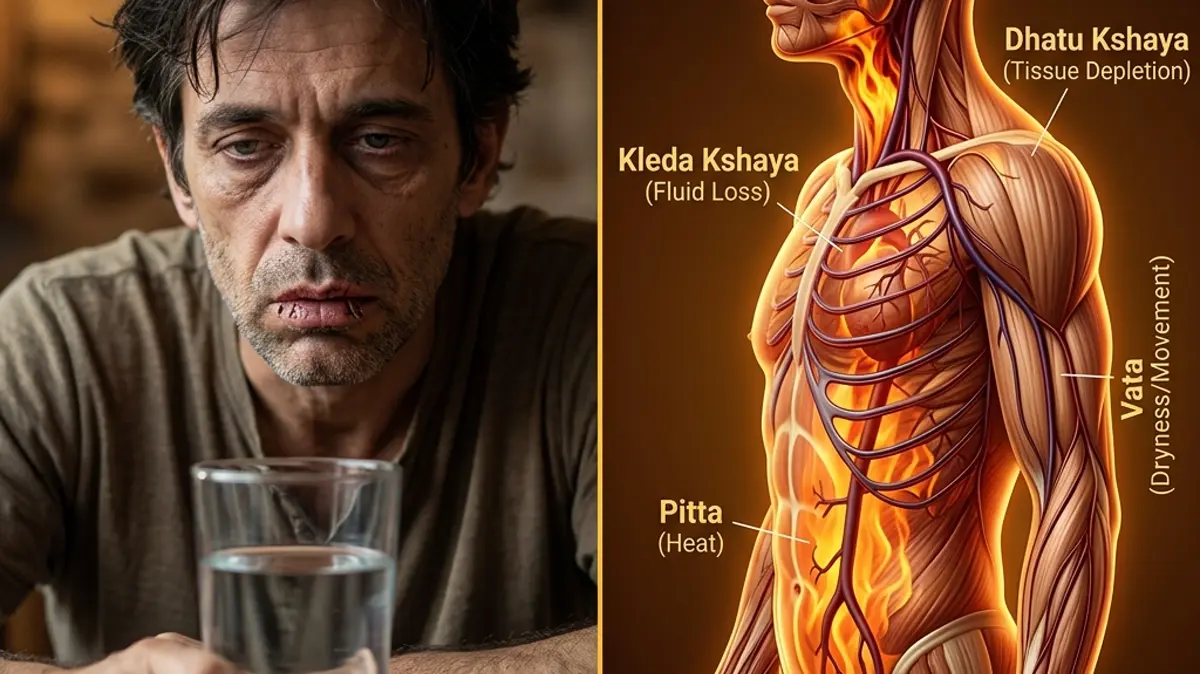
Water is also essential for maintaining Kleda, the internal moisture that lubricates the organs and protects them from the heat of digestion (Agni). When a person dry fasts, Rasa Dhatu is rapidly depleted, and Kleda is lost. Without water to cool the system, the body's internal heat, governed by Pitta dosha, spikes immediately.
This heat surge combined with the lack of lubrication aggravates Vata dosha, which represents dryness and movement. The hot, dry qualities begin to consume the deeper tissues, starting with muscle (Mamsa) and fat (Meda), leading to a state of Dhatu Kshaya, or tissue wasting. The kidneys and blood channels, starved of moisture, are forced to operate under high pressure, leading to toxic strain.
Clinical indications of fluid deprivation on tissues and doshas:
- 1Rasa Dhatu DepletionAbstaining from water for 24 hours reduces plasma volume, drying out the lymph channels.
- 2Vata-Pitta VitiationLack of cooling moisture spikes systemic dryness and visceral heat by over 50%.
- 3Kidney Filtration StressConcentrated waste products increase the filtration load on the kidneys, risking cellular damage.
- 4Ojas Preservation TargetFasting must always stop before tissue wasting begins to prevent the permanent loss of vital energy.
The Clinical Opinion: Hydrated Fasting vs. Extreme Dry Fasting
"Dry fasting is an extreme and depleting practice that contradicts the core principles of Ayurvedic healing. In my clinical opinion, depriving the body of water while it is trying to detoxify is a recipe for kidney strain and tissue damage. By practicing hydrated fasting with warm herbal teas, we support the liver and kidneys to flush out toxins naturally while preserving the vital moisture of our cells."
Proponents of dry fasting argue that the lack of water creates a harsh environment that forces the body to clear damaged cells faster. While temporary cellular stress can trigger autophagy, severe dehydration also damages healthy cells and stresses the heart. Ayurveda view fasting as a tool to lighten the body, not to deplete it.
Traditional fasting (Langhana) always allows for the intake of warm water or light herbal teas of cumin and ginger. Warm water kindles Agni to help digest toxins (Ama) while keeping the channels of excretion open. This ensures that dissolved toxins are safely flushed out of the body rather than re-circulating in concentrated blood.
The Ayurvedic Guide to Safe and Restorative Fasting
Fasting is a powerful therapeutic tool when aligned with your unique constitution and the seasonal changes.
1. Water Fasting (Sajala Upavasa)
For most individuals, fasting should always be performed with adequate hydration. Drinking warm water throughout the day helps dissolve sticky Ama and supports the kidneys. Warm water also calms Vata dosha, preventing the nervous system from becoming overactive.
To support detoxification, infuse your water with cooling or carminative spices. A warm tea made from fennel, coriander, and cumin seeds helps balance all three doshas and cools Pitta. This keeps the digestive tract calm and prevents acidity during the fast.
2. Light Food Fasting (Laghu Ahara)
Fasting does not require complete starvation. For Vata and Kapha constitutions, a mono-diet of Kitchari (a warm, easily digestible dish of mung beans and rice cooked with Ghee) is far more effective than water fasting. This provides the body with light nourishment while allowing the digestive tract to rest.
Kitchari fasting kindles Agni, digests Ama, and supports the tissues without causing depletion. It keeps Vata grounded and prevents the blood sugar drops associated with complete starvation. This gentle approach is the gold standard for Ayurvedic cleansing.
3. Post-Fast Re-feeding (Upalepana)
How you end a fast is as important as the fast itself. After a period of food restriction, the digestive Agni is sensitive. Breaking a fast with a heavy, cold, or complex meal immediately overloads the stomach, producing massive amounts of Ama.
Break your fast with a warm, thin rice soup (Manda) or a light vegetable broth. Over the next 24 to 48 hours, gradually transition to normal cooked meals. This allows Agni to rebuild its strength slowly, ensuring proper nutrient assimilation.
The Balance of Moisture and Fire
The dry fasting trend is a reminder of the dangers of extreme wellness practices. In Ayurveda, health is found in balance, not in deprivation. Protecting our body's vital moisture through mindful hydration and gentle fasting is the key to preserving Ojas, maintaining tissue longevity, and achieving mental calm.
To learn more about fasting and metabolic health, read our detailed guides on the concept of Agni, the intermittent fasting trend, and managing Vata imbalances. You can also review our clinical audits of the IV vitamin drip trend, the cold plunge ice bath trend, and the science of Ojas recovery.
Featured image attribution: Left panel displays a visual representation of an exhausted person looking at a glass of water. Right panel shows a detailed clinical 3D anatomical illustration highlighting tissue dehydration (Kleda Kshaya), heat channels (Pitta), and muscle tissue depletion (Dhatu Kshaya) within the human body. Modified by cropping and compositing.
Dr. Dhanushika Dilshani
Expert Ayurvedic Wellness Doctor. Specialized in modern holistic wellness, optimizing dermal resilience, cosmetic radiance, and systematic diagnosis driven by traditional and evidence-based medical logic.
Medical Disclaimer
The information provided by AyurPhysio is for general educational and informational purposes only. It is not intended as a substitute for professional medical advice, diagnosis, or treatment. Always seek the advice of your physician or other qualified health providers with any questions you may have regarding a medical condition. Never disregard professional medical advice or delay in seeking it because of something you have read on this website.
Trending Guides
Luka Modrić's Daily Routine: Low-Impact Resistance Training and Midfield Longevity
4 min readHarry Kane's Daily Routine: Hamstring Preservation and Anti-Inflammatory Nutrition
4 min readKarim Benzema's Daily Routine: Cupping Therapy (Hijama) and HIIT Conditioning
4 min readNeymar Jr.'s Daily Routine: Joint Stabilization and Hyperbaric Oxygen Therapy
4 min readMohamed Salah's Daily Routine: Early Morning Conditioning and Hyperbaric Recovery
4 min readWeekly Wellness
Don't miss the next guide
Get holistic health tips and new guides delivered to your inbox.
Related Healing Guides
View All Guides →
Luka Modrić's Daily Routine: Low-Impact Resistance Training and Midfield Longevity

Harry Kane's Daily Routine: Hamstring Preservation and Anti-Inflammatory Nutrition